
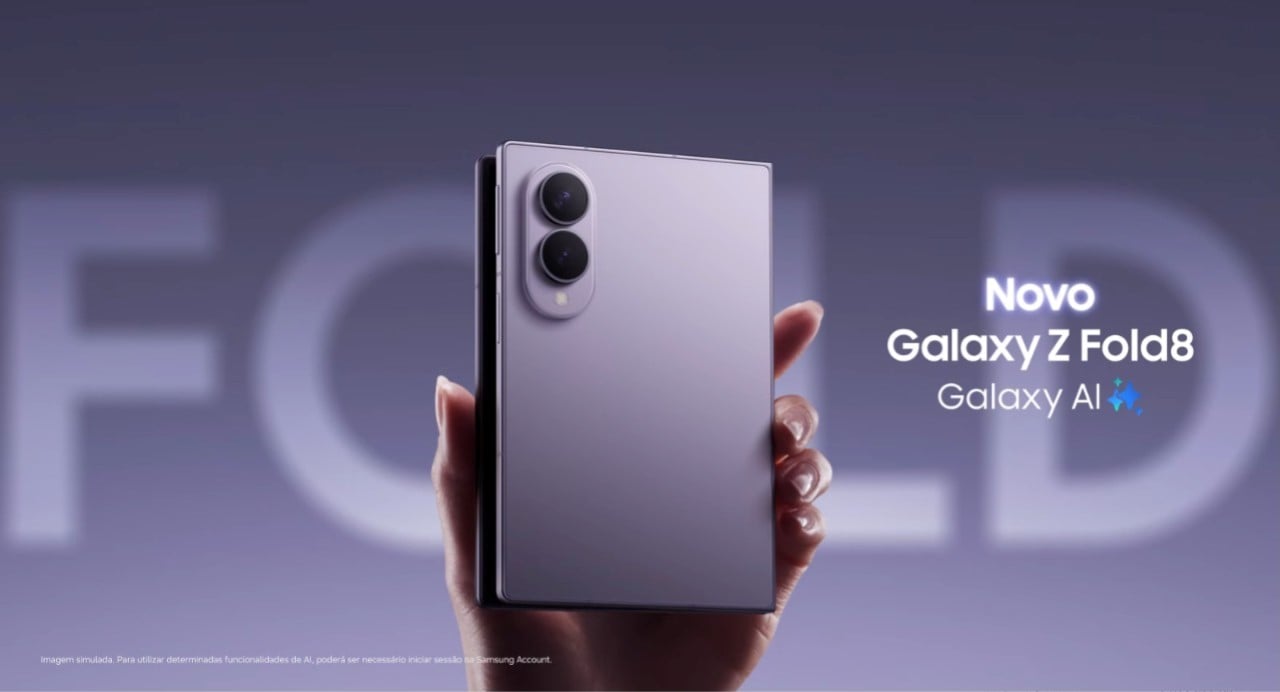
The arrival of Samsung’s new generation of smartphones with malleable screens has brought to light debates about the durability of internal components in the face of daily use. Technicians specializing in electronics disassembly opened the Galaxy Z Fold8 to understand how the manufacturer structured the parts under the metal and glass casing. The result obtained in the thorough technical analysis was a score of four out of a possible ten, indicating that resistance against external impacts is not reflected in ease of maintenance. This scenario creates a significant obstacle for consumers who plan to keep the device for long periods, as any intervention requires an almost surgical level of precision.
Insufficient technical development keeps foldable devices far from ideal repair
The criteria adopted by international laboratories punish projects that make access to the equipment’s vital circuits difficult. The four rating achieved by the latest model demonstrates that the complexity of flexible screens still represents a formidable barrier to the repair market. In the previous year, the Galaxy Z Fold7 obtained just three points in the same evaluation, showing that the changes implemented by the South Korean brand were marginal and did not solve the structural problem. For a mobile device to receive the repairability seal of approval, the minimum score required is usually seven, a level that guarantees the replacement of parts without the danger of damaging neighboring components.
The global right-to-repair movement has pressured large corporations to develop more affordable products for independent repair shops. However, the closed and highly integrated architecture of premium models goes against this sustainability trend. The lack of modularity makes the diagnostic process more expensive and alienates professionals who do not have specific machinery approved by manufacturers, limiting the options of those who need a quick repair.
More on this story: Experts disapprove of the internal structure of the Galaxy Z Fold8 due to the risk of breakage during repair
Extremely fragile main screen and dust seal failures
The most critical component during the opening process is the internal OLED technology display. The analysis team found that simply attempting to peel off the plastic edges could result in permanent damage to the imaging matrix. This extreme sensitivity turns screen replacement into a very high-risk operation, where a millimeter of pressure in the wrong place condemns the most valuable part of the entire electronic assembly, generating immediate losses for the technician.
Another factor that caught the attention of evaluators concerns the IP48 certification, widely publicized in the product’s advertising campaigns. Number eight attests to excellent protection against submersion in liquids, but level four for solid particles is insufficient to stop grains of sand and fine dust. This microscopic debris finds easy paths to the center hinge gears. With the daily opening and closing movement, the friction of dirt wears out the mechanism quickly, compromising the physical integrity of the smartphone long before the end of its estimated useful life.
Monopoly of authorized services increases the cost of maintenance for the consumer
The technical difficulty imposed by the device’s design generates a severe financial impact for those who suffer accidents outside the legal warranty period. Neighborhood workshops and independent technicians often refuse to accept this type of cell phone, fearing the loss of breaking the screen while changing a simple defective battery. When they accept the service, the risk built into the budget causes the amount charged to reach prohibitive levels, often exceeding half the price charged for a brand new phone in retail stores.
As a direct consequence of this hardware complexity, the owner ends up confined to the manufacturer’s official technical assistance network. These authorized centers operate with fixed price tables and return deadlines that can leave users weeks without their main communication and work tool. This exclusive dependence negatively affects the used appliance market, as second-hand buyers avoid investing in models that have unpredictable maintenance costs and a history of fragility.
Learn more: Cubot KingKong Dura bets on a removable battery for greater durability and user convenience
Design decisions that favor the work of hardware technicians
Despite harsh criticism regarding the screen and hinge, the technical report highlighted some engineering choices that represent positive advances. The South Korean manufacturer has implemented solutions that reduce working time in specific disassembly stages, making life easier for professionals who venture to open the device.
The improvements identified in the internal structure include fundamental changes in the fixation of parts:
- Screw standardization: The company abandoned exclusive formats and used the Phillips standard throughout the motherboard, allowing the use of common screwdrivers found on any workbench.
- Simplified rear opening: The rear glass panel is secured with a heat-sensitive adhesive, which allows the cover to be removed without the need to apply brute force or sharp tools.
- Modular power input: The USB-C charging port works independently and is not soldered to the main board, drastically reducing the cost of the part if the connector has poor contact.
- Battery removal system: Energy storage cells feature adhesive strips designed to be pulled by hand, eliminating dependence on dangerous chemical solvents during extraction.
These small internal design wins show that there is room for optimization, even in highly compact designs. The adoption of modular components, such as the USB-C port, is a clear example of how simple engineering decisions can extend the usefulness of the device and avoid unnecessary disposal of entire boards.
The challenge of balancing aesthetic innovation with environmental responsibility
The full x-ray of the Galaxy Z Fold8 perfectly illustrates the crossroads at which the global telecommunications industry finds itself. Development teams are fighting a constant battle between the market’s demand for ever thinner devices and the urgent need to create repairable electronics. The hinge system, which allows the transformation of a phone into a tablet, continues to be the point of greatest mechanical vulnerability and one of the biggest generators of early electronic waste in the premium segment.
For the flexible display niche to reach technical maturity, technology giants will need to completely overhaul the internal layout of cables and connectors. The use of materials that are more resistant to torsion and the creation of independent modules are fundamental steps for the future of the category. Only with a change in mentality focused on hardware longevity will it be possible to deliver innovative designs without quickly replacing expensive devices becoming the accepted standard in consumer society.