
Video of family stranded by avalanche in Nepal highlights rescue challenges and death toll
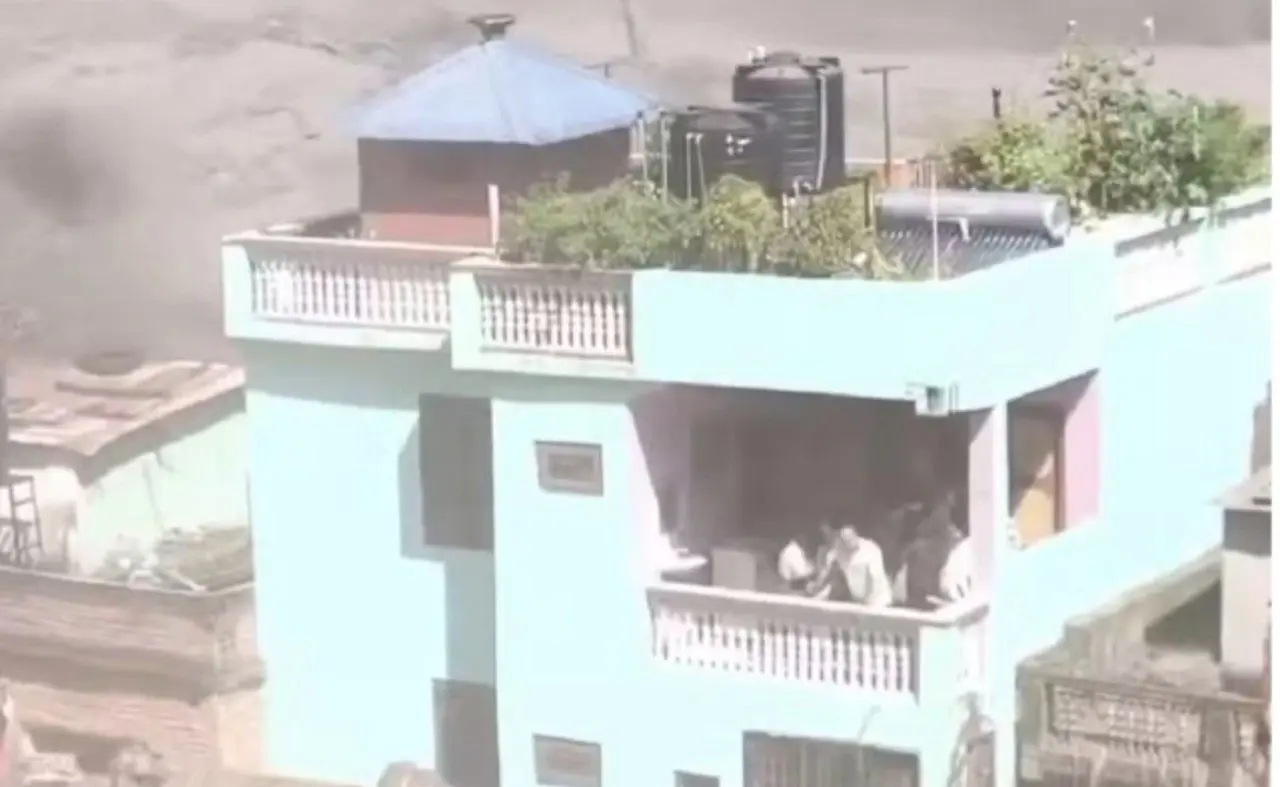
A devastating avalanche hit villages in Nepal on Wednesday, August 26, 2026, and a heartbreaking video captured the despair of a family left stranded. The images, which quickly circulated on social media, show a man and a woman with a child in their arms, seeking refuge on the balcony of the second floor of a house, while a huge flood of mud and debris passed around them. The property, by a miracle, remained standing amidst the destruction.
A few meters above the wave of cars, mud and debris, the family had no possibility of escape or immediate rescue. At a later point, another video recorded the group already safe, but still waiting for help and signaling the rescue teams. The region, known for its geographic complexity and strategic importance, now faces an immense humanitarian and logistical challenge.
Family defies avalanche fury and searches for rescue in Nepal
Scenes from the viral video, which show the family resisting nature’s fury, have become a symbol of the tragedy in Nepal. Trapped on the balcony, they watched the current of mud and debris swallow everything around them. The agony of having nowhere to go and the wait for rescue in a scenario of complete devastation were recorded, exposing human vulnerability in the face of extreme events.
More on this story: Tragedy in the Himalayas: avalanche causes 1,318 deaths and more than 5,600 missing
Despite the scare, all members of the family portrayed in the images managed to survive the avalanche. This account of resilience amid chaos brought a glimmer of hope in a situation marked by large-scale loss and destruction. Efforts to reach and save others in similar conditions continue, highlighting the courage of the search teams.
Number of victims rises as teams face challenges in rescues
Local authorities released on Friday, August 28, 2026, a new tragic assessment of the avalanche that hit Nepal and Tibet, in the border area. The death toll reached 584, and more than 1,500 people remain missing. Rescue operations are ongoing but face significant obstacles.
Work was briefly interrupted on the morning of August 28, 2026, due to the possibility of new flooding caused by the overflow of a lake. This disruption highlighted the ongoing risks faced by rescue teams, who must operate in unstable terrain and under threat of further landslides or flooding. First responder coordination and safety are crucial priorities.
Video testimonies reveal the devastating force of the disaster in the region
In addition to the video of the stranded family, other impressive recordings emerged in the days following the disaster, showing the magnitude of the destruction. Terrifying scenes recorded the devastation of structures such as the port of Gyirong and the panic of passengers on a bus, in one of the Nepalese villages affected by the avalanche.
One of the most shocking reports came from Vivek Shrestha, an employee at a hydroelectric plant that was hit. He recorded everything he experienced with his colleagues during the tragedy. Initially calm as he filmed the approaching flood, Vivek realized the overwhelming force of the water and the imminence of danger, running and climbing the mountain to protect himself. These video records are vital tools for understanding the progression of events and the rapid deterioration of conditions.
Learn more: Unpublished data reveals trail of avalanche destruction between Nepal and Tibet
The strategic importance and vulnerability of the Himalayan region
The area affected by the avalanche is a border region with China (which controls Tibet) and has notable geostrategic and tourist importance. Surrounded by the Himalayan Mountains, one of the largest and most majestic mountain systems in the world, it is an epicenter of biodiversity and source of great Asian rivers. Although not densely populated, the region plays a fundamental role.
- International Connection:An essential border post between Nepal and China, it is one of the main routes for travelers and trade between the two countries.
- Energy Sources:Home to hydroelectric plants, vital to Nepal’s energy infrastructure, whose destruction causes a direct economic impact.
- Tourist Attraction:Starting point for world-famous trails, such as Langtang, and areas frequented by Hindu pilgrims seeking Kailash Mansarovar. These activities support many local communities.
Dependence on natural resources and steep topography make this region particularly susceptible to natural disasters, exacerbating the impacts of events such as the recent avalanche.
Avalanche causes and the impact of climate change in Asia
The disaster was triggered by the collapse of a glacier, a phenomenon that has become more frequent in mountainous regions such as the Himalayas. The accelerated melting of glaciers, often associated with climate change, releases large volumes of water and debris, which can turn into mud avalanches and flash floods. The fragility of these ecosystems is a warning of global environmental challenges.
On the same topic: Tragedy in the Himalayas buries 933 workers and mobilizes urgent international rescue
The consequences of these avalanches and floods are not limited to immediate human and material losses. They also compromise food security, the availability of drinking water and the economic stability of communities living in these mountainous areas. Experts warn that the recurrence of such events could increase if global temperatures continue to rise, requiring urgent climate mitigation and adaptation action in Asia and around the world.
More news in Latest News (EN)
See more → Sony clarifies launch timing and hardware price plans for PS6
 Sony PlayStation 6 cost nears $950 as memory prices climbAfD state election triumph prompts urgent review of Germany’s democratic foundationsAaron Judge returns to Yankees lineup, igniting playoff push after three-month rib injury absenceHigh-altitude tragedy: Climber perishes after fall on Aspen-area 14er summitEgyptian TV personality and 11 co-defendants condemned to death for large-scale synthetic drug traffickingPlayStation 6 component bills surge to $960 amid memory crunch
 Rockstar North adds canine waste throwing to GTA 6 worldRockstar North details dog mechanics and street combat in GTA 6
 Corporate ChatGPT users gain custom text style replicationWorkplace ChatGPT starts copying individual writing styles
More news on Mix Vale
- 1Trump demands Bombardier relocate production to US for market access, escalating trade tensions
- 2Veteran left-hander Thomas Pannone hurls rare perfect game in Triple-A for Nashville Sounds
- 3Power outage forces FSU and SMU to play college football without modern communication tools
- 4United Kingdom to impose trade restrictions on Israeli settlements, sparking strong U.S. and Israeli opposition
- 5Top Ukrainian prosecutor resigns following probe into vast illegal call center network scheme
- 6Calls intensify for Australia to assert foreign policy independence over extensive US military presence
- 7Saxony-Anhalt results underscore growing momentum for European far-right parties ahead of key votes
- 8Julia Louis-Dreyfus reveals intense creative clashes shaped iconic sitcom ‘Seinfeld’s’ groundbreaking humor
- 9U.S. forces dismantle sophisticated floating drug refueling station tied to Ecuadorian narco-terror group
- 10Giants make unexpected roster move, release longest-tenured player Darius Slayton as Harbaugh era begins