
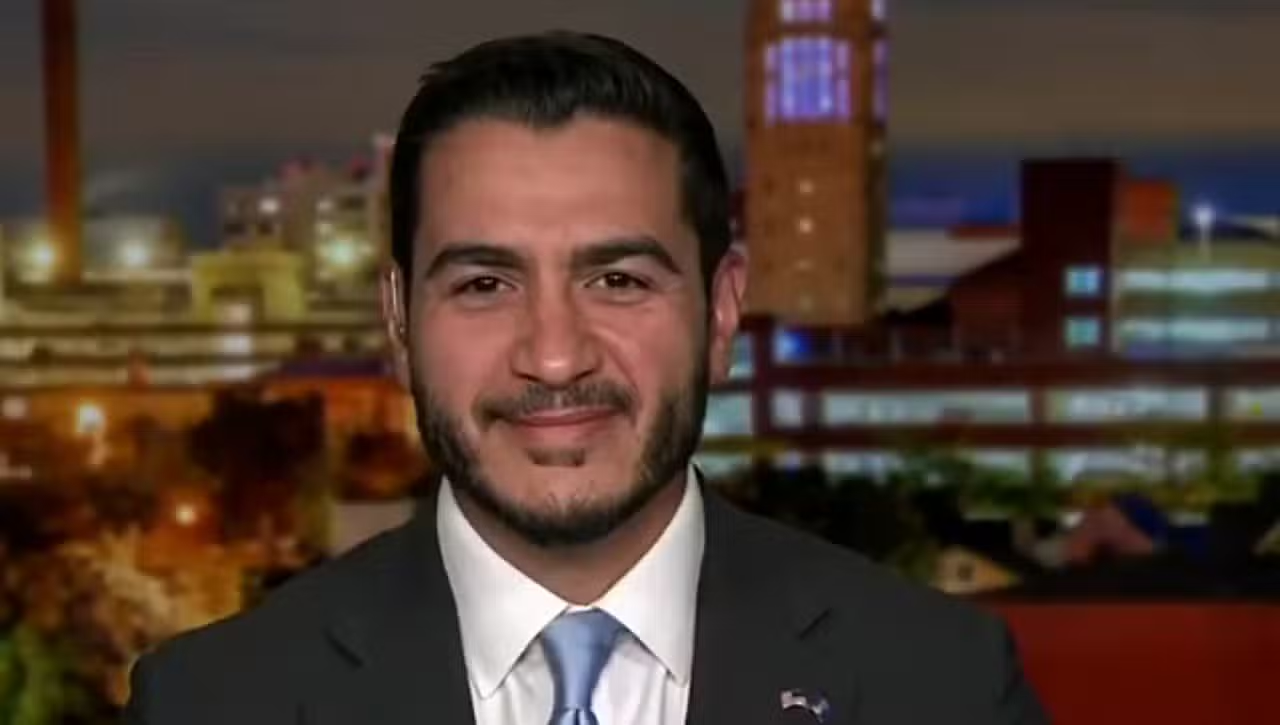
Democratic politician Abdul El-Sayed, who is running for the United States Senate from Michigan, is under scrutiny for past comments related to the September 11 attacks. The situation occurs as the country prepares for the 25th anniversary of the 2001 tragedy, reigniting debates and generating possible new political attacks.
Leader of a new generation within his party, El-Sayed is known for his opposition to American wars and for capitalizing on anti-Arab sentiment in a state with a significant and active Muslim community. However, he is now seeking to adjust, and in some cases remove, old statements that might not appeal to a wider electorate during the general election.
As he prepares for his fall election contest against Republican Rep. Mike Rogers, El-Sayed, who has a background in public health, has already had to distance himself from Hasan Piker’s views. This popular Twitch streamer, who participated in Democratic campaign events, caused controversy when he said that “America deserved 9/11”, although he later retracted it.
However, El-Sayed’s previous references to the 9/11 attacks continued to surface. Two publications deleted from his social networks, confirmed by checks, show that he encouraged the American public to react to the number of deaths from COVID-19 with the same indignation seen after the attacks.
In a text from April 2020, El-Sayed drew a parallel between the approximately 3,000 lives lost on September 11 and the growing number of deaths from COVID-19, defending a response compatible with the post-9/11 national mobilization. Elsewhere, he wrote that since more Americans died from COVID than from the 9/11 attacks, he hoped “this means we will spend the next ten years fighting a war on public health and against poverty… like we launched a global #WarOnTerror after 9/11. We could save lives rather than take them.”
A spokesperson for El-Sayed’s campaign said in a statement that “Abdul has always unequivocally condemned terrorism and the 9/11 attacks.” The release added that “Mike Rogers’ attempts to misrepresent Abdul’s beliefs are bad faith lies designed to deceive the citizens of Michigan.”
Another deleted post, initially revealed, shows El-Sayed writing on September 11, 2021: “Today, I mourn the 3,000 lives, the 6,000 injuries, and the devastation of infrastructure in New York, perpetrated out of ignorance in the name of my faith. Tomorrow, I will mourn the estimated 1 million lives, millions of injuries, and the devastation of infrastructure in 3 countries, perpetrated out of ignorance in the name of my country.”
El-Sayed’s campaign clarified a few months ago that he removed all posts prior to July 2023 “to prevent old posts from being taken out of context,” but did not specify when the deletions occurred.
In a recent interview about whether such posts could make it harder for him to connect with moderate voters, El-Sayed said, “I think we all look back and say that 9/11 was a terrible thing that happened in this country, and I think we all look back and say, think about all the wars that were fought and how much safer we felt because of them?”
He continued: “What I want to say is that what happened on 9/11 was a disaster. It was a terrible attack on our country and our responsibility is also to think about how to build an America where we protect our military men and women from being forced to fight in wars that are not ours to fight and that ultimately end up harming people. And that’s what we’re seeing now.”
For Abdul El-Sayed, the reappearance of old social media posts could become a considerable obstacle, as Adrian Hemond, a bipartisan political consultant based in Lansing, pointed out.
Hemond likened the situation to a “duck quacking problem” for El-Sayed, indicating that “there’s so much quacking going on, in a way, that it’s raised questions from a lot of people, and he hasn’t done very well at answering them.”
The upcoming anniversary of the attacks represents a new chance for El-Sayed to address a sensitive moment in American history. He needs to find a way to appease moderate voters without alienating progressive activists, who form an important part of his support base.
Kristian Ramos, a progressive strategist based in Washington, pointed out that “people underestimate the crucial importance of the Arab vote in Michigan.”
Ramos added that “the war in Iran and everything else has scrambled a lot of people’s perceptions of what is and isn’t acceptable at this time.” He also mentioned that “there’s a reason he exited the primary the way he did: because he was addressing issues that resonated with Michigan primary voters, which will be essential to his general election victory.”
The September 11 attacks largely acted as a rallying point in US politics. The attacks caused the death of almost 3,000 people, started two decades of military conflict and transformed aspects such as foreign policy and airport security. For candidates for state office, even indirect references to the attacks can generate more intense scrutiny than mentioning other tragedies.
Matt Grossmann, a political scientist at Michigan State University, said El-Sayed’s deleted social media posts alone probably won’t hurt his campaign. However, they strengthen your opponent’s narrative that he holds extremist views.
Grossmann explained that “is any specific tweet going to influence the general election? It seems unlikely.” He mused: “But will the general impression that he may be too extreme […] make a difference? That has a greater chance of making a difference.”
The more El-Sayed is questioned about his past statements, the less he will be able to effectively attack his opponent, former Republican congressman Mike Rogers, according to Joel Payne, a Democratic strategist.
Payne said, “He applies nontraditional language to some of these ideas. It’s allowed him to stand out. It’s also allowed him to demonstrate his willingness to break with convention. Right now, I think it’s created for him the fact that [his unconventional language] is what people want to discuss, rather than him making an economic argument against Mike Rogers.”
The most evident episode of this dynamic occurred when El-Sayed tried to explain his connection to Piker, the streamer who, in 2019, declared that “the United States deserved 9/11” before retracting it. While El-Sayed campaigned alongside the streamer in April, he was repeatedly pressed to detail the relationship. In an interview, El-Sayed said, “Of course I don’t think 9/11 was justified. Just because you appear with someone doesn’t mean you agree with them on everything.”
Since then, Republicans have tried to turn this question into a more comprehensive test of character and judgment, arguing that El-Sayed’s continued association with Piker reflects negatively on his political instincts. His opponent, Rogers, released a statement after El-Sayed secured the Democratic nomination, incorrectly attributing Piker’s comments to El-Sayed himself.
Rogers stated, “I spent years hunting down terrorists and bringing Osama bin Laden to justice. I never imagined I would one day run against someone who believes the United States deserved 9/11.”
In a separate statement, Abdul El-Sayed called the events of September 11 “cowardly terrorist attacks” and mentioned in his 2020 book, “Healing Politics”, that they “devastated” him.
More broadly, the issue of 9/11 aligns with a persistent challenge in El-Sayed’s campaign. Throughout the dispute, he was repeatedly asked to explain controversial associations or comments related to national security, foreign policy and extremism. In each instance, his opponents described him as someone outside the political mainstream, while El-Sayed argued that critics were misrepresenting his views or taking them out of context.
The balance can be especially complex in Michigan, a state that is home to one of the largest Arab-American and Muslim communities in the country. Many voters in these communities remain deeply involved in debates about the consequences of the post-9/11 period, which includes the wars in Iraq and Afghanistan and surveillance programs that have targeted Muslims.