
Toyota will develop 2++ assistance system with AI and guardrail by 2028

The search for autonomous driving vehicles reaches a new level in Japan, with Toyota developing more sophisticated technologies. The initiative aims to reduce the technological gap in relation to competitors from the United States and China, a market in constant evolution.
The Japanese automaker plans to implement its own driving assistance technology, classified as level 2++, in passenger cars from 2028. This innovation will require limited intervention from the driver in certain traffic scenarios.
The company’s plans include progressively expanding the offer to a wider variety of models, in addition to boosting the acceptance of this technology from the year 2030 onwards. This information was released by Toyota in a recent announcement.
Currently, assisted driving solutions available in Japan are generally restricted to level 2. In this modality, the driver is required to resume control of the vehicle when the system requests it.
Toyota aims to go beyond this phase, despite initially intending to market its most elaborate technology as level 2++. This occurs even as the company develops technical capabilities that align with level 4 automation.
Akihiro Sarada, who leads Toyota’s Software Development Center, stated that the company will adopt a methodology that integrates security with the ability to justify the choices made by the system.
In the commercial vehicle segment, the automaker aims to achieve level 4 automation by 2030. This will enable completely autonomous driving, as long as it is in previously established environments and situations.
The company also aims to speed up the implementation of these solutions throughout the national territory from 2030 onwards. This movement will benefit from the projected growth for public transport and other services that use automation.
Among the short-term ventures is the e-Palette, an electric vehicle (EV) that will be unveiled in 2025. It is designed for purposes such as transporting people, operating as an autonomous bus.
Toyota assured that it will maintain the deadline established to provide the e-Palette with level 4 driving capacity in fiscal year 2027, confirming the progress of the project.
The Japanese government, in turn, legalized level 4 autonomous driving systems in 2023. The country also set bold goals to increase the number of these vehicles in circulation.
The Japanese authorities’ objective is to have a total of 10,000 buses, taxis and other types of vehicles equipped with level 4 automation in operation throughout the territory by fiscal year 2030.
The Japanese automaker is also considering the possibility of entering the robotaxi sector, in partnership with Waymo. The latter is the automated driving division of Alphabet, the holding company that controls Google.
Although Toyota confirms that it is analyzing this partnership with Waymo, the company has not yet released a detailed schedule for the start of a commercial operation in this segment.
Toyota’s technical strategy will follow a different direction from that practiced by companies that centralize the complete operation of automated driving in end-to-end artificial intelligence (AI).
Toyota does not plan to rely solely on this standard, used by companies like Tesla, for tasks such as recognizing the environment, deliberating actions and general control of the car.
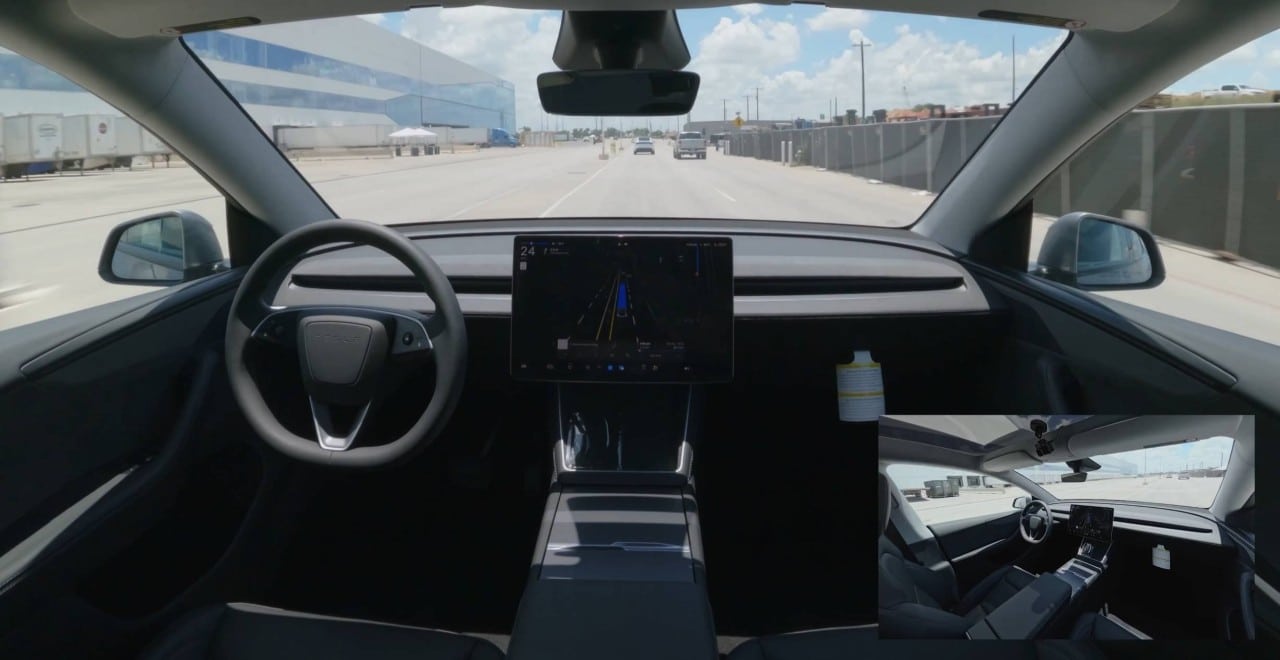
In addition to artificial intelligence, the automaker will implement a mechanism called guardrail. This system will have the function of supervising performance and preventing unpredictable conduct that may exceed the guidelines established by human operators, increasing safety.
According to Toyota, this combined methodology has the potential to increase safety and help reduce the number of deaths and injuries that occur annually in traffic accidents by around 60%.
The competition scenario in this sector is growing rapidly, with other Japanese automakers also intensifying their projects. The objective is to follow the technological progress evident in the United States and China.
Honda, in 2021, was the first global manufacturer to introduce a car with level 3 automation. This vehicle was capable of operating autonomously in specific and controlled situations.
Since that time, the company has continued to improve these features. At the same time, Nissan revealed in April its plans to integrate autonomous driving technology with artificial intelligence into 90% of its model lineup.
Toyota, in turn, focuses on level 4 technical development. However, the company does not plan to initially make all this autonomy available to customers in their personal vehicles.
This choice allows more advanced functionalities to be used under a more prudent commercial classification. Meanwhile, the automaker carries out further validations and adapts its technology to the market.
Japanese authorities also show interest in boosting this market segment. To this end, they set a goal of reaching 30% of global sales of autonomous vehicles throughout the 2030s.
In order to follow this progression, the Japanese Ministry of Transport plans to establish, later this year, a private certification system for cars that have level 2++ technology.





