Asobo Studio reveals Resonance A Plague Tale Legacy prequel

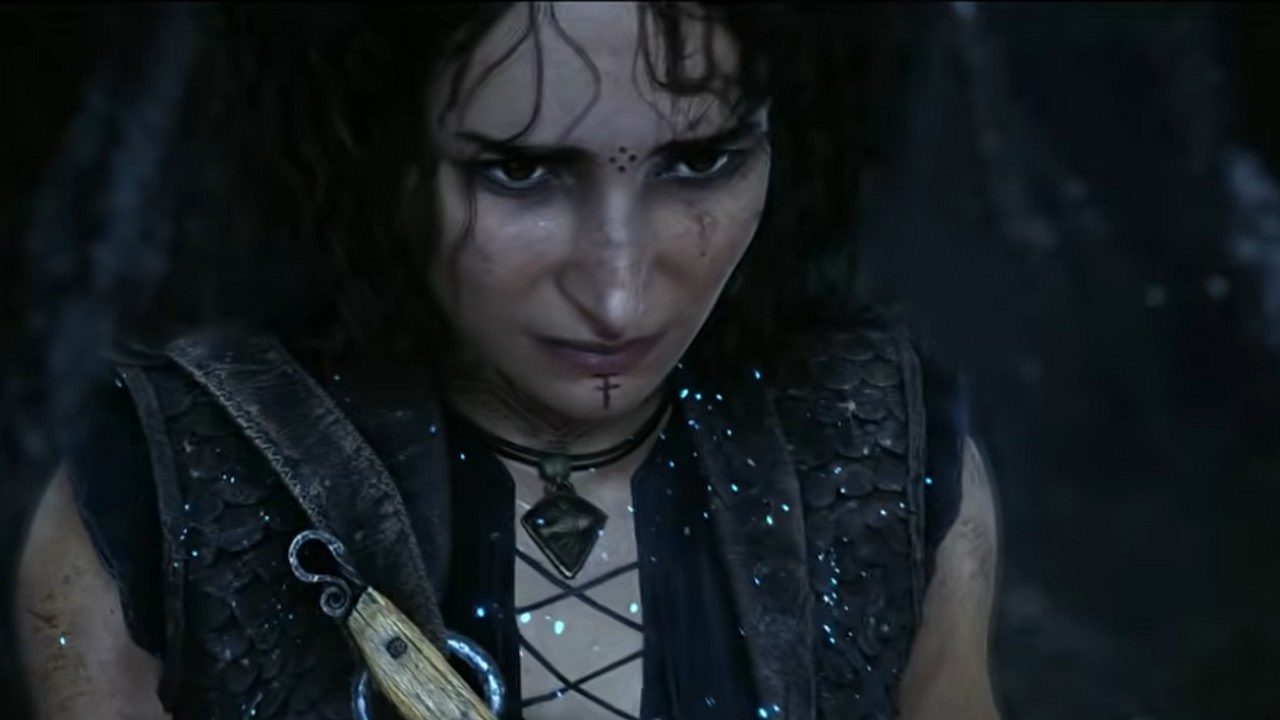
Asobo Studio scheduled the official release of the action title Resonance: A Plague Tale Legacy for August 27, 2026.
The storyline places the protagonist Sophia inside the ruins of an ancient Minoan cistern. Her solitary traversal introduces the eerie atmosphere of the subterranean setting.
Subterranean echoes reverberate through the cavern as the former smuggler navigates the dust-filled tunnels.
The explorer faces perilous corridors despite her proven mastery with both sword and dagger. Her previous encounters required precise parries, rapid strikes, counterattacks, and grappling hook maneuvers against hostile forces. She navigated lethal traps, secured valuable artifacts, and solved intricate environmental puzzles.
Sophia presses ahead through collapsed caverns located beneath an ancient complex of long-abandoned Minoan trials.

Resonance: A Plague Tale Legacy takes place roughly 15 years prior to the events depicted in A Plague Tale: Requiem. That previous installment originally introduced Sophia to the video game series.
During this prequel adventure, the young scavenger searches for answers regarding her ties to the Island of the Minotaur, her early convent upbringing, and her connection to the Macula.
Through the ancient Macula curse, Sophia experiences historical visions of the island seen through the perspective of Theseus. These visions lead her across time into the Minoan epoch to confront lethal challenges.
Sophia and her companion Leni must evade roaming adversaries while traversing a perilous labyrinth laden with lethal mechanisms.
The narrative establishes Sophia’s background with the Macula while significantly expanding her offensive capabilities. Combat mechanics portray her earlier life as an agile rogue.
Asobo Studio creative director and co-founder David Dedeine explained that connecting Sophia’s established future to this newly created past required strict narrative fidelity without altering any of the events previously depicted in A Plague Tale: Requiem.
“At the same time, there was still room to better understand why a character as tough as Sophia would care so much about two wandering children, and why she would be willing to take so many risks to help them,” Dedeine said. “As we explored Sophia’s past and developed the story of Resonance, it became increasingly clear that her promise to Arnaud was only part of the answer, with something much deeper motivating her actions.”
In Requiem, Sophia protects the siblings Amicia and Hugo to settle an outstanding debt with Arnaud Malpart, who spared her life after receiving orders to execute her.
“During the development of Resonance, we regularly revisited Sophia’s scenes in Requiem to ensure everything remained consistent,” Dedeine said. “And at times, I was surprised by how naturally Resonance seemed to fit, as if Sophia already knew her own story before we did.”
Combat adjustments allow Sophia to execute parries, counterstrikes, and rapid secondary attacks with an off-hand dagger or pull distant targets inward using a grappling hook.
The development team examined combat mechanics from Ghost of Tsushima and SIFU during internal gameplay design sessions. Dedeine noted that Sophia’s distinct lore and overarching campaign length ultimately led the studio to shape an original formula.
“The initial approach aligned closely with the philosophy we had for many features in Innocence and Requiem: how to create a combat system that feels as realistic as possible, allowing players to stay connected to Sophia as a person rather than turning her into a killing machine, while making her a believable and accomplished fighter?” Dedeine said.
Designers structured the character to fall quickly under enemy assault while recovering health through successful eliminations. Combat demands precision.
“The idea that Sophia could go down in just a few hits was a core principle from the start, and that ultimately led to our mantra: ‘Every shot counts,'” Dedeine said. “Sophia is also smart and cunning, so we introduced the dagger as her signature move, guided by another internal principle: ‘A sword keeps you alive, but the dagger wins the fight.'” He described the weapon interplay as central to her survival strategy.
“Finding the perfect balance between vulnerability and mastery was incredibly challenging,” Dedeine stated. “The team worked hard, overcoming numerous obstacles to get it right, and we are very proud of the result and how the combat blends seamlessly into the rest of the experience.”
Combat encounters combine dagger strikes, sword cuts, grabs, kicks, and fatal execution animations across hostile battlegrounds.
The production team worked to preserve continuity without modifying established details from Requiem. Writers integrated new narrative revelations into the existing timeline.
Developers chose to illuminate Sophia’s backstory rather than retcon later chronological events.
“Sophia’s relationship with the Macula plays an important role in the story, but our intention was never to rewrite established events or create contradictions,” Dedeine said. “Instead, we wanted to explore some of the deeper motivations behind her actions and offer another perspective on a character players thought they already knew.” He added that new players do not need prior familiarity with A Plague Tale to follow the narrative.
The standalone title functions as an action-adventure production evoking classic design elements seen in franchises such as Tomb Raider and Uncharted.
“We definitely wanted to enhance the action layer of the experience, with more varied environments, brighter landscapes, and a greater sense of scale and exploration,” Dedeine said. “In that sense, it is easy to see why players might think of games like Tomb Raider or Uncharted.”
“The universe of A Plague Tale carries a particular tone, somewhere between historical realism, fantasy, and darkness, which influences everything from story and world-building to how we approach characters and their motivations,” Dedeine said.
Exploration takes players across the Island of the Minotauro, featuring crumbling ruins, massive architectural structures, and combat set across two distinct eras. The varied environments reinforce the shifting time periods.
The narrative presents an original adaptation of the legend of Theseus and the Minotaur within the franchise universe.
The campaign incorporates demanding boss encounters alongside hazardous obstacle sequences. Players navigate increasingly complex trials as the journey unfolds.
Composer Olivier Deriviere returned to write original music for the title, collaborating with singer Vasiliki Anastasiou and the Amalgamation Choir to record vocal tracks in the Cypriot Greek dialect.
The musical arrangement features traditional instruments including the Turkish yayli tanbur, Arabic rebab, Greek bouzouki, and the ancient Celtic carnyx war horn. These varied acoustic elements provide distinct atmospheric textures throughout the score.
The full campaign spans between 15 and 20 hours of gameplay across ancient and historical settings.
The concluding sequences bring closure to Sophia’s personal journey across Minoan territory while leaving potential narrative pathways open for future developments. Asobo Studio wraps up the prequel adventure within this historical framework.