Annihilation Battle returns in latest Ace Combat 8 trailer

Bandai Namco Entertainment America will launch the flight combat game Ace Combat 8: Wings of Theve on October 2, 2026. The release introduces updated skirmishes alongside the return of the Annihilation Battle mode for PlayStation users.
The publisher scheduled the global launch of this military aviation entry across worldwide markets on October 2, 2026.
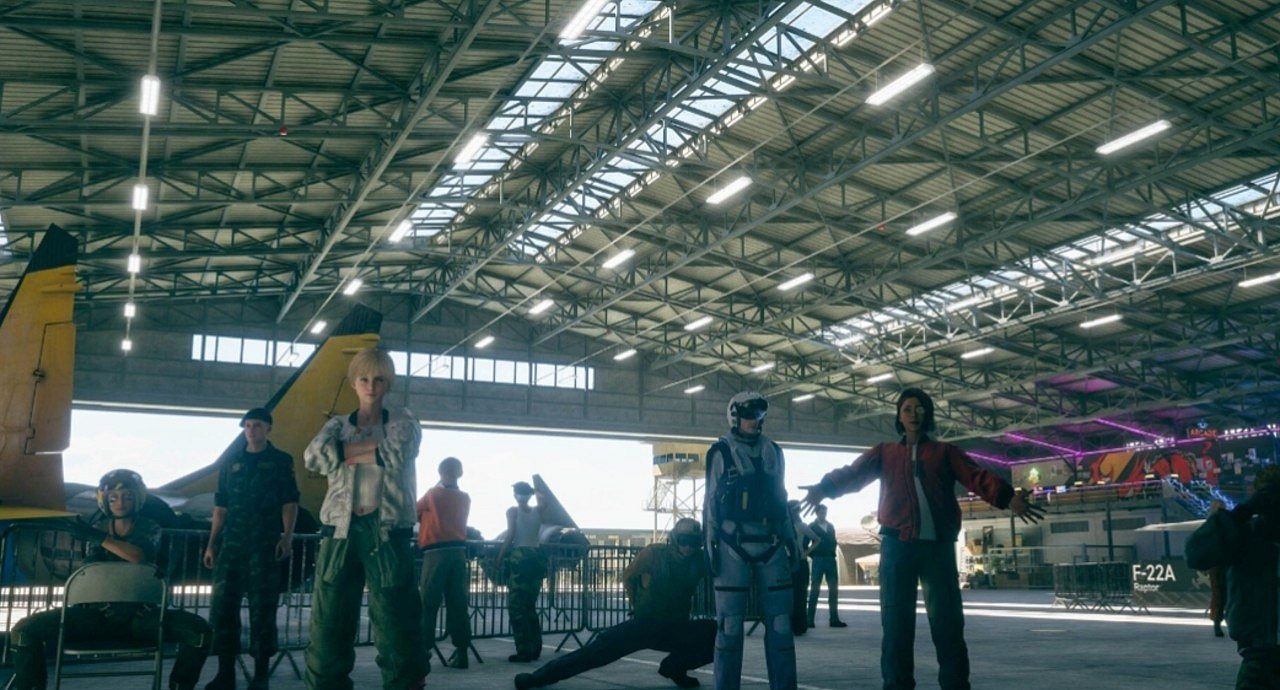
Promotional footage depicts daily operational routines aboard the carrier The Endurance in the middle of active naval warfare. Fighter pilots confront veteran hostile squadrons from the Republic of Sotoa and massive siege weapons targeting the Federation of Central Usea. These border skirmishes expose deeper geopolitical divisions across the storyline of Ace Combat 8: Wings of Theve.
The published teaser showcases dogfighting mechanics and flight maneuvers from Ace Combat 8: Wings of Theve.
Bandai Namco outlines the internal developments of the fictional wartime campaign. The presentation highlights the fast-paced engagement style that long-time series enthusiasts recognize.
High-altitude clashes pit allied aces directly against seasoned adversary pilots. Video sequences detail a mid-air duel between commander Shadow 22 of the Elite Sotoan Air Force Shadows Unit and the Joker Flight squadron. The allied unit operates under the direct command of the Wings of Theve.
Pilots must also engage massive terrestrial and atmospheric superweapons to safeguard the sovereign airspace of the Federation of Central Usea.
Bandai Namco placed these coordinated threats at the center of the newly previewed assignment. The incoming defensive orders put the entire fighter wing on emergency status.
Traditional combat objectives make a comeback in new aerial mission
This combat stage directs an all-out assault against Republic of Sotoa installations to eliminate every hostile target detected on radar.
Aviators enter crowded airspace to engage opposing combat wings in sustained gun runs and missile trades. Flight requires precise aim. The mission formally marks the revival of the Annihilation Battle format.
Tactical freedom defines target choices across Annihilation Battle
During Annihilation Battle, pilots strike solar power installations, fuel depots, forward air stations, and fortified ammunition storage facilities under a strict operational countdown while retaining total tactical authority to determine attack sequences and withdraw to the designated supply line.
“I believe this type of mission represents the core pillar of the Ace Combat series: the player’s ability to eliminate enemies based on their own judgment,” producer Manabu Shimomoto said. Shimomoto stated that this tactical freedom will make Mission 7 compelling for Ace Combat 8 players.

Explosive chain reactions open up additional bombing strategies
Much like the heavy transport craft Podarge revealed in earlier previews, the upcoming game enables collateral destruction cascades throughout large-scale combat zones.
Manabu Shimomoto detailed the mechanical systems governing structural blast damage across enemy outposts. “For example, if you hit a flammable object like a fuel tank at an enemy base and cause an explosion, you can also trigger a chain reaction that destroys surrounding buildings,” the producer said.
Structures located near aircraft impact points collapse when burning fuselage sections crash directly into hostile bases.
Design teams implemented this environmental mechanic to encourage careful flight vectors during ground strikes. Calculating the exact timing of each ordnance drop determines the success of the assault.
What enemy threats now endanger the Federation of Central Usea?
Pilots encounter separate defensive challenges throughout the wider campaign beyond standard Annihilation Battle operations.
The offshore facility Megafloat Fatsia sits off the western coast of the Republic of Sotoa as an expansive artificial island. The complex houses munitions plants for Sotoan forces and functions as a forward supply depot for regional offensives. Government authorities originally built the floating platform as a national initiative to counter regional desertification.
The multilevel structure spans six kilometers in total length and features a 2,000-meter upper runway capable of handling heavy cargo aircraft.
A cold-fusion power station within the central sector runs on seawater deuterium to sustain arms factories and synthetic fuel refineries. Surplus electricity drives water desalination units that pump fresh drinking supplies to the mainland through undersea pipelines.
The defensive grid integrates multifunction radar arrays, CIWS emplacements, surface-to-air missile batteries, fighter-mounted railguns, and patrol drones that extend coverage across a 400-kilometer perimeter.
Kinetic metal rods power the orbital Tonitrus Spear satellite
The Tonitrus Spear orbital platform belongs to Sotoan military units and employs kinetic strike mechanisms originally engineered by Yuktobania during the Cold War. Engineers initially conceived this kinetic weapon system as a non-nuclear alternative to traditional strategic bombardment.
Stationed at an orbital altitude of 500 kilometers, the Tonitrus Spear releases high-velocity metal projectiles that obliterate wide surface targets without leaving radioactive fallout.
Pilots must pull into sharp maneuvers to break away from descending kinetic projectiles. Evasion demands sharp reflexes.
The full campaign features additional undisclosed military threats confronting allied forces.