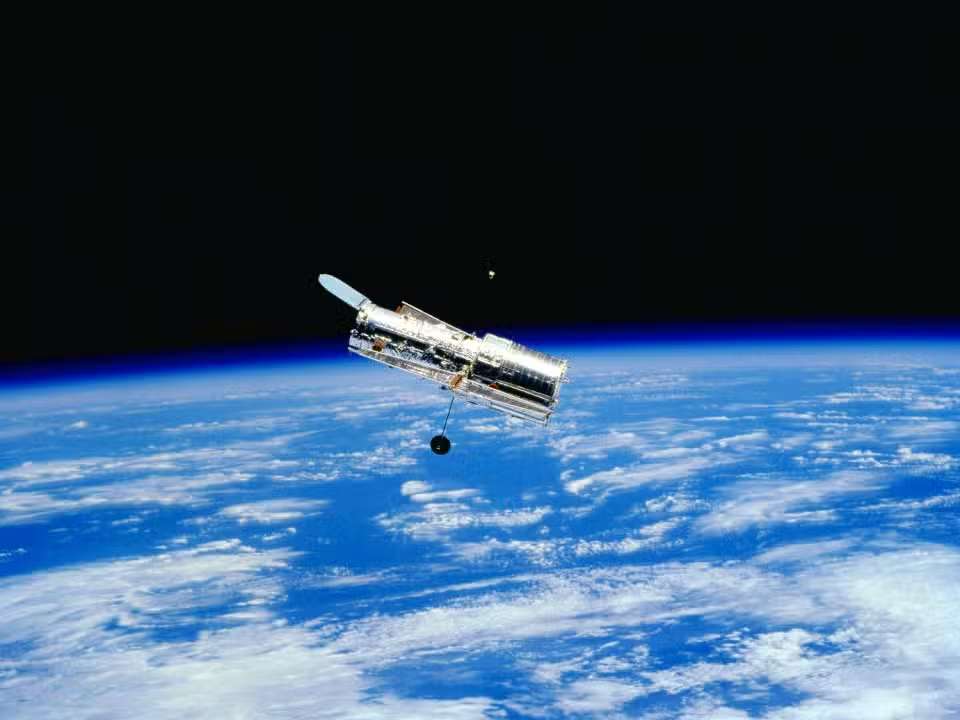
SpaceX Starship engine shutdown threatens NASA 2028 Moon landing

An unexpected engine shutdown disrupted the fourteenth uncrewed test flight of the SpaceX Starship vehicle, introducing fresh uncertainty into the schedule established by the National Aeronautics and Space Administration to return astronauts to the surface of the Moon. The propulsion failure occurred shortly after the spacecraft executed its separation maneuver from the Super Heavy booster stage. Ground teams were forced to curtail the planned orbital duration to ensure that the vehicle remained in a safe operating configuration throughout its high-altitude path.
Flight controllers stationed at the Starbase facility in Texas retained active command over the upper stage despite the sudden reduction in thrust, guiding the spacecraft into low Earth orbit. While operating along that orbital trajectory, the vehicle deployed a batch of 26 Starlink V3 telecommunications satellites. The successful deployment represented the first commercial mission generating direct revenue in the history of the experimental rocket program.
Because the loss of the propulsion unit compromised redundant thrust margins, operations directors decided against keeping the spacecraft in space for the full mission window. Reentry into the upper atmosphere began approximately three hours after liftoff. The flight concluded with a controlled ocean landing in the Pacific Ocean, targeting pre-cleared waters situated north of the Hawaiian islands.
Flight parameters and orbital delivery milestones for the test
Mission controllers monitored operational parameters throughout the three-hour evaluation to establish mechanical performance data across both stages of the launch system. The data package provides critical baseline readings to confirm whether the spacecraft can meet high-cadence commercial deployment goals alongside crew transport standards.
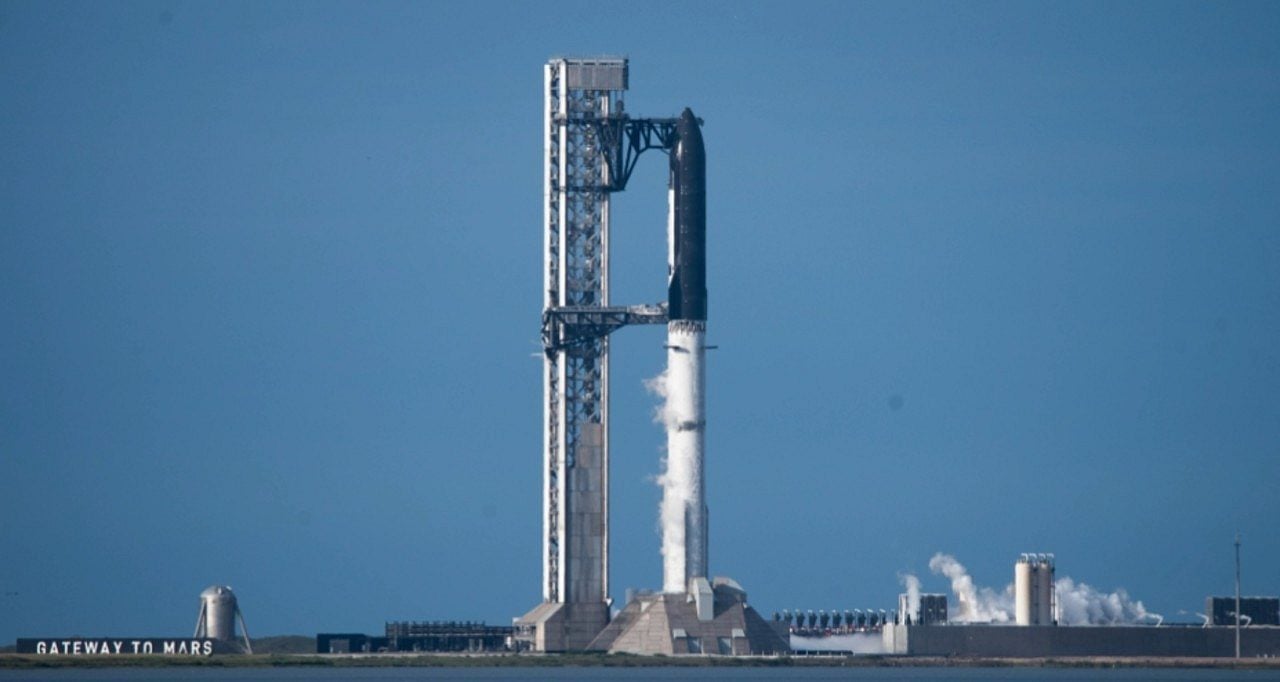
- Liftoff date: Monday, September 28, 2026
- Launch facility: Starbase orbital launch complex near Brownsville, Texas
- Total mission duration: approximately 3 hours leading to splashdown
- Payload released: 26 commercial Starlink V3 internet satellites
- Engines affected: 1 Raptor thruster deactivated prematurely during upper-stage ascent
- Target landing windows: 2028 for the United States and 2030 for China
Raptor thruster shutdown threatens NASA lunar landing goals
The mechanical anomaly directly affects the planning of the United States lunar exploration roadmap because NASA selected Starship to serve as the foundation for the Human Landing System contract. The agency chose the stainless-steel vehicle to conduct the descent and ascent phases between lunar orbit and the surface of the Moon during upcoming crewed Artemis missions. Any disruption to the base propulsion platform has downstream effects on that development path.
The propulsion hardware used for lunar descents uses the identical underlying Raptor design tested during flights out of South Texas. Powered by cryogenic liquid methane and liquid oxygen, the engine is among the most complex engineering assets in the commercial space industry, requiring high operational reliability before astronauts can fly aboard the lander.
The severity of the delay imposed on the Artemis flight schedule depends on forensic evaluations currently underway by propulsion engineers. Ground specialists must review digital flight logs to determine whether the premature shutdown resulted from an isolated component defect or a systemic design vulnerability in the engine powerhead.
Dean Sladen, an aerospace engineer and quality manager at manufacturing supplier Accu Components, explained that the consequences for the space agency vary significantly based on the root cause. Sladen noted that the extent of schedule slippage will depend on whether the problem was a one-off failure of a single part or an architectural issue requiring upgrades across the entire fleet.
The engineer also pointed out that subsequent testing phases for the vehicle rely on the consistent, uninterrupted performance of this propulsion assembly. Any corrective redesign that pauses flight operations, including future attempts to catch the upper stage with mechanical tower arms after atmospheric descent, will reduce the time available to prepare the lunar lander.
Artemis timeline pressures mount amid private sector rivalry
Validating Starship under rigorous operating conditions is a prerequisite for fulfilling contractual commitments made to the federal government. NASA maintains an official baseline schedule aiming to land human crews on the Moon by 2028, marking the first time astronauts would walk on the lunar surface since the conclusion of the Apollo 17 mission in 1972.
Follow: NASA's Roman Telescope: mission has fuel for 22 years and refueling technology
Geopolitical milestones in the international space sector have placed additional urgency on domestic schedules. The Chinese government has established a target to land its own astronauts on the Moon by 2030, leaving narrow tolerances for prolonged slips in American development efforts.
Dean Sladen observed that the deadline to reach lunar orbit remains the primary pressure point driving the program, emphasizing that NASA requires a flight-ready Starship for Artemis 3. That mission is designated to validate orbital docking procedures and propellant transfer operations in low Earth orbit before carrying out a landing attempt.
SpaceX, founded by Elon Musk in 2002 near Los Angeles, no longer holds an uncontested monopoly on the earliest crewed landing contract. The company faces direct competition from Blue Origin, the aerospace venture founded by Jeff Bezos, which is developing the Blue Moon lander under alternative engineering methodologies.
NASA Administrator Jared Isaacman announced earlier that the space agency intends to use whichever lander is ready first for the crewed lunar landing. Isaacman confirmed that procurement approach following the flight of Artemis 2, which carried a crew around the Moon using the Space Launch System rocket built with Boeing and Northrop Grumman alongside the Orion spacecraft manufactured by Lockheed Martin.
Engine telemetry review continues following past combustion issues
Combustion problems involving the Raptor engine family have disrupted operational testing during previous Starship campaigns. In May, during the twelfth flight of the vehicle, an engine failed to complete its programmed ignition sequence, prompting engineers to cancel vacuum relight trials during later phases of that flight.
The thirteenth test mission, conducted in July, achieved a full-duration burn across all engines during ascent without anomalies registered in primary telemetry streams. The recurrence of an engine shutdown after first-stage separation during the fourteenth test flight has renewed scrutiny surrounding the consistency of the propulsion units.
Despite the early termination of the orbital segment of the flight on Tuesday, September 29, 2026, NASA leadership offered an encouraging public evaluation. Posting on social media network X, Administrator Jared Isaacman stated that the Starship test achieved an impressive flight that demonstrated substantial engineering progress.
The definitive cause behind the Raptor shutdown remains under review by engineering teams at SpaceX and has not been publicly released. NASA has not adjusted its formal contractual target dates for the Artemis program pending the completion of the flight anomaly report.