Geomagnetic storm alert brings northern lights display to 11 US states

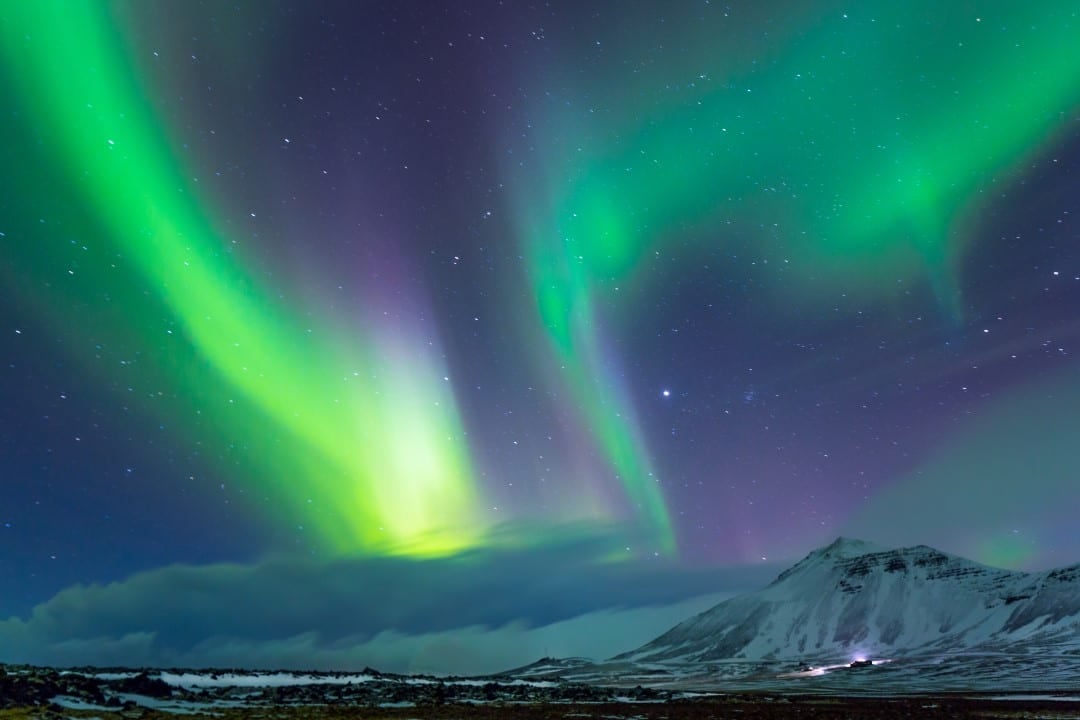
Geomagnetic storm conditions triggered by a solar eruption put skywatchers across 11 northern US states on alert for potential northern lights displays. The Space Weather Prediction Center, an agency of the National Oceanic and Atmospheric Administration (NOAA), issued a G1 minor storm watch following the ejection of solar plasma toward the planet.
Space Weather Prediction Center forecasters confirmed the alert after modeling an incoming coronal mass ejection, noting that “G1 – Minor storming was likely on October 2 due to glancing effects from the CME.”
Key parameters of the October 2026 geomagnetic event
- Solar eruption time: Monday, September 28, 2026, at 13:50 UTC
- Alert issuance date: Tuesday, September 29, 2026, at 13:01 UTC
- Earth impact window: Friday, October 2, 2026, around 03:15 UTC with a margin of plus or minus seven hours
- Maximum predicted planetary Kp index: 4.67
- Storm classification: G1 (Minor) on the five-tier NOAA space weather scale
- Coronal mass ejection speed: approximately 500 km/s
- Angular width of the plasma cloud: approximately 200 degrees
Check out: NOAA projects 90% chance of historic El Niño across Pacific
Trajectory and modeling of the coronal mass ejection
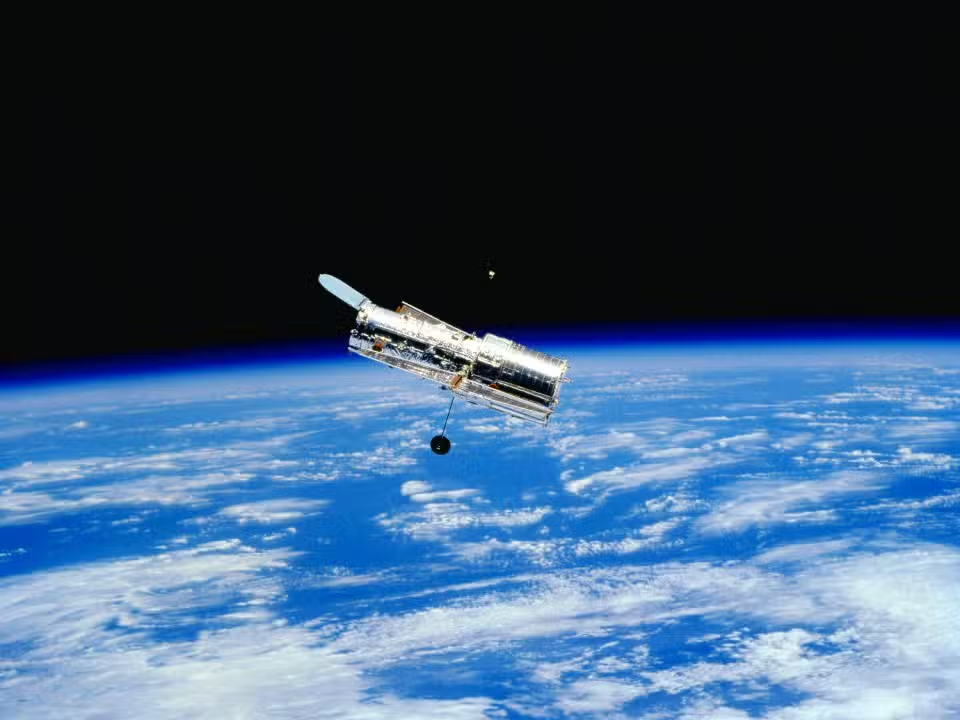
The disturbance began when a solar filament erupted in the northwest quadrant of the Sun, an event captured by the Atmospheric Imaging Assembly on the Solar Dynamics Observatory satellite operated by NASA. The Solar Influences Data Analysis Center at the Royal Observatory of Belgium classified the event as a partial halo coronal mass ejection expanding outward at an estimated speed of 500 km/s with an angular span of roughly 200 degrees.
Numerical simulations produced by NASA using the WSA-ENLIL plus Cone model calculated that the shock front of the plasma cloud would reach Earth at roughly 03:15 UTC on Friday, October 2, 2026. The simulation established an uncertainty margin of seven hours earlier or later than that projected arrival time, reflecting the variable conditions encountered by magnetized plasma traversing interplanetary space. Because the core of the mass ejection is not directed head-on at Earth, the interaction involves a glancing blow against the terrestrial magnetosphere rather than a direct impact.
Follow: Sentinel-6B charts intense El Niño storms in 48-hour surge
Which US states have viewing chances for the northern lights?
NOAA identified favorable viewing positions along the northern tier of the contiguous United States near the Canadian border, where regional skies may glow if geomagnetic disturbance peaks as projected. The agency listed 11 states within the projected boundary:
- Washington
- Idaho
- Montana
- North Dakota
- South Dakota
- Minnesota
- Wisconsin
- Michigan
- Maine
- Vermont
- New Hampshire
Keep reading: New El Niño cycle is confirmed by NOAA and raises awareness about the future of food and the world economy
Scale of geomagnetic disturbances and visual expectations
The space weather scale operated by NOAA ranges from G1 for minor events to G5 for extreme disturbances. Events classified at the G1 level represent the baseline threshold of geomagnetic activity, typically causing only weak fluctuations in electrical power grids situated at high latitudes and displacing the auroral oval slightly southward toward mid-latitude borders.
Observers situated within the 11 identified states are unlikely to see the bright overhead ribbons typical of subpolar latitudes during minor events. At G1 intensity, the aurora borealis usually manifests along the northern horizon as a diffuse, pale white or light green glow. Because human vision in darkness detects limited color, camera sensors and smartphone night modes with exposures lasting several seconds reveal vivid green or purple hues that remain subtle or washed out to the naked eye.
Learn more: El Niño reaches super status with ocean temperatures soaring
Real-time solar wind data will determine final visibility
The actual intensity of the auroral display and whether it becomes discernible without camera equipment remain uncertain until the shock front strikes upstream monitoring satellites. True geomagnetic coupling depends on the orientation of the interplanetary magnetic field, specifically whether its north-south component, known as Bz, points southward upon impact. Spacecraft positioned at the L1 Lagrange point will capture real-time readings of speed, density, and magnetic direction minutes before the plasma encounters Earth’s magnetosphere.
Read also: El Niño phenomenon reaches strong intensity and worsens alerts for Santa Catarina, says NOAA