
3I/ATLAS reveals ancient deep freeze at 1.77 billion km from Earth as it heads toward interstellar void

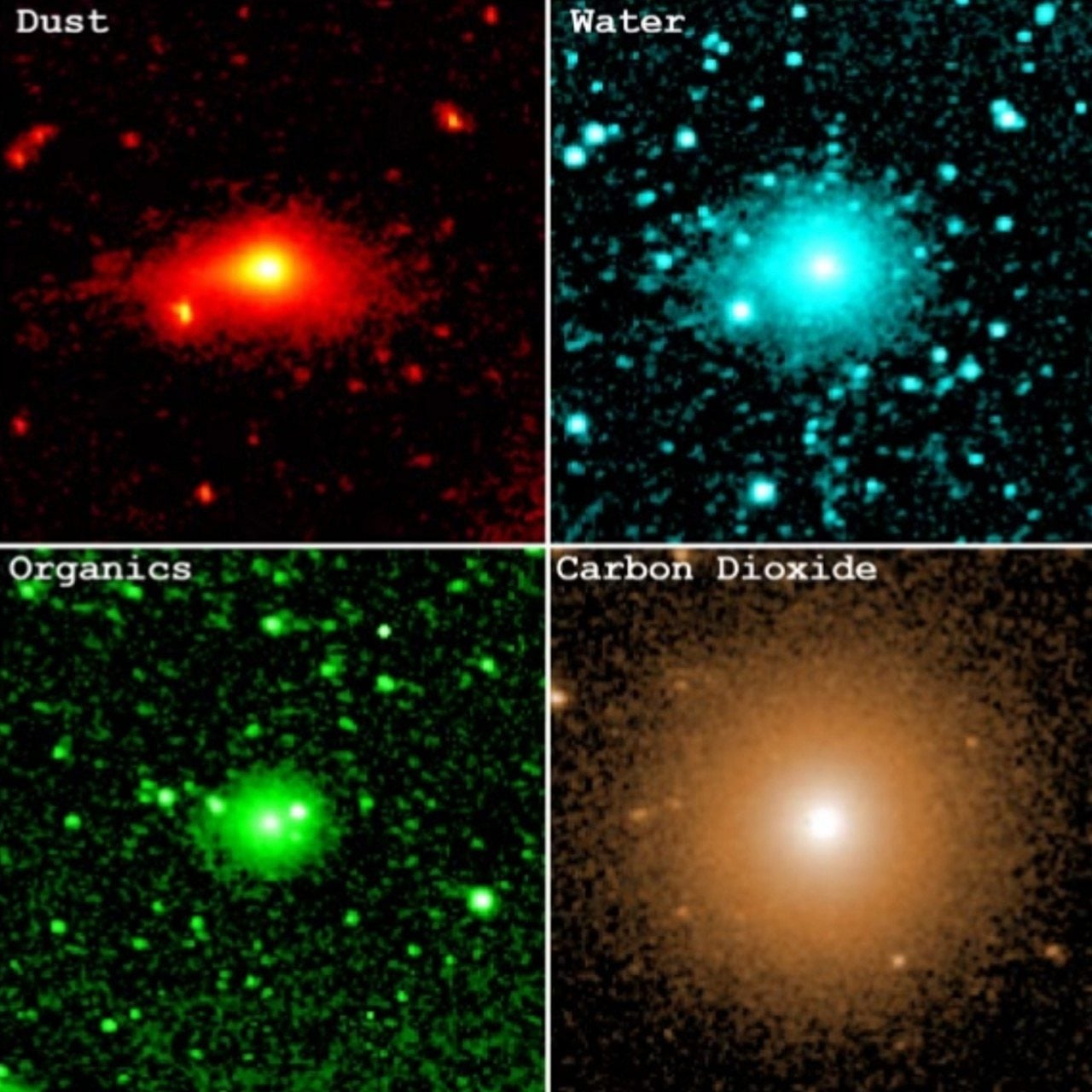
Deep space surveillance networks have tracked the interstellar comet 3I/ATLAS crossing the boundary of 1.77 billion kilometers from Earth as it travels at an estimated velocity of 209,000 kilometers per hour away from the planetary neighborhood. Ground and space-based astronomical evaluations show that the primordial body took shape in an extreme thermal regime of minus 240 degrees Celsius along the outer fringes of a stellar nursery possessing unusually low levels of metal elements.
Orbital telemetry confirms that the object follows a hyperbolic trajectory, demonstrating that it has never been gravitationally bound to the Sun and will depart the Solar System permanently. An international research collective spearheaded by Northumbria University analyzed the volatile components escaping from the comet tail by operating high-precision optical hardware based in the Canary Islands.

Advanced spectroscopy identifies five distinct ions within the comet tail
Astrophysicists associated with Northumbria University deployed the WEAVE spectrograph on the William Herschel Telescope at the Roque de los Muchachos Observatory on the island of La Palma to capture detailed structural data from the coma. This deployment marked the first simultaneous spectroscopic identification of five separate ionized chemical species inside the plasma tail of an extrasolar visitor, capturing distinct signals of molecular nitrogen, carbon monoxide, carbon dioxide, water, and methylidyne ions.
Calculations derived from the proportion of molecular nitrogen relative to carbon monoxide confirmed that the nucleus condensed under environmental temperatures below 30 Kelvin, which equates to minus 240 degrees Celsius. This thermal limit indicates that the original accretion of dust and volatile ice took place at a vast distance from the direct warmth and radiation of the parent star.
“This object gives us a rare chance to study material that formed somewhere completely different to our own Solar System. Finding that it is so rich in nitrogen tells us it likely formed in extremely cold conditions, far from its home star,” stated Léa Ferellec, a researcher at Northumbria University’s School of Engineering, Physics and Mathematics who served as lead author of the investigation.
Very Large Telescope measurements suggest origins around an ancient parent star
Supporting observations conducted with the Very Large Telescope, managed by the European Southern Observatory in the Atacama Desert in Chile, focused directly on isotopic variations present in the sublimating water ice. A research team directed by astronomer Cyrielle Opitom at the University of Edinburgh detected anomalous ratios between deuterium and protium, offering independent confirmation of an origin rooted in deep-freeze cosmic conditions.
The spectral assessment also established the precise proportion between carbon-12 and carbon-13 isotopes within the expelled gases. The measured values align with expectations for planet-forming disks situated around low-metallicity stars, where the abundance of elements heavier than hydrogen and helium is roughly half of that found in our Sun, suggesting the comet originated around a star significantly older than the solar core.
“Every one of these objects we study helps us understand a little more about how planets form around other stars,” Ferellec stated regarding the scientific value of analyzing pristine chemical samples from beyond our celestial neighborhood. These comparative findings provide astrophysicists with direct empirical material to calibrate models describing how volatile matter gathers across diverse galactic environments.
Learn more: Astronomers trace stellar origin of interstellar comet 3I/ATLAS
Orbital tracking and nucleus dimensions observed by space observatories
High-resolution imaging gathered by the Hubble Space Telescope allowed astronomers to calculate that the solid nucleus of 3I/ATLAS spans between 320 meters and 5.6 kilometers across. Determining a more exact diameter within that window remains difficult because the ongoing release of gas and dust produces an opaque envelope that shields the icy nucleus from direct surface measurement.
Coordinated surveillance involved major orbital observatories such as the James Webb Space Telescope along with several interplanetary spacecraft stationed across the inner Solar System. The observational campaign drew measurements from the Juice spacecraft during its transit toward Jupiter, the Mars Express orbiter, the ExoMars Trace Gas Orbiter, and surface exploration rovers operating on Mars that monitored the flyby geometry relative to the Martian orbit.
Historical astronomical records classify 3I/ATLAS as the third confirmed interstellar object documented passing through the Solar System. The initial discovery occurred in October 2017 with the detection of 1I/’Oumuamua, followed by the identification of comet 2I/Borisov by ground surveys in the second half of 2019.
Key milestones during the journey of 3I/ATLAS through our cosmic neighborhood
- July 1, 2025 — The ATLAS survey telescope situated in Río Hurtado, Chile, first identifies the incoming object and transmits tracking records to the Minor Planet Center of the International Astronomical Union.
- October 29, 2025 — The comet reaches perihelion at 11:45 Universal Time, achieving its closest point to the Sun at an orbital separation of 1.4 astronomical units.
- July 6, 2026 — Research papers published in Nature Astronomy and reports from the European Southern Observatory outline evidence pointing toward an ancient, low-metallicity parent system.
- September 8, 2026 — The Royal Astronomical Society issues findings in the Monthly Notices of the Royal Astronomical Society regarding the detection of five ionic species with the William Herschel Telescope.
- September 24, 2026 — Observatories present a combined analytical summary as the comet reaches 1.77 billion kilometers of separation from Earth.
Observational limits and the unresolved search for the parent planetary system
Despite comprehensive insights into the chemical and thermal conditions where 3I/ATLAS aggregated, current orbital back-tracing cannot pinpoint the specific stellar progenitor that ejected the body. The home star and its precise coordinates across the Milky Way remain entirely unidentified within modern astronomical catalogs.
Telescopic coverage will dwindle sharply as the comet continues along its outbound path. Racing toward the edge of the Solar System at 209,000 kilometers per hour, the object is experiencing a steady drop in apparent brightness that will soon place it beyond the reach of ground-based optical instruments.





