Orionid meteor shower peaks on October 21 alongside Mars and Jupiter alignments in eastern skies

Earth is traversing the orbital debris stream left by comet 1P/Halley, setting the stage for the Orionid meteor shower to reach peak activity in the predawn hours of October 21, 2026. Across October, this annual display shares the morning sky with close visual pairings of the Moon, Mars, and Jupiter along the eastern horizon, alongside four defined lunar transitions.
Every year between October 2 and November 7, Earth crosses the dense stream of cosmic dust and rock shed by Halley. Tiny particles enter the upper atmosphere at high velocities, where friction against gas molecules incinerates the material and produces radiant streaks visible from the surface.
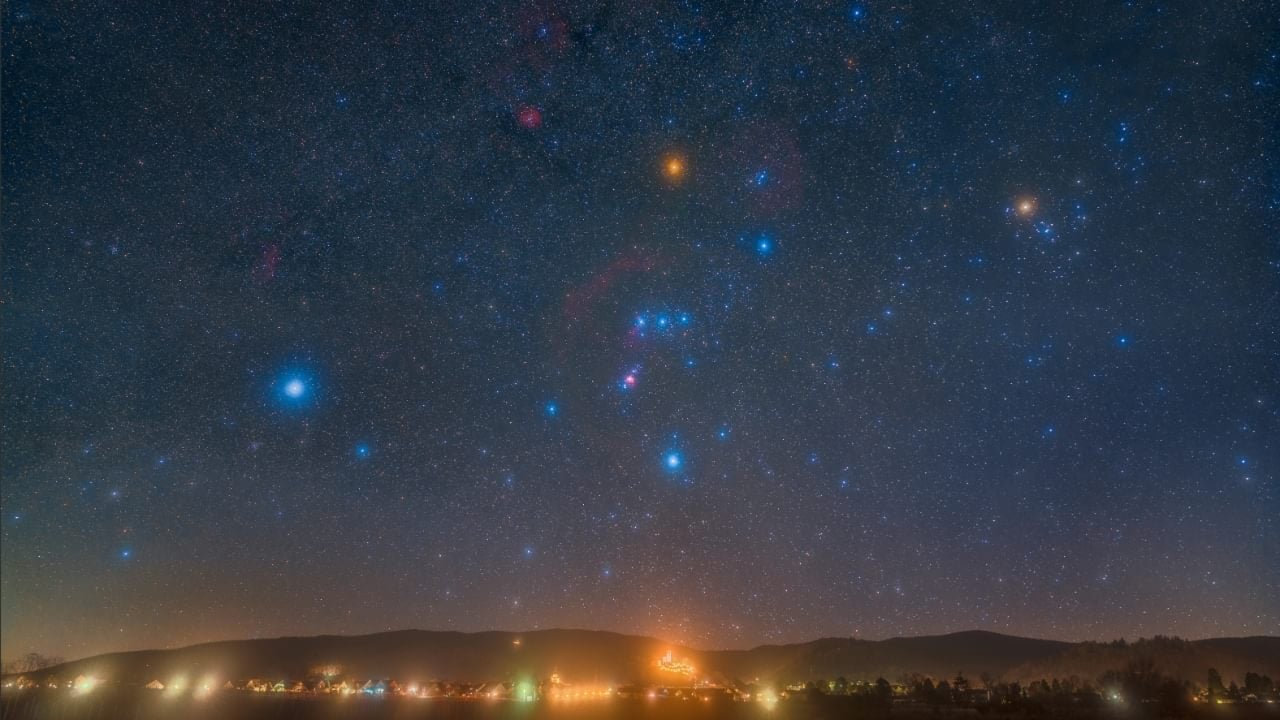
During maximum activity on October 21, natural illumination from a waxing gibbous Moon will influence viewing conditions. With lunar brightness reaching approximately 70 percent, weaker meteor trails will be washed out, decreasing the overall hourly rate visible to ground observers.
Viewing advice to minimize light interference before dawn
Observing the shower requires no specialized optical instruments like telescopes or binoculars, though selecting an appropriate viewing site before sunrise remains crucial. Traveling to rural or suburban districts away from urban light pollution allows human vision to properly adapt to darkness.
While the meteors appear to radiate from the constellation Orion, observers achieve better results by scanning broader swaths of the sky. Focusing on darker atmospheric pockets away from the 70 percent illuminated Moon increases chances of spotting brighter fireballs and lingering smoke trails.
Morning alignments bring Mars and Jupiter close to the Moon
Ahead of the meteor shower maximum, Earth’s satellite forms successive visual pairings with two prominent planets in the solar system. Before sunrise on Monday (5), the Moon appears directly beside Mars just above the low eastern horizon.
The following morning, on Tuesday (6), the Moon wanes toward a 20 percent crescent as it settles next to Jupiter. Jupiter shines brightly in the clear morning twilight, creating a distinctive optical pairing alongside the thin lunar crescent.
These close encounters represent optical projections caused by an identical line of sight from observers on Earth. In reality, hundreds of millions of kilometers separate the Moon, Mars, and Jupiter in interplanetary space, leaving their orbits and gravitational fields unaffected.
Astronomical calendar outlines October lunar transitions
The changing angle of sunlight across the lunar surface marks four primary phase transitions throughout October. Precise celestial geometry dictates the exact moments these phases occur:
- Third quarter: Saturday, October 3, 2026, at 10:25
- New moon: Saturday, October 10, 2026, at 12:50
- First quarter: Sunday, October 18, 2026, at 13:13
- Full moon: Monday, October 26, 2026, at 01:12
The full moon reaches its geometric peak on Monday, October 26, at 01:12. Skywatchers looking toward the eastern horizon at dusk on Sunday (25) will see the lunar disk appear virtually full and circular to the naked eye.
Orbital separation keeps late October full moon off supermoon list
Despite its luminosity, the full moon occurring in late October does not meet the scientific parameters required for a supermoon designation. Astronomical definitions specify that the exact moment of perigee must coincide closely with the full phase opposite the Sun.
The physical distance between Earth and the Moon changes continuously along an elliptical orbit. Astronomers rely on specific distance thresholds to classify whether a lunation achieves supermoon status:
- 356,000 to 363,000 kilometers: Perigee orbital distance required to qualify as a supermoon
- 369,000 kilometers: Projected separation between Earth and the Moon during the full phase on October 26, 2026
Because the Moon remains roughly 369,000 kilometers away on October 26, it lies well outside the necessary threshold for this classification. Lunar perigee for the month arrives two days later on Wednesday, October 28, deferring the next official supermoon on the astronomical calendar to Tuesday, November 24, 2026.