
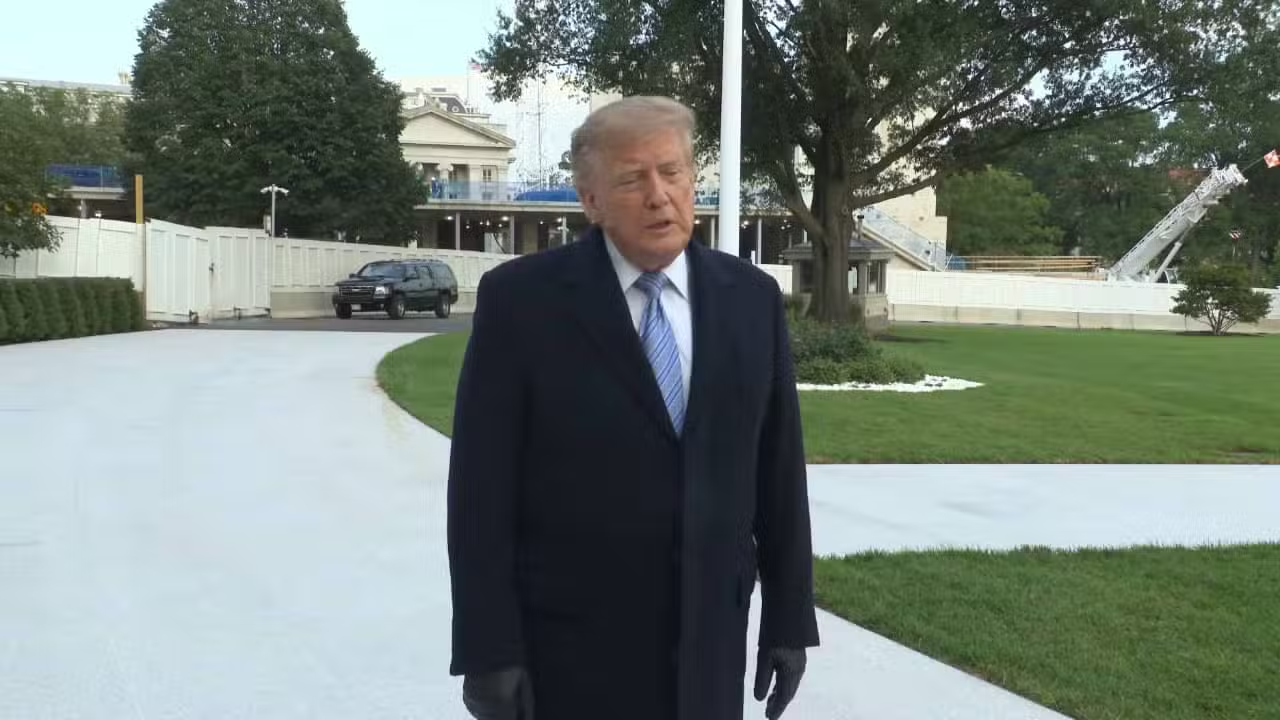
Donald Trump announced an immediate energy ceasefire between Russia and Ukraine without presenting technical frameworks or prior diplomatic protocols, prompting conditional backing from Kyiv while Moscow offered no official response. The unilateral declaration came on Sunday (11) through the Truth Social platform, but Russian forces continued targeting electrical generation sites across Ukrainian territory on the same day.
In his social media post, the president of the United States wrote: “Effective immediately, there is an ENERGY CEASEFIRE in the War between Russia and Ukraine. Both parties have agreed. Do not break it!” Despite the claim of mutual consent, the White House provided no operational specifics regarding monitoring mechanisms or formal diplomatic channels established with the belligerents.

Russian strikes hit Kharkiv CHP-5 plant hours after Donald Trump statement
Ukrainian authorities confirmed new Russian bombardments against power infrastructure shortly after the announcement in Washington. Russian drone strikes hit an electrical plant in Kyiv, causing localized power outages, while separate strikes hit the CHP-5 thermal power plant in Kharkiv. Moscow launched approximately 200 attacks against Ukrainian generation and transmission facilities over the past week alone, intensifying an aerial campaign aimed at crippling the power system ahead of winter.
Learn more: Controversial US deal to import Russian diesel ignites geopolitical debate and market questions
Regional officials in Ukraine confirmed that 6 people were killed in attacks across two cities on Sunday, October 11, 2026. The casualties included three civilians who died when munitions struck an open market in the outskirts of Kharkiv. Fatalities were also reported in Russian-controlled areas, where one person died in the Belgorod border region and another man was killed in a drone strike within the occupied Donetsk region.
Volodymyr Zelensky demands mutual guarantees and proposes 60-day vote truce
Ukrainian President Volodymyr Zelensky said the announcement was unexpected, telling news outlet Axios that the declaration “was news for me. But if Russians agree to an energy ceasefire, Ukraine will agree.” Zelensky later stated on social media that his government is awaiting concrete details from Washington regarding contacts with Moscow, affirming that Ukrainian forces are prepared to halt strikes on Russian energy targets if the Kremlin demonstrates verifiable compliance.
Tensions between Washington and Kyiv had escalated on Saturday (10), when Donald Trump suggested it was time for Ukraine to replace its leadership after Zelensky publicly condemned an American agreement to import Russian diesel fuel. Zelensky responded by reiterating his willingness to hold presidential elections, which remain suspended under the Ukrainian constitution during wartime, if Russian President Vladimir Putin agrees to a comprehensive 60-day total ceasefire across all battlefronts.
International reactions to the truce declaration remained divided. British Prime Minister Andy Burnham endorsed the initiative, stating: “The UK strongly supports President Trump’s call today for a sustained energy ceasefire to start now.” Officials in France, Canada and the European Commission, led by President Ursula von der Leyen, also signaled initial support for halting strikes on vital infrastructure. However, British Defence Secretary Wes Streeting expressed opposition to the broader arrangements involving Russian petroleum trade.
Bipartisan group of 7 senators challenges Russian diesel import agreement
Domestic opposition to Donald Trump’s energy maneuvers gathered strength in the United States Congress. A bipartisan coalition of 7 senators issued a formal challenge demanding the immediate revocation of the administration’s decision, announced on Friday (9), to temporarily waive sanctions and import Russian refined diesel. The congressional group includes three Democrats and four Republicans, led by Democratic Senator Jeanne Shaheen alongside Republican Senators Thom Tillis of North Carolina, Susan Collins of Maine, and Lisa Murkowski of Alaska.
The legislative group condemned the executive move as a breach of federal statutes enacted four years ago. In a joint declaration, the lawmakers stated: “Congress was clear: the US should not import oil from Russia until it ends its aggression against Ukraine and ceases threats against our Nato Allies.” Tillis added that easing restrictions to purchase Russian fuel directly jeopardizes American national security and contradicts congressional mandates.
Global fuel pressure and the November midterm elections
The push by the White House to halt mutual infrastructure attacks coincides with rising domestic economic pressures ahead of the United States midterm elections scheduled for Tuesday, November 3, 2026. Worldwide fuel prices surged following military conflict between the United States and Iran that began in February 2026, which triggered shipping disruptions throughout the Strait of Hormuz. High retail diesel prices across the American market fueled persistent inflation, weakening public approval ratings for the administration.
Donald Trump previously floated an unconfirmed energy truce on September 14, 2026, though combatants continued mutual bombardments uninterrupted. Ukrainian units have persistently targeted oil refineries inside Russian borders to curb Kremlin war revenues, while Russian forces have methodically hit the Ukrainian thermal grid. To offset market supply shortages, the United States Department of the Treasury issued an administrative license permitting transactions for Russian diesel, currently set to remain active until Wednesday, April 7, 2027.