Seven out of 16 planetary vital signs tracked by an international coalition of researchers reached record-breaking extremes in 2026, while multiple other environmental indicators continue to accelerate in the wrong direction. Led by scientists at Oregon State University (OSU) in Corvallis, United States, the research team published its seventh annual assessment on Wednesday (14) in the peer-reviewed journal BioScience. The study concludes that Earth’s life-support systems are moving deeper into uncharted territory as human activity pushes the planet toward irreversible tipping points.
Titled “The 2026 state of the climate report: challenges and opportunities” and registered under the digital object identifier DOI 10.1093/biosci/biag125, the assessment brings together more than 60 international contributors. The paper accompanies the broader World Scientists’ Warning of a Climate Emergency initiative, a global declaration that has gathered approximately 15,892 scientific signatories across 167 countries. Rather than projecting distant scenarios, the authors state that the planetary crisis is already unfolding faster than human societies are managing to respond.
“Rapid destabilization is now a diagnosis rather than a warning for the future,” said William J. Ripple, distinguished professor emeritus in the OSU College of Forestry and co-lead author of the report. Ripple noted that while clean energy deployment is growing, stabilizing the planetary system requires steep cuts in greenhouse gas emissions alongside immediate ecosystem protection.
Atmospheric carbon dioxide surpasses 428 ppm and ocean heat sets records
Concentrations of the three primary greenhouse gases in the atmosphere—carbon dioxide, methane, and nitrous oxide—climbed to unprecedented highs in 2026 due to continuous human pressure on the atmosphere, oceans, and biosphere. During May 2026, atmospheric carbon dioxide surpassed 428 parts per million (ppm), marking the highest concentration on Earth in at least 2 million years. That volume sits roughly 50% above pre-industrial levels measured at the end of the 18th century before widespread industrialization began.
This accumulation of heat-trapping gases has pushed the global warming rate to approximately 0.36 degrees Celsius per decade since 2010. The thermal buildup produced immediate temperature anomalies during the middle of the year. July 2026 ranked as the hottest month ever recorded across the contiguous United States since record-keeping began in 1895, coinciding with an all-time July high for global sea surface temperatures.
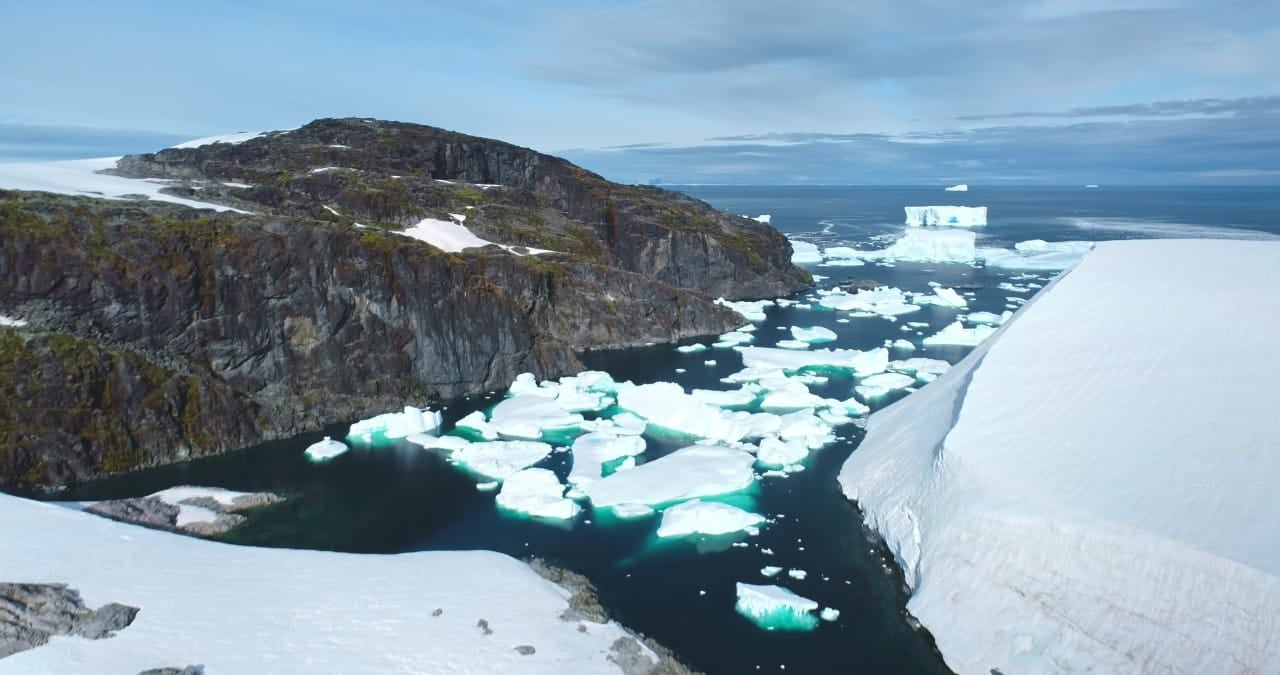
Beyond surface warmth, total ocean heat content and global mean sea level both reached historical peaks in the 2026 tracking data. Over recent decades, 56% of global sea level rise has been driven by thermal expansion, the physical process in which water increases in volume as it absorbs heat. Across the same timeframe, mountain glacier thickness and the Greenland ice sheet mass dropped to historical lows, with extreme summer meltwater runoff across Greenland multiplying sixfold over recent decades.
Low-carbon electricity reaches 43% globally while fossil fuel emissions top 41 gigatons
Data compiled in the BioScience assessment highlights a structural shift in the global power sector, driven by battery storage improvements and expanding wind and solar capacity. Worldwide renewable power generation officially surpassed coal-fired electricity during 2025, and low-carbon sources now supply roughly 43% of total global electricity. However, rising global energy demand outpaced clean power additions, causing overall consumption of fossil fuels—oil, coal, and natural gas—to grow by 0.9% in 2025. That expansion pushed fossil fuel use to an all-time high and drove annual energy-related carbon dioxide emissions past 41 gigatons (equivalent to 45 billion short tons) for the first time.
Follow: NASA and NSIDC tie 2026 Arctic sea ice minimum for 10th lowest
“With low-carbon sources now providing about 43% of global electricity, we may be witnessing the emergence of what we call the ‘Age of Electricity,'” said Christopher Wolf, a scientist at Terrestrial Ecosystems Research Associates, former OSU postdoctoral researcher, and co-lead author of the study.
According to the research team, clean generation gains are not yet displacing hydrocarbon combustion fast enough to bend the emissions curve downward. Wolf stated that “that is a reason for hope, but fossil fuel use and emissions are still at record levels, so the transition needs to accelerate dramatically”.
Extreme weather kills 14,000 in Europe and burns 10.8 million hectares of forest
Co-authors of the study—including Johan Rockström, director of the Potsdam Institute for Climate Impact Research in Germany, where independent commentator and climate scientist Nico Wunderling also conducts research—report that severe heatwaves, floods, droughts, storms, and wildfires have become defining features of the modern climate rather than isolated anomalies. In the previous edition of the study, the sixth annual report published in October 2025, the coalition monitored a broader set of 34 planetary vital signs and found 22 at record extremes.
For the 2026 assessment, the researchers documented the loss of 10.8 million hectares (approximately 27 million acres) of global tree cover to wildfires during 2025. That burned expanse is roughly equivalent to the land area of the U.S. state of Tennessee and represents the third-largest annual tree cover loss on record. The authors also cataloged deadly meteorological disasters across the 12 months preceding the October 14, 2026 publication, emphasizing that communities in the Global South and small island states suffer the earliest and most severe damage despite contributing the least to historical emissions.
Read also: El Niño reaches historic strength weeks before peak, fueling global extreme weather events
- October 2025: Hurricane Melissa tied the Atlantic record for maximum sustained wind speed and killed 95 people, with fatalities concentrated in Jamaica and Haiti.
- Full year 2025: Wildfires destroyed 10.8 million hectares (27 million acres) of global tree cover, the third-highest annual loss recorded.
- May 2026: Atmospheric carbon dioxide concentrations exceeded 428 ppm, around 50% higher than late-18th-century pre-industrial levels.
- June 2026: An early-summer European heatwave caused approximately 14,000 deaths, according to preliminary mortality estimates.
- July 2026: The contiguous United States recorded its hottest month since 1895, alongside record-high July global ocean temperatures.
Natural feedbacks and El Niño could push warming past 2 degrees Celsius before 2050
Forecasts pointing to the development of a strong El Niño oceanic warming event during the second half of the year put 2026 on track to rank among the hottest years in instrumental history. The coalition warns that if global greenhouse gas emissions continue at their current pace, planetary warming could cross the threshold of 2 degrees Celsius above pre-industrial levels prior to 2050.
“I think there’s a real possibility that someone who is 30 years old today will see major changes associated with climate tipping points during their lifetime,” William J. Ripple said regarding the near-term trajectory of planetary warming.
Over a longer horizon through the year 2100, studies cited in the report estimate that natural greenhouse gas sources triggered by warming itself—such as forest fires, wetland emissions, and the thawing of permafrost, the permanently frozen ground across Arctic regions—could amplify human-caused post-2020 warming by roughly 20% to 30%. Because climate disruption interacts directly with biodiversity loss, freshwater scarcity, food insecurity, pathogen spread, and geopolitical instability, the authors urge world leaders to abandon business-as-usual policies. Alongside rapid emissions reductions, the report outlines fast-track adaptation measures that deliver immediate societal benefits, including urban cooling initiatives, mangrove and wetland restoration to buffer storm surges, distributed solar power to prevent grid failures, wildfire preparedness, water conservation, and shifts toward plant-based diets.
Key institutional and scientific details of the 2026 BioScience climate assessment
The seventh annual planetary assessment brings together climate physicists, ecologists, and earth system scientists from institutions across North America, Europe, and Asia. Below are the primary institutional credentials and reference identifiers for the document:
- Lead institution: Oregon State University (OSU), located in Corvallis, Oregon, United States.
- Co-lead authors: William J. Ripple (distinguished professor emeritus at the OSU College of Forestry) and Christopher Wolf (scientist at Terrestrial Ecosystems Research Associates).
- Participating researchers and institutions: More than 60 international co-authors, including Johan Rockström (director of the Potsdam Institute for Climate Impact Research in Germany), Michael E. Mann (University of Pennsylvania), Unai Pascual, Jillian W. Gregg, Chi Xu, Sarah E. Perkins-Kirkpatrick, Thomas M. Newsome, Jacob Bukoski, and Anjal Prakash.
- Journal and scientific registration: Published open-access on October 14, 2026, in BioScience under DOI 10.1093/biosci/biag125.