
Comet 3I/ATLAS speeds at 66 km/s through solar system as NASA confirms safe orbital distance

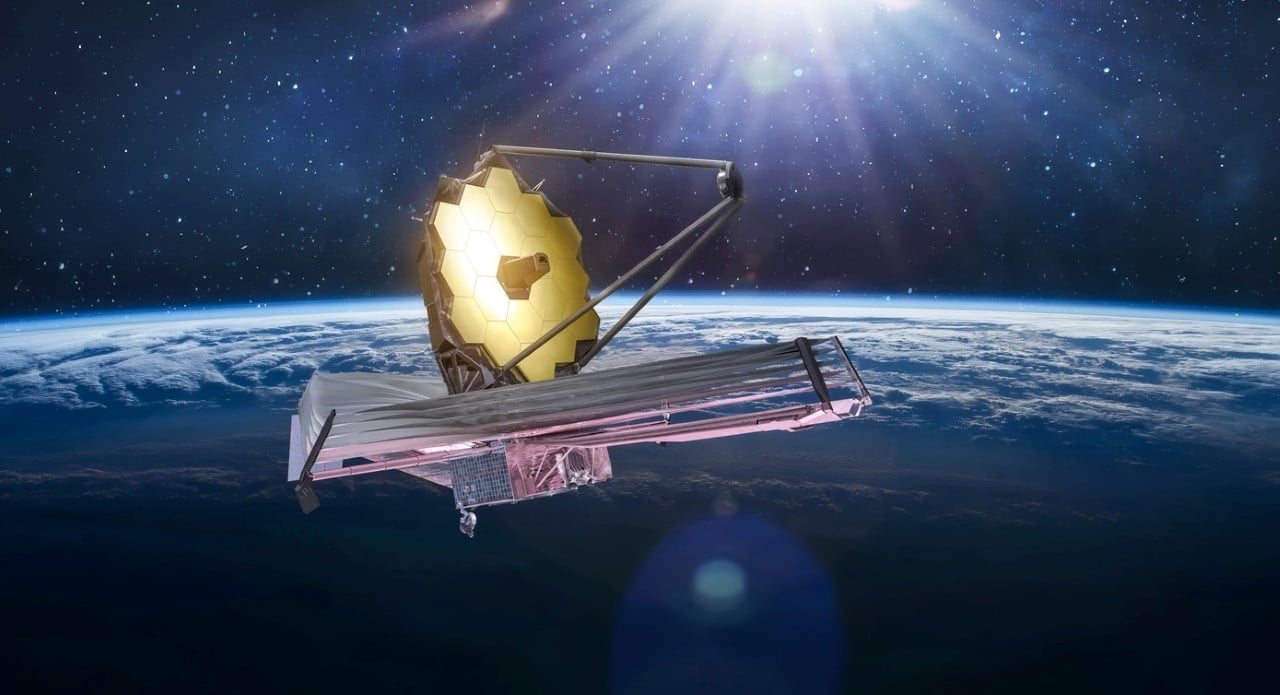
Ground observation stations in Hawaii supplied NASA with updated orbital metrics tracking the interstellar comet 3I/ATLAS as it travels through interplanetary space. High-precision instruments logged the celestial body moving at a sustained velocity of 66 kilometers per second relative to the Sun. Technical teams on the ground mapped the object’s precise path to evaluate its physical characteristics and gravitational response.
The interstellar visitor continues along its hyperbolic path across the planetary system. Telescopes continue monitoring its transit across the interplanetary medium as the object maintains an outbound trajectory toward deep space.
Spectral measurements gathered across Hawaiian observation platforms allowed space agency researchers to identify substantial amounts of carbon monoxide, water ice, and hydrogen cyanide throughout the surrounding gaseous envelope, demonstrating a structural profile distinctly different from native Solar System bodies. The automated sky survey Asteroid Terrestrial-impact Last Alert System initially located the object operating near the orbit of Jupiter. Navigational specialists at the Jet Propulsion Laboratory in Pasadena subsequently calculated an orbital eccentricity of 1.45, confirming that the body originated outside the gravitational control of the local planetary system.
An eccentricity value higher than 1 establishes that solar gravitational pull cannot bind the object to an elliptical loop. This orbital configuration ensures that the traveling matter will permanently exit into interstellar space once perihelion concludes.
Calculated physical dimensions and trajectory safe from planetary impact
Measurements gathered through the James Webb Space Telescope place the diameter of the solid nucleus between 800 meters and 1.2 kilometers. Outgassing driven by solar heat strips away material through continuous sublimation at a rate of 45 kilograms per second along its inbound approach. Sensors at the W. M. Keck Observatory on Maunakea documented an apparent visual magnitude of 16 alongside a surface temperature of 140 Kelvin across the Sun-facing hemisphere.
Check out: Comet 3I/ATLAS images reveal chemical makeup found by NASA
The center specializing in near-Earth object trajectories in Maryland determined that the closest passage to Earth will remain at an offset of 240 million kilometers, corresponding to 1.6 astronomical units. The comet’s closest approach to the Sun will occur at 180 million kilometers, maintaining a buffer zone that eliminates any risk of collision with Earth.
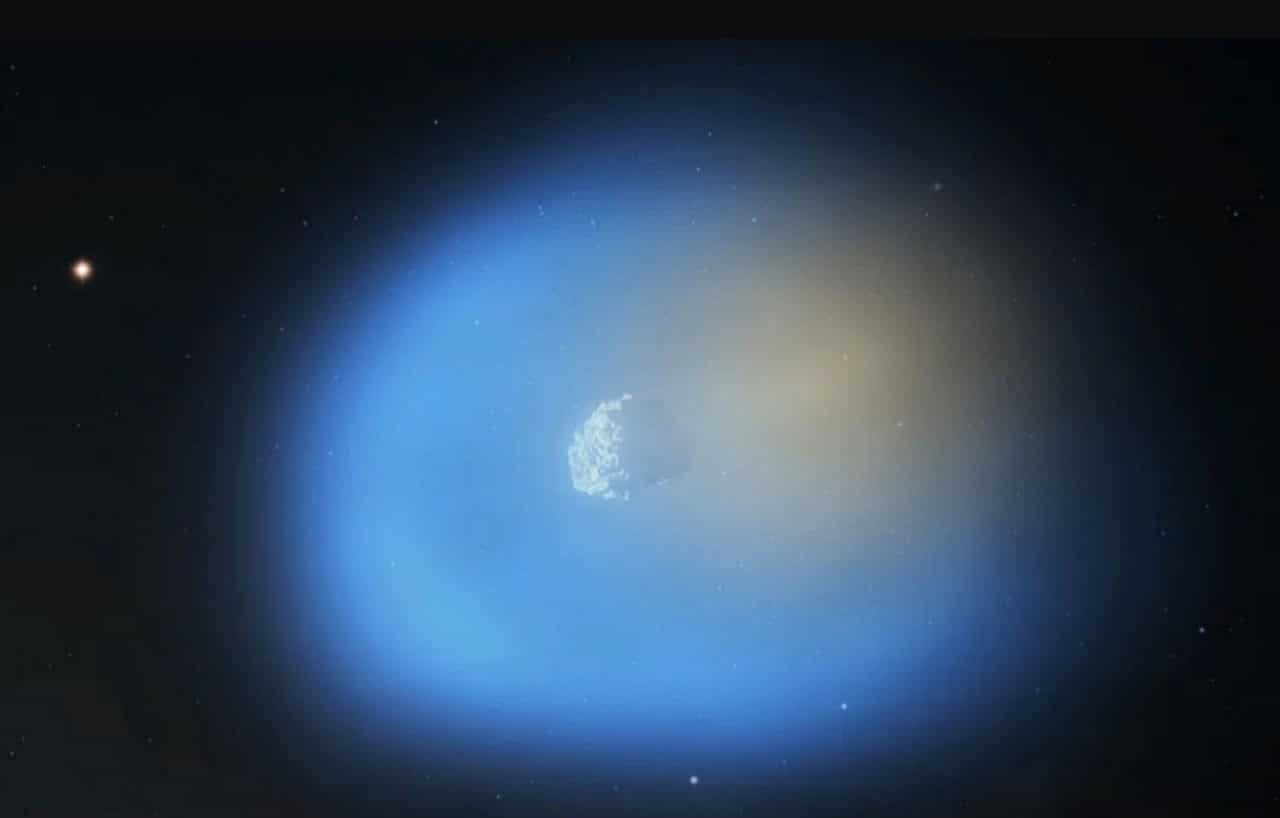
Chemical composition and spectroscopic readings across the tail
Gaseous emissions released by the object contain three times the concentration of carbon monoxide typically registered in comets arriving from the Oort Cloud. Observers working at the La Silla Observatory in Chile detected microscopic silicate dust particles suspended within the streaming tail. Instrument readings isolated several primary constituents across the drifting plume:
- Water ice preserved across the exposed surface layer
- Carbon monoxide producing uninterrupted spectroscopic signals
- Hydrogen cyanide concentrated within the inner coma
- Simple organic molecular chains containing carbon
- Iron- and magnesium-rich mineral dust ejected along perimeter zones
The ALMA radio telescope array in the Atacama Desert determined that the comet nucleus completes one full rotation every 14 Earth hours. Antenna networks detected surface fracturing along the eastern edge of the crust, exposing pristine subsurface material that had remained shielded since the body was ejected from its home planetary system. Spectral analysis revealed reduced amounts of free nitrogen gas within the coma, expanding an interstellar catalog previously defined by 1I/’Oumuamua in 2017 and 2I/Borisov in 2019.
Follow: Comet 3I/ATLAS reveals precursors of life across the Milky Way
Global observatory network operations and planetary defense tracking budget
Specialists at the European Southern Observatory aligned detection arrays to chart the extended stream of ionized gas while the Hubble Space Telescope isolated sunlight reflected directly off the solid core. Flight controllers based in Baltimore scheduled four ultraviolet observation cycles to document core emissions as the celestial object advances rapidly toward the constellation Pegasus before crossing beyond the ecliptic plane.
NASA plans to halt primary optical tracking operations in November 2026 when the object shifts behind the direct glare of the Sun. Financial monitoring for the mission registered 3.8 million dollars allocated through the planetary science operating budget, with all telemetry files cataloged directly into the Planetary Data System in Washington.





