Pancreatic cancer is found late in 70% to 80% of cases, INCA saysBy Luís Henrique Costa
7 min read
 |
About 10,980 Brazilians a year are affected by pancreatic cancer, according to the National Cancer Institute (INCA). The disease is usually found in advanced stages, as happened with chef Edu Guedes, who discovered the tumor after a kidney crisis. Its silent behavior and fast spread make early detection difficult and reduce the chance of cure. Between 70% and 80% of cases are identified after the tumor has already spread, which makes treatment harder.
The aggressiveness of the disease comes from the combination of its biology and the lack of noticeable signs in the early stages. Many patients find out they have it by chance, during tests for other health problems. The pancreas sits deep in the abdomen, which also makes routine preventive exams harder. The main challenges are:
- Late diagnosis in 70% to 80% of cases.
- Fast spread to organs such as the liver and the lymph nodes.
- No effective screening tests.
- High mortality: only 10% of patients survive five years after diagnosis.
The disease affects mainly people over 60. Adenocarcinoma is the most common type, accounting for 90% of cases. This tumor starts in the exocrine glandular cells and is hard to treat because it can invade blood vessels and nearby tissues.
Why the tumor spreads so fast through the body
Pancreatic cancer cells multiply quickly and form tumors that reach other organs, such as the liver, in up to 50% of cases at the time of diagnosis. The absence of specific symptoms is a crucial obstacle. When signs such as jaundice, abdominal pain or weight loss appear, the tumor has usually already compromised vital structures. Oncologist Mariana Bruna Siqueira, of Oncologia D’Or, said that even small tumors can invade blood vessels, which complicates surgery. The fibrous texture of the tumor also reduces the effect of chemotherapy, which struggles to penetrate the tissue.
Another factor is the lack of widely available screening methods, like mammography for breast cancer. Computed tomography (CT) and magnetic resonance imaging (MRI) are used only when there is clinical suspicion, which contributes to late diagnosis. In the United States, pancreatic cancer is estimated to become the second leading cause of cancer death in the coming decades, with 64,050 new cases a year.
Habits and conditions that raise the risk
Several factors increase the chance of developing pancreatic cancer, many of them linked to lifestyle. Smoking, the main preventable factor, triples the risk in regular smokers. Obesity, a growing problem in Brazil, also raises the chances, especially when associated with type 2 diabetes. According to studies, up to 88% of patients with pancreatic cancer receive a diabetes diagnosis in the 24 months before the tumor is found. The main risk factors are:
- Smoking: smokers have three times the risk.
- Obesity: raises the probability by up to 20%.
- Type 2 diabetes: may be an early sign of the disease.
- Chronic pancreatitis: prolonged inflammation increases the risk.
- Family history: 10% to 15% of cases have a genetic origin.
Mutations in genes such as BRCA1 and BRCA2 are present in up to 15% of cases. Long-term exposure to chemicals, such as solvents and pesticides, is also a risk factor, especially for workers in industries such as oil.
Signs that should not be ignored
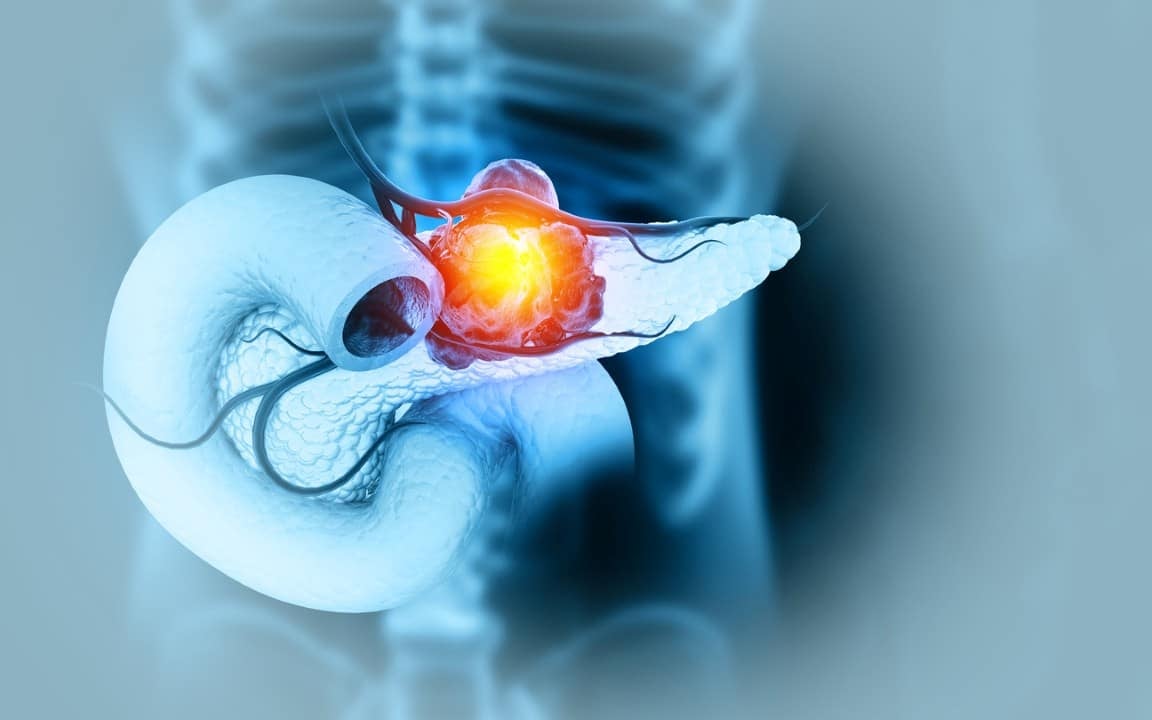
Pancreatic cancer symptoms are nonspecific, which makes early identification harder. Jaundice, marked by yellowed skin and eyes, is one of the most common signs, especially in tumors of the head of the pancreas, which block the bile duct. Abdominal or back pain, unexplained weight loss and loss of appetite are also frequent.
Follow: Reação pós-massagem: entenda por que alguns sentem sintomas de gripe após tratamentos de bem-estar
Patients may notice dark urine, pale or oily stools and itching caused by the buildup of bilirubin. In rare cases, the tumor destroys insulin-producing cells and causes diabetes to appear suddenly. These signs are common to other conditions, but they should be investigated, especially in people with risk factors.
How doctors confirm the disease
Detection requires several tests, starting with imaging such as CT or MRI, which identify masses in the pancreas with up to 90% accuracy. A blood test for the tumor marker CA19-9 is often performed, although it is not conclusive, since 10% to 15% of patients with the disease do not show high levels. The biopsy, taken through endoscopic ultrasound, is the definitive method to confirm the diagnosis and determine the type of tumor.
The tumor’s location influences symptoms and diagnosis. Tumors in the head of the pancreas, which account for 80% of cases, cause early jaundice. Tumors in the body or tail usually show symptoms only in advanced stages, when the disease has already spread. This diagnostic delay is one of the biggest challenges doctors face.
Surgery is the only option with cure potential
Treatment depends on the stage of the disease and the patient’s health. Surgery, such as the Whipple procedure for tumors in the head of the pancreas, is the only option with potential for cure, but only 20% of patients are eligible because of the spread of the tumor. Minimally invasive techniques, such as robotic surgery, have reduced complications but remain complex procedures.
When surgery is not an option, chemotherapy, often combined with radiotherapy, is used to control symptoms and extend survival. In recent years, neoadjuvant chemotherapy, given before surgery, has shown benefits in borderline cases by increasing the chances of removing the tumor. For patients in advanced stages, palliative care, such as nerve blocks to relieve pain, is essential to improve quality of life.
Targeted therapies and immunotherapy under study
Research on pancreatic cancer has advanced, with a focus on targeted therapies and immunotherapy. These approaches aim to attack specific genetic mutations in the tumor or stimulate the immune system to fight cancer cells. Clinical trials in the United States and Europe are testing new drugs that may improve the effect of chemotherapy on fibrous tumors.
Genetic mapping has also become routine to identify patients with hereditary predisposition, which allows earlier interventions. Despite these advances, the five-year survival rate remains low, at around 10%, which highlights the need for more investment in prevention and early diagnosis.
Read also: Balneário Rincão Airbnb host recovers R$ 17,000 in stolen furniture after guest sells items to store
Habits that can lower the risk
Although the exact cause of pancreatic cancer is unknown, healthy habits can reduce the risk. Avoiding tobacco is the most effective measure, followed by a balanced diet rich in fruits, vegetables and whole grains. Weight control and regular physical activity are also recommended, especially for people with diabetes or chronic pancreatitis. The preventive measures are:
- Quitting smoking: reduces the risk by up to 50% after 10 years without tobacco.
- Keeping a healthy weight: lowers the chance of diabetes and cancer.
- Limiting alcohol: helps prevent pancreatitis, a risk factor.
- Regular check-ups: essential for people with a family history.
People with genetic syndromes, such as Peutz-Jeghers syndrome, should have regular medical follow-up, including imaging exams starting at age 40. Knowing the symptoms is also crucial so people seek medical help quickly.
Edu Guedes and Tony Bellotto bring the disease into focus
The diagnoses of public figures, such as chef Edu Guedes and musician Tony Bellotto, put pancreatic cancer at the center of discussions. Guedes, who is 51, found the tumor after a kidney infection, while Bellotto identified the disease in routine exams. These cases reinforce the importance of regular check-ups, especially for people over 50 or with risk factors. Guedes’s surgery, performed at the Hospital Israelita Albert Einstein, was successful, but he still faces a long recovery.
The attention these cases received highlights the need for awareness campaigns. In Brazil, pancreatic cancer is still discussed less than other tumors, such as breast or prostate cancer, which adds to the lack of knowledge about its risks and symptoms.
Why awareness campaigns matter in Brazil
Lack of information about pancreatic cancer is an obstacle to prevention and early diagnosis. Initiatives such as World Cancer Day, on February 4, aim to teach people about warning signs and the value of healthy habits. In Brazil, organizations such as the Instituto Vencer o Câncer run campaigns to clear up myths and encourage people with persistent symptoms to seek medical help.
Awareness also means changing how people view the prognosis. Although the disease has high mortality, advances in treatment and incidental diagnoses, as in Guedes’s case, show that outcomes can improve with early intervention. Doctors recommend that patients with symptoms such as persistent abdominal pain or unexplained weight loss see a specialist in gastrointestinal tumors.