Nintendo sets Ocarina of Time Switch 2 remake for Nov. 5 from $59.99 By Luís Henrique Costa
3 min read
 |
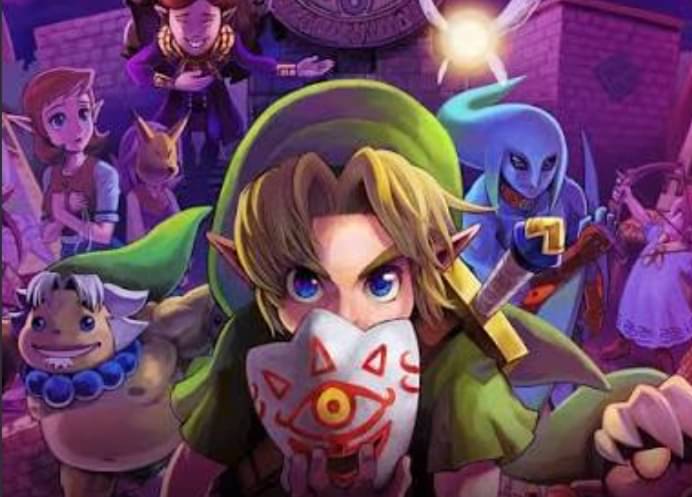
Nintendo’s Ocarina of Time remake arrives exclusively on the Nintendo Switch 2 on Thursday, November 5, 2026. The project rebuilds the 1998 Nintendo 64 classic from the ground up and marks the 40th anniversary of The Legend of Zelda franchise.
Details about the development came out in the first part of volume 24 of Nintendo’s Ask the Developer interview series, published on November 2, 2026. The remake adds dashing, jumping, gyro aiming, fully voiced cutscenes and the option to play songs by humming or playing an instrument into the Switch 2 microphone.
Producers Eiji Aonuma and Hidemaro Fujibayashi explained why the company chose to revisit the title. According to the executives, rebuilding the adventure from scratch let Nintendo train programmers who had worked only on recent open-world games. The aim is to join the structured pacing of the original story with the processing power of current hardware.
Milestones in the series, from 1998 to the Switch 2 remake
- 1998: Ocarina of Time launches on Nintendo 64, introducing Z-targeting, a lock-on aiming system.
- 2001: Oracle of Seasons and Oracle of Ages debut on the Game Boy Color handheld.
- 2011: Skyward Sword arrives on Wii, and Ocarina of Time 3D launches as a remake.
- 2017: Breath of the Wild launches at the same time for Nintendo Switch and Wii U.
- 2023: Tears of the Kingdom debuts on the Nintendo Switch console.
- 2026: The full remake of Ocarina of Time launches exclusively for Nintendo Switch 2.
Hardware limits that shaped the 1998 targeting system
Developers of the original game faced severe hardware limits right after finishing Super Mario 64. Shigeru Miyamoto and Yoshiaki Koizumi led a team that had to solve spatial orientation in sword fights using only the analog stick of the Nintendo 64 controller. The answer was Z-targeting, which centered the camera behind Link and locked the aim on enemies, becoming the standard for later three-dimensional games.
See also: Nintendo Switch 2 gets Ocarina of Time physical pre-order gifts
Roles were not rigidly divided at the time. Aonuma took on dungeon and boss design while production was already halfway through its schedule. The producer said the song for the final fight against Ganon was commissioned from composer Koji Kondo on the eve of the delivery deadline, after a livelier first version was discarded in favor of the definitive dark tone.
Rolls and fast-travel points cut during Switch 2 testing
During testing of the Switch 2 version, producers considered speeding up the hero’s movement across Hyrule Field. In the 1998 game, players often performed consecutive rolls to cover long distances faster. Aonuma asked for extra fast-travel points inspired by Breath of the Wild, but those features were removed shortly afterward. Instant shortcuts broke the sense of discovery and the exploration pace designed for the story.
The direction took a supportive stance without strict impositions on younger developers. Fujibayashi and Aonuma let the team make the aesthetic and functional decisions, focusing on teaching the logic of traditional puzzle design. The goal is to balance the focused pace of the classic with the wider freedom players found in recent episodes.
Check out: Nintendo overhauls Ocarina of Time Remake with voice acting on Switch 2
Platform, dates and price of the Switch 2 release
- Exclusive platform: Nintendo Switch 2
- Release date: November 5, 2026
- Executive producers: Eiji Aonuma and Hidemaro Fujibayashi
- Price in the US: $59.99 digital and $69.99 physical, per Nintendo’s US store
- Themed Switch 2 console and accessories: October 29, 2026
- Genre: action and adventure in a three-dimensional world
Nintendo plans to publish the next parts of the interview during the game’s launch period. The upcoming chapters will cover the graphic adaptation, modern interface adjustments and the reshaping of Hyrule’s ecosystems. Buyers of the digital version who order before November 23, 2026, at 11:59 p.m. Pacific time receive a 40th anniversary digital wallpaper, and two amiibo figures are planned for 2027.