First known green star found: WD J1330+6435 white dwarf in Warwick study By Luís Henrique Costa
3 min read
 |
A white dwarf catalogued as WD J1330+6435 would look green to human eyes, according to astronomers at the University of Warwick in England. The team describes it as the first known genuinely green star in the galaxy. The findings were published in the journal RAS Techniques and Instruments in October 2026.
The star is a remnant of a Sun-like star that has run out of fuel. Over time it pulled rocky debris from its old planetary system into its atmosphere, enriching it with calcium, lithium and sodium. The team says no other star, living or dead, has ever been credibly reported as green.
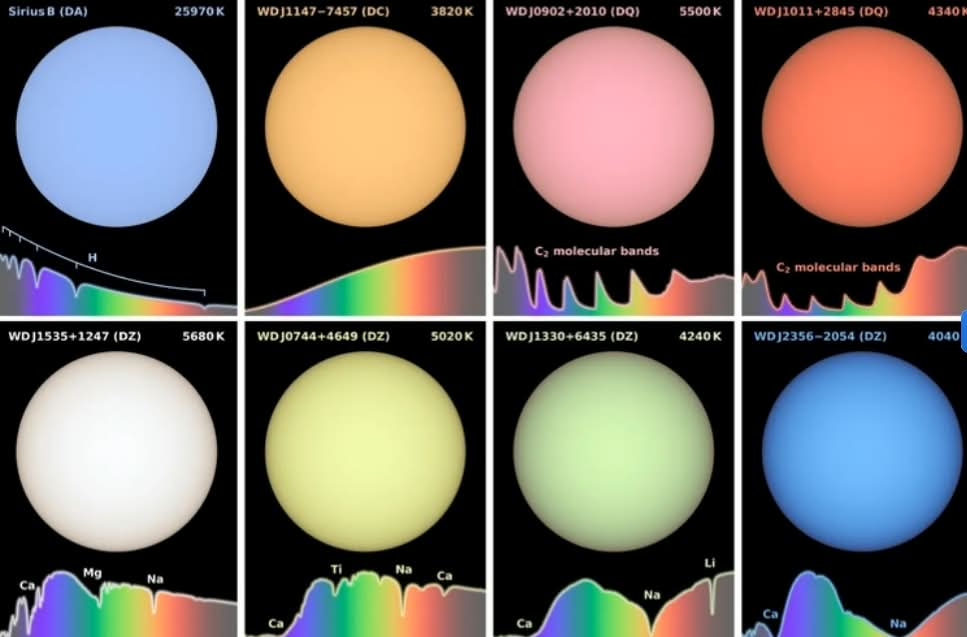
How sodium gives a dying star its green glow
The colour comes from the density of the star’s atmosphere, which is dominated by helium. Under those extreme conditions, trace elements such as calcium and sodium interact with the surrounding helium plasma and absorb light across a wide range of colours. Hollands said the sodium absorbs the orange part of the spectrum, leaving behind what he called a ghostly green glow.
The researchers say the colour is a model result, not a direct sighting. No white dwarf is close enough for people to judge its colour by eye, so the team calculated its true colour from measured starlight and models of human vision. The result, in the team’s models, is a chartreuse green appearance.
Why most white dwarfs look white or blue
Most white dwarfs do not look green. Cooler white dwarfs with atmospheres of mixed hydrogen and helium usually show a cyan or pale blue tinge. Warwick researchers found that the median colour of a representative population of white dwarfs is white.
The study also challenges the common idea that white dwarfs are usually blue. The authors say planetary debris can shift the colour of these stars, so a few of them may look yellow, pink, purple or green if seen up close.
Key data on WD J1330+6435
- Surface temperature: about 4,000 °C, or about 7,232 °F
- Distance from Earth: reports range from about 284 light-years to about 326 light-years
- Atmospheric contamination: calcium, lithium and sodium from rocky planetary debris
- Colour cause: sodium absorbs orange light, leaving green
- Published in: RAS Techniques and Instruments
Pink and red stars found in the same study
The same team also reported WD J0902+2010, a cool white dwarf whose convection zone has reached the core. That process lifts carbon to the surface and forms carbon molecules, which give the star a deep salmon-pink glow in the models.
The researchers also identified WD J1011+2845, a white dwarf 48 light-years from Earth that may be the reddest star ever recorded. Warwick describes these results as evidence that white dwarfs can show a wide range of colours, including green, pink, cyan, yellow and purple.