Refit owner Ricardo Magro becomes target of Operation Charon in Rio de Janeiro

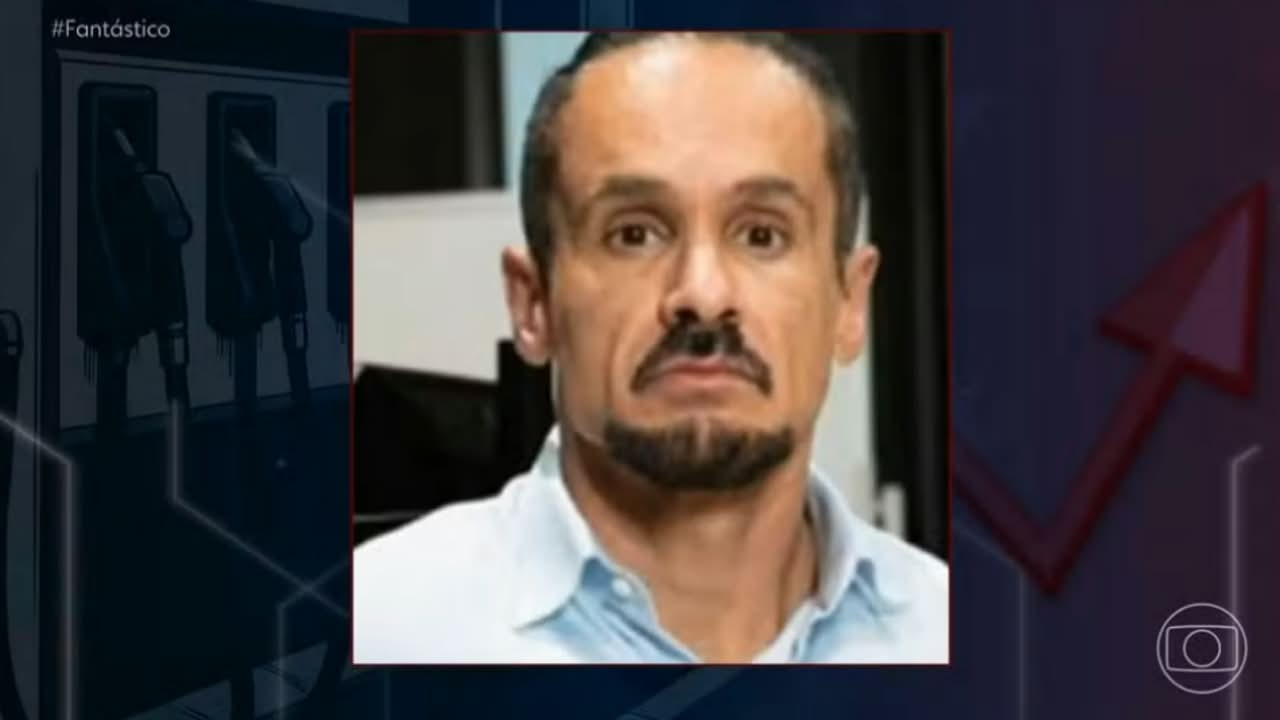
Prosecutors say Ricardo Andrade Magro, controller of the Refit group, used relatives, straw owners and former employees to hide assets in the United States while his companies owe more than R$50.5 billion to public treasuries. Authorities describe him as the largest tax evader in the country. On Wednesday, November 11, 2026, the Rio de Janeiro State Public Prosecutor’s Office (MPRJ) launched Operation Charon against him, and Magro, a fugitive since May, was not found.
The investigation was carried out by state prosecutors, the Federal Police and the Federal Revenue. It found that money diverted from tax payments financed an international network of concealment run by direct family members, nominees and ex-employees. The network reached Miami, Houston, Longview and McAlester. After the courts declared the refinery bankrupt on August 31, the case became a diplomatic matter between the Planalto Palace and the White House, focused on freezing accounts and extraditing the suspects.
The pressure peaked on Wednesday, when the Specialized Group to Combat Tax Evasion (Gaesf) of the MPRJ carried out arrest and search warrants. Targets included luxury homes in the Lagoa and Barra da Tijuca neighborhoods of Rio, gated condominiums and upscale areas of São Paulo. The task force dismantled the logistics and accounting center that let Magro enjoy his fortune in Florida and Texas without appearing in corporate records.
Prosecutors say relatives were placed as formal owners
To erase the trail of the real owner, the laundering scheme recruited first-degree relatives to act as the formal owners of the companies. The corporate structure found by investigators was large, and it relied on two main kinds of vehicles.
- 192 companies, opened at the same time in Brazil and in tax havens, to spread the gains from fuel tax evasion.
- 25 investment funds, created to make capital look legitimate before it was sent to the United States.
In São Paulo, the Civil Police carried out arrest warrants against the oldest branch of the family, the businessman’s grandfather, Manuel Joaquim Andrade, and his uncle, Ernesto dos Santos Andrade. The MPRJ said Magro’s parents, João Manuel Magro and Gabriela Andrade Magro, were also targeted. Because both parents and the grandfather are over 80, João Manuel Magro and Manuel Joaquim Andrade are to serve house arrest, while Gabriela Andrade Magro was sought.
Prosecutor Renata Mello Chagas, of the MPRJ, detailed the strategy. “The administrators kept free to open new companies and keep the mechanism running,” she said. “He has the capacity to ensure all the money keeps being used for his benefit, and that will only stop when he is arrested.”
The operation also reached figures outside the family tree. Race driver André Marques, Copa Truck champion in 2021, was arrested at a hotel in Rio de Janeiro, although his base was a condominium in Barueri, in Greater São Paulo. Marques has 77 races and nine wins to his name, and he had announced a pause in his racing career in 2022 to manage business interests. Investigators say he took an active role in the network that laundered the money.
From port to pump: how fuel was imported as crude oil
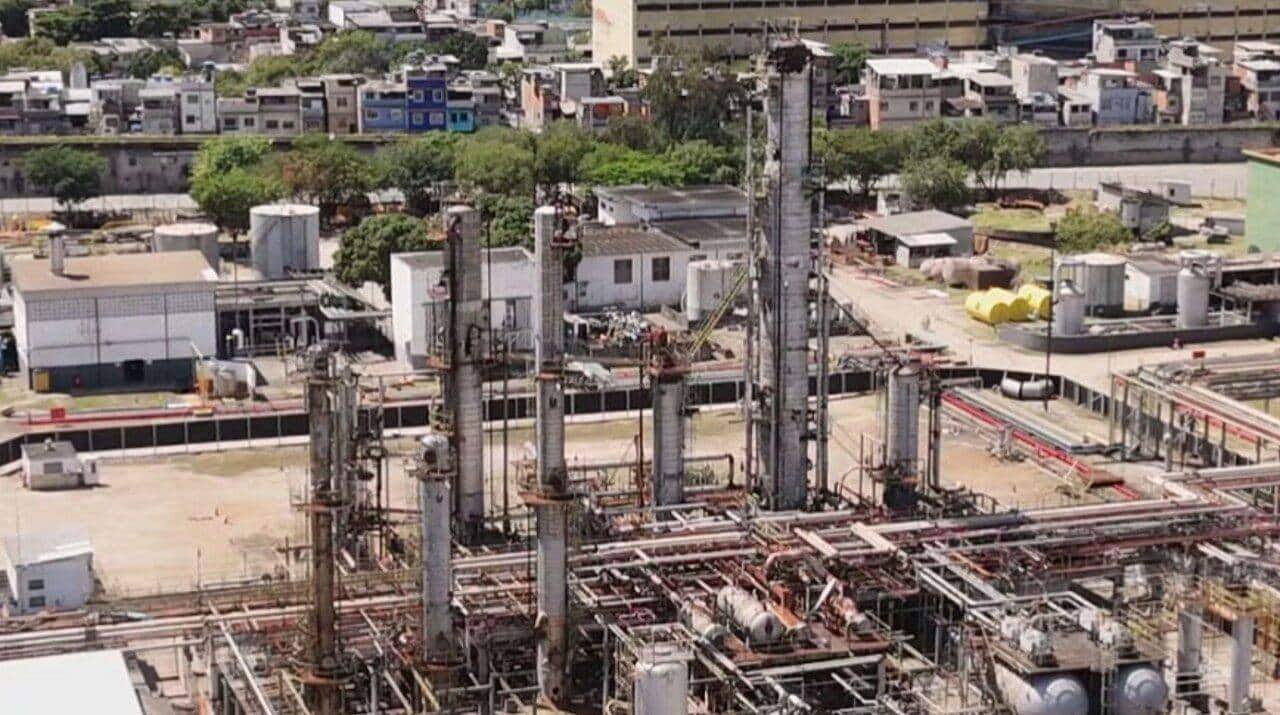
The money sent to the United States started at the Refit yard, the name adopted by the former Manguinhos Refinery in Rio’s North Zone. The plant has a long record of court disputes with the state. Prosecutors say it built a system of customs fraud and large-scale evasion of the state sales tax, the ICMS.
The National Petroleum Agency (ANP) and the Federal Revenue analyzed the fraud, which led to the seizure of four oil tankers at Brazilian terminals. According to the inquiry, companies based in the United States and run by Magro bought fuels already refined, such as gasoline, diesel and naphtha, on foreign markets. When the ships docked, cargo manifests and invoices were falsified to list the products as “crude oil”.
The false declaration sharply cut the tax base. In Brazil, fuels are taxed at the source under a tax substitution regime, so declaring a finished product as raw material pushed the tax chain down. On one vessel intercepted by tax agents, the cargo sold for R$142,200,000.00 and generated confirmed evasion of R$138,000,000.00. Magro stood on both sides of the deal, because his US company sold to his own importer in Brazil.
Federal Revenue Secretary Robinson Barreirinhas described the route of the money. The payments crossed oceans as commercial transactions, were spread across offshore companies and came back to the Brazilian economy disguised as foreign private equity funds. “In the end, it was the same money being laundered by this criminal structure in a cyclical way,” the secretary said.
Emerson Kapaz, executive director of the Instituto Combustível Legal, said the practice broke the business environment for regulated companies. “From port to pump with no tax. That is basically their core rule for carrying out this completely unfair competition with the productive sector,” Kapaz said.
Refit debts reach R$50.5 billion as Rio budget takes hit
The total of debts registered in the Active Tax Debt records of the Union and the states places Magro and the bankrupt Refit estate at R$50.5 billion. The final survey by the National Treasury Attorney General’s Office (PGFN) consolidated the total liabilities of the group. The refinery and its direct subsidiaries account for R$27.6 billion of that figure.
The breakdown by public treasury, according to the figures available, is:
- Rio de Janeiro state: more than R$15 billion, with about R$14 billion attributed to the refinery, according to the Gaesf.
- São Paulo state treasury: R$10,100,000,000.00 in unpaid debt.
- Federal taxes owed to the Union: R$3,000,000,000.00.
State prosecutors stressed that the Rio portion alone exceeds the annual budgets of key secretariats, such as Education and Public Security. The money drained from fuel pumps blocked purchases of police vehicles, structural repairs to public hospitals and investment in state schools over the last decade.
Rio de Janeiro Attorney General Antônio José Campos Moreira criticized the gap between the social cost and the lifestyle of the scheme’s leaders abroad. “Tax evasion produced huge profits that allow this person and others connected to him to live extravagantly with public resources,” the attorney general said.
Messages recovered by the Federal Police from phone apps show how relaxed the operators were. In one exchange, a subordinate mocked national tax law: “Tax law in Brazil is a bad joke. You either evade or go under.” A colleague replied: “The master of that is our boss.”

Nine properties and 13 supercars in South Florida
Magro has held a permanent “green card” for 11 years, which allows him to live and work in the United States. His social life centers on the Florida coast, mainly in Coral Gables and Key Biscayne. Investigators say the assets in the region have no lawful source.
Investigators identified nine physical properties and 20 active legal entities in the coastal region. The most valuable find was on Key Biscayne, where the family owns two combined oceanfront penthouses totaling 500 square meters, valued at more than R$43,000,000.00.
To hide direct ownership, one of the houses appeared in Miami public records under the name of a front real estate agency. That veil fell when the Gaesf obtained the separation agreement signed in 2025 between the fugitive and his then wife, Alessandra Engel Magro. The court-approved division of assets lists the property and full control of Refit as Magro’s personal holdings, which contradicts his claim that he only provided services or advised the companies.
Learn more: TikTok networks face Brazilian crackdown over child exploitation sales starting at R$ 10
The vehicles registered to the family include 13 luxury supercars from makers such as Porsche, Ferrari, Lamborghini and Rolls-Royce, together valued at more than R$25,000,000.00. Eight of them were registered at the same home address. The couple’s 21-year-old daughter was seen several times driving the sports cars into the condominiums.
The family also invested in a luxury spa that sells herbal products made from Amazon rainforest plants. It occupies a prime spot on the second floor of a commercial building in Coral Gables. Magro’s ex-wife and eldest daughter run it day to day.
Longview plant workers describe a hidden owner in Texas
To absorb the liquidity shock created by the diverted billions, the money crossed the Gulf of Mexico and reached Longview, a city of 80,000 people in East Texas. The city is historically known for oil extraction from the East Texas Oil Field. It is also home to the Longview Gas Plant, a gas processing facility founded 91 years ago, 15 kilometers from the urban center.
In 2020, during the height of the pandemic, control of the plant passed to J.Global Energy, a company founded by João Manuel Magro, the father of the businessman. The purchase cost US$14 million, equivalent today to R$78,000,000.00. The deal caused such a stir that a local newspaper ran “Who is Ricardo Magro?” as its main headline.
Inside the gas plant, the fugitive was kept out of view. American professionals who spoke under strict confidentiality said the Brazilian management imposed a policy of harassment and distance. Magro was never called by his name, and staff referred to him as “The Board”.
An engineer recalled the first time he heard the term. “When I first heard the term ‘the board,’ I imagined an executive group or shareholders sitting in a room. Shortly after, I was told it was actually one person, the Brazilian, and that he commanded everything alone.”
A former employee described the orders given before inspections. “They set the rule: if the board arrived at the yard, everyone had to disappear, stay in absolute silence, never make eye contact, step back and not interrupt his walk.” During the entire period in which he held the plant, the executive made no more than three brief visits, each lasting only hours.
The plant’s technical staff fell from 50 specialized workers to fewer than 15 contractors. The 91-year-old facility is now going through its first production blackout. According to the investigation, the company stopped paying local raw gas producers and left the plant idle, while large monthly sums still went into keeping it running. Prosecutors say this shows the goal was to simulate cash flow, not to process energy.
Bitcoin farm in Oklahoma and a Houston office run by Cristiano Beraldo
The cyber arm of the group was set up in McAlester, a rural town in Oklahoma. In 2021, the group paid US$450,000 for the licenses of a bitcoin mining farm through the company Minefficiency Limited. Investigators say crypto mining suits laundering because servers consume large amounts of electricity, which gives a ready accounting excuse for deposits that look disproportionate.
The Oklahoma site had the same problems as the Texas plant. Old computers overheated every day, severe electrical failures halted key operations, and the machines often stood idle. Technicians often had to travel urgently from Texas to McAlester to fix broken wires. “The general picture was that they needed something that simulated strong, immediate profitability, with high financial turnover, to justify laundering millions diverted,” said a former administrative technician at the farms.
The city government of McAlester confirmed that the purchase happened at the same time the Houston office was created, linking the two ends of the scheme. The main headquarters was found in a skyscraper in Houston, the main financial hub of Texas. Thirteen companies, opened one after another, ran their paperwork from a single set of rooms in that building.
Cristiano Beraldo handled the in-person management of that office. He worked at Refit from 2015 to 2019, which the investigation describes as Magro’s “eyes, arms, hands and feet.” After a short break with the businessman, he returned to lead international logistics. In recent legislative elections, he secured a seat as an alternate federal deputy (suplente) for the Progressistas (PP) party.
Aware of the crackdown, Beraldo left Brazil on a one-way flight on October 11, 2026, and arrived in Houston. Prosecutors say he was not found at the addresses they searched in São Paulo, and he is now also wanted along with his former boss.
Lula takes repatriation request to Donald Trump; defences respond
The scale of the losses turned the case into a diplomatic matter that reached the highest levels of foreign relations, beyond first-instance courts. The National Secretary of Justice of the Ministry of Justice, Maria Rosa Loula, outlined federal efforts to cut off the group’s routes.
During an official visit to Washington, President Luiz Inácio Lula da Silva personally presented a confidential dossier to US President Donald Trump. The document lists repatriation requests and legal steps to trace, freeze and seize assets, aiming to pressure Magro and Beraldo in their exile.
The lawyers for Ernesto dos Santos Andrade issued a statement saying their client broke ties with his nephew, the fugitive, eight years ago. According to them, Ernesto agreed to a plea deal (delação premiada) and handed over his private phones, a home computer and all corporate email passwords to state prosecutors.
The defence of André Marques rejected his arrest at the Rio hotel. In a formal statement, it said the pilot never provided legal, accounting or commercial services to Refit, and it called the warrants “completely illegal, arbitrary and disproportionate.” The lawyers said the lack of any link between the racing sponsorships and the refinery will be proven in higher courts. The lawyers for Magro, his parents, his grandfather and Beraldo chose silence and did not answer questions after the searches.
Without direct control of the R$27.6 billion bankrupt Refit estate, the “Board” has become a target of joint efforts between Brazilian and American authorities. As of the latest update, Magro had not been located, and his name remained on Interpol’s red notice list.