NASA takes X-59 supersonic jet from Lockheed Martin in Edwards

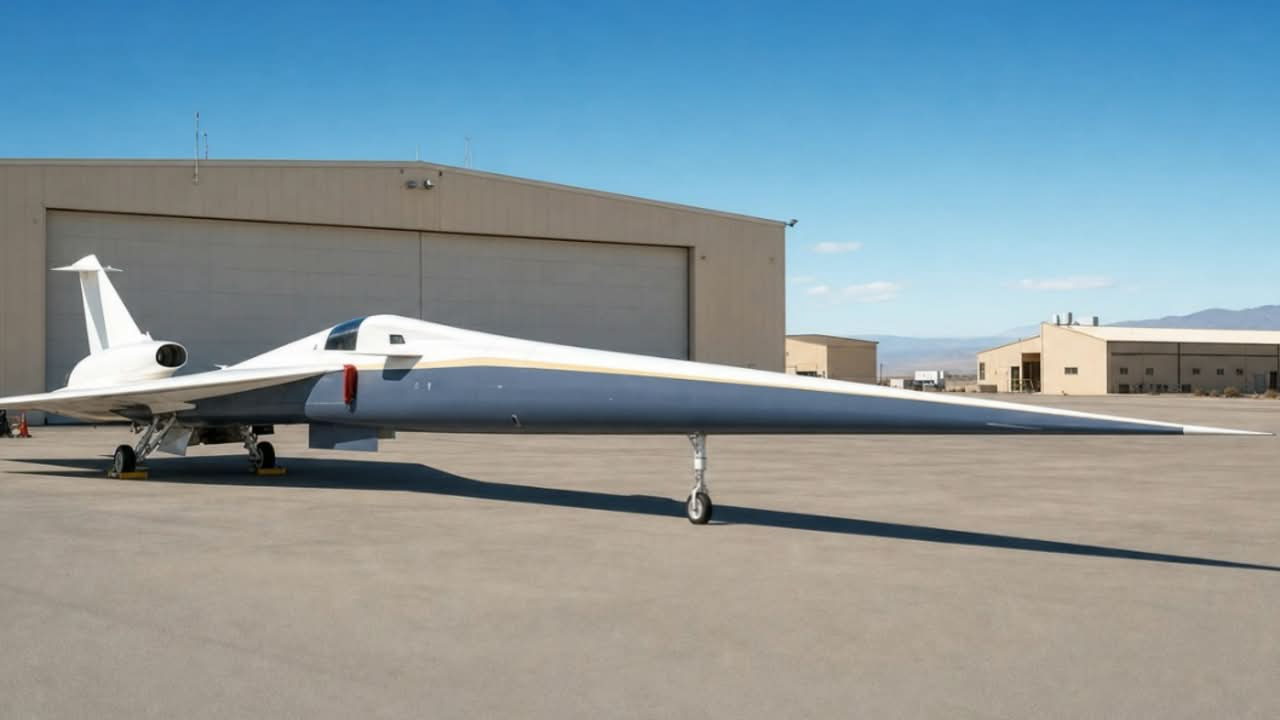
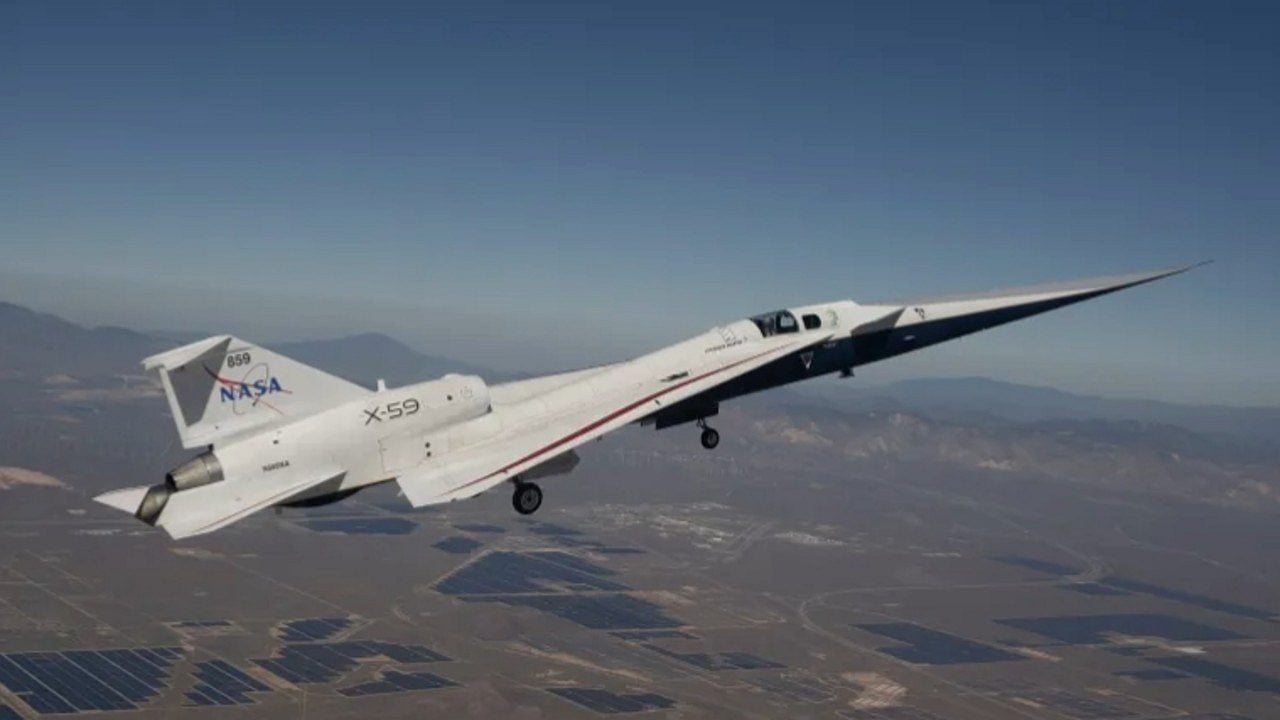
NASA now owns the X-59, the experimental supersonic jet built by Lockheed Martin Skunk Works. The transfer was completed on November 18, 2026, at the Armstrong Flight Research Center in Edwards, California, after the aircraft passed Mach 1.53 in flight tests. The handover closes the build phase and clears the way for NASA to gather data on how people on the ground hear the jet’s noise, the central step of the Quesst mission.
The X-59 has been based at NASA facilities in California since its first flight on October 28, 2025, but Lockheed Martin kept formal title during the early test campaign. The change depended on an aircraft acceptance review, a step tied to closing the development contract. Lockheed Martin will keep providing technical support when needed, while NASA takes over operations and the next research phases through its Aeronautics Research Mission Directorate.
“To someone outside the flight test, this might seem like a subtle change,” said Cathy Bahm, project manager of the Low Boom Flight Demonstrator at the Armstrong center. For her, the transfer brings the agency closer to data that could make commercial supersonic flight over land a reality.
Flight tests carried the X-59 to Mach 1.53 during 2026
The campaign reached its first milestone on June 5, 2026, when the X-59 broke the sound barrier for the first time. Test pilot Jim “Clue” Less flew the 81-minute mission with an F-15 chase jet, reaching about Mach 1.1 at 43,400 feet. On June 12, the aircraft reached Mach 1.4 at 55,000 feet, the conditions planned for flights over communities.
In the months that followed, the team pushed the flight envelope up to Mach 1.53, and the longest test lasted 102 minutes. The jet also flew more than 2,000 miles between California and Florida, escorted by NASA F-15, F/A-18 and C-20 aircraft, to take part in the MAX POWER event.
See also: NASA's Webb says interstellar comet 3I/ATLAS formed 10 to 12 billion years ago
The X-59 uses a single F414-GE-100 engine and has a design maximum weight of 24,300 pounds, with an empty weight of 15,000 pounds. Its landing gear comes from the F-16 Blk25 fighter. The elongated fuselage spreads the shock waves created in supersonic flight, replacing the traditional boom with a muffled sound.
Why a 1973 rule still keeps supersonic airliners off land
Commercial supersonic flights over land in the United States have been banned since 1973 because of the intensity of the sonic boom, which can scare residents and disturb people on the ground. The restriction limited historic commercial operations to routes over oceans.
To get around that barrier, NASA set a target noise level of 75 PLdB for the X-59. PLdB is the Stevens scale of perceived decibels, which tracks how people react to impulsive sounds. In the agency’s acoustic studies, that level is compared to a car door closing at a distance, which measured 70.3 PLdB.
Next step is community flights as NASA adds the X-70 Fractal
With the jet under NASA control, the Quesst team is planning flights over selected communities in the United States. Residents will answer surveys on how they perceive the noise of the X-59 when it flies faster than sound. NASA will share the results with national and international regulators to support new noise limits based on science.
Check out: NASA sees no sign 1998 KY26 is anything other than an asteroid
The transfer is part of a wider NASA plan to restart crewed experimental aircraft, known as X-planes, to advance aviation in the United States. The X-59 will be joined by the X-70 Fractal, which NASA announced on November 4, 2026, during the UP.Summit event at the Kennedy Space Center in Florida.
The X-70 is planned as a high-performance crewed jet with reconfigurable flight controls to test aerodynamic and control solutions in real conditions. Meanwhile, NASA is preparing the detailed schedule for ground acoustic measurements and the community overflights.