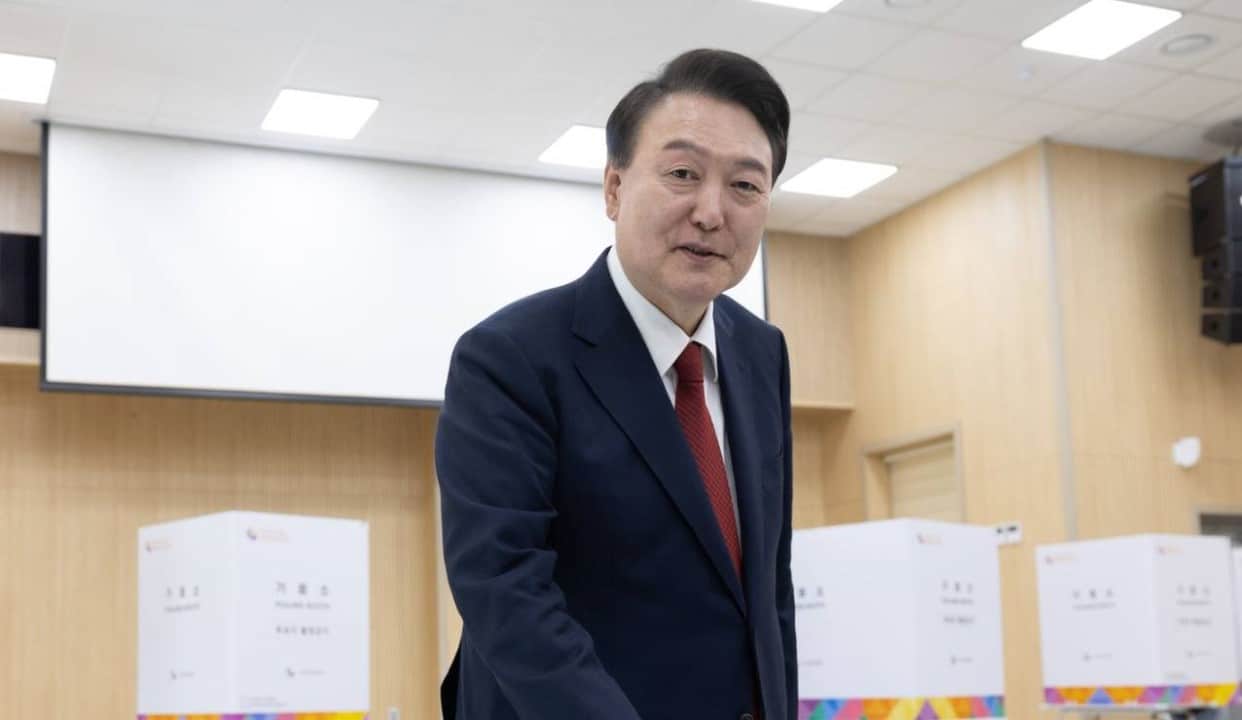
South Korean President Yoon Suk-yeol shocked the nation on Tuesday (December 3) by declaring martial law, citing the need to contain “pro-North Korea elements” that he claims threaten the country’s security and constitutional order. The decree, which restricts civil liberties and places authority under military control, has sparked widespread criticism and protests from the opposition, which sees the move as an attempt to consolidate presidential control over Parliament.
The situation escalated as the opposition, which holds a parliamentary majority, convened an emergency session and invalidated the martial law decree, despite the Parliament building being cordoned off by security forces. This development marks one of the most severe political crises in South Korea’s recent history, a country known for its stable democracy after decades of military dictatorship.
It was great to meet PM @narendramodi again at the Rio G20 Summit. Looking forward to building on the growing partnership between our two countries next year! https://t.co/kXByL4kUqu
— 윤석열 Yoon Suk Yeol (@President_KR) November 19, 2024
Understanding the impact of martial law
Martial law brings significant changes to the lives of South Koreans. Key measures include:
- Suspension of civil rights: Demonstrations are banned, the press is censored, and political activities are restricted.
- Military authority: Armed forces assume responsibilities for law enforcement, sidelining local police autonomy.
- Institutional shutdowns: Parliament has been blocked, and access to key government buildings is restricted.
The president justified the decree as a necessary response to protect the nation from internal and external threats, though he offered no concrete evidence of the alleged “pro-North Korea elements.”
International reactions and local dissent
The decree has raised concerns among international allies, including the United States, which maintains a close alliance with South Korea. The White House has stated it is closely monitoring developments and reaffirmed its commitment to regional security.
Domestically, South Korea’s police chief called for an emergency meeting to assess the situation, and even members of President Yoon’s own party expressed opposition. Han Dong-hoon, leader of the People Power Party, called the declaration a “strategic mistake” and urged public support to reverse it.
Opposition fights back to nullify the decree
Opposition leaders have condemned the declaration as unconstitutional and have mobilized all political parties to stand against the presidential action. Lawmakers managed to enter Parliament under heavy security and voted to annul the martial law, directly challenging the president’s authority.
Meanwhile, protests have erupted across Seoul, with thousands gathering outside the Parliament building to demand the repeal of martial law and the president’s resignation.
Historical context: an unprecedented move in recent times
The last time South Korea experienced martial law was during its military dictatorship, which ended in the 1980s. Since then, the country has developed into one of Asia’s most stable democracies. Implementing martial law in a democratic context raises questions about the balance between national security and civil liberties.