
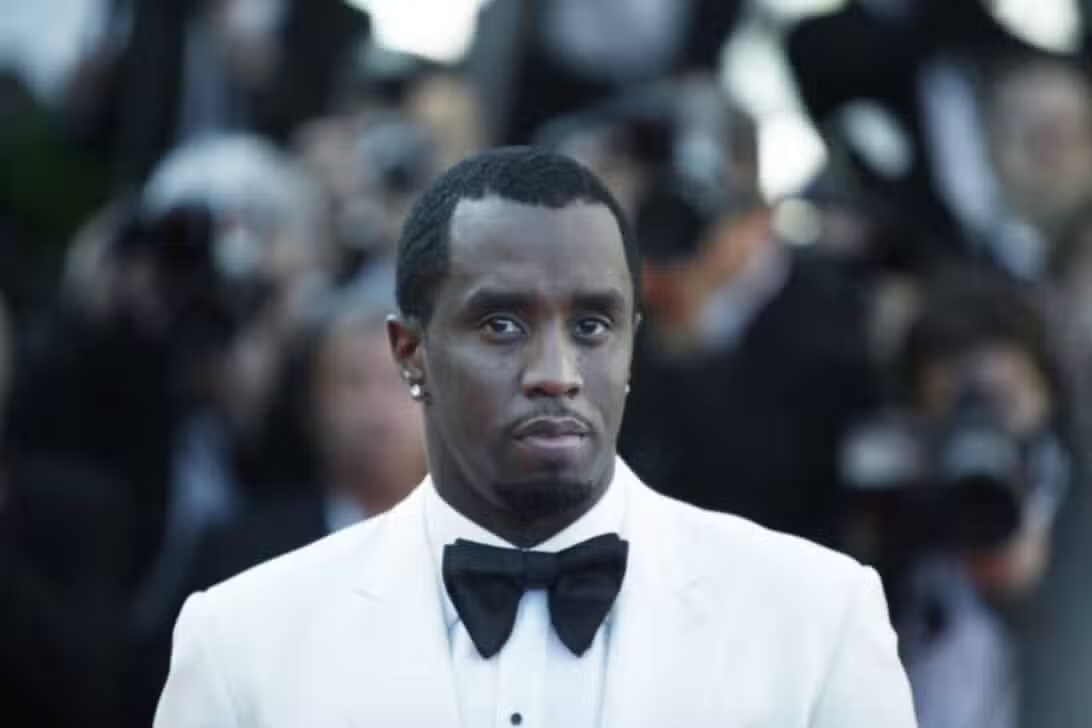
Mark Geragos, attorney for celebrities like Michael Jackson and Chris Brown, appeared in Manhattan federal court on Monday, May 5, 2025, during the start of jury selection for Sean “Diddy” Combs’ trial. The presence of the renowned lawyer, who is not officially on the legal team, sparked speculation among prosecutors, who noted his potential role as an advisor to the defendant. Combs faces serious charges, including sex trafficking, racketeering conspiracy, and transportation for prostitution, in a case that could lead to life imprisonment. The trial, which began with jury selection, marks a critical moment in the hip-hop mogul’s career.
Jury selection, underway at the Southern District of New York Federal Court, drew attention due to the case’s notoriety and the complexity of the charges against Combs. The process, overseen by Judge Arun Subramanian, aims to form a panel of 12 jurors and six alternates, with rigorous questioning to ensure impartiality. The trial, expected to last at least eight weeks, involves key witnesses, such as Combs’ ex-girlfriend Cassie Ventura, and evidence like a 2016 video showing the rapper assaulting Ventura in a hotel.
- Main charges: Sex trafficking, racketeering conspiracy, and transportation for prostitution.
- Estimated duration: At least eight weeks, with opening statements set for May 12.
- Trial location: Daniel Patrick Moynihan Courthouse, Manhattan.
- Possible penalty: Life imprisonment if convicted on all counts.
Mark Geragos’ presence in court
Mark Geragos’ appearance in court caught prosecutors off guard, who noted in a letter to Judge Subramanian the possibility of him acting as Combs’ advisor. Geragos, who has represented figures like Jussie Smollett and the Menendez brothers, stated he was there only to support his daughter, Teny Geragos, who is officially part of the defense team. He denied any formal involvement, emphasizing his friendship with Combs. Prosecutors, however, requested that if Geragos is advising the defendant, he adhere to the same restrictions as other attorneys, including refraining from public comments about the case.
On Tuesday, May 6, Geragos was seen again in court but did not take an active role in the proceedings. His presence, even if informal, adds a layer of intrigue to the already high-profile trial. The attorney is known for his skill in high-stakes cases, raising questions about his behind-the-scenes influence, even without an official role.
Strengthening Combs’ legal team
Beyond Geragos’ presence, Combs bolstered his defense with other prominent attorneys on the eve of the trial. On Friday, May 2, Xavier Donaldson, a New York lawyer, was officially added to the team after attending pre-trial conferences. Donaldson brings experience in complex criminal cases, which could be crucial in addressing the detailed 17-page indictment presented by prosecutors.
In the week of the trial, Combs also hired Brian Steel from Atlanta, who defended rapper Young Thug in a racketeering case, and Nicole Westmoreland, who represented a co-defendant in the same case. The addition of these professionals signals a robust strategy to counter the allegations, which include decades of alleged abusive behavior. The legal team, led by Marc Agnifilo, argues that the sexual activities described by prosecutors, such as the so-called “Freak Offs,” were consensual.
- New attorneys: Xavier Donaldson, Brian Steel, and Nicole Westmoreland.
- Lead defense attorney: Marc Agnifilo, experienced in celebrity cases.
- Main argument: Sexual activities were consensual, without coercion or violence.
Jury selection process
Jury selection, which began on May 5, is one of the trial’s most sensitive aspects due to the case’s extensive media coverage. Judge Subramanian conducts individual questioning to assess candidates’ prior knowledge of the charges and ensure they can judge impartially. By the end of Tuesday, May 6, 35 jurors had been qualified, with a goal of reaching 45 by Wednesday, May 7.
Many candidates admitted to having seen the 2016 security video showing Combs assaulting Cassie Ventura in a Los Angeles hotel. One potential juror described the video as depicting “a hostile and angry person who feels entitled” but claimed they could remain impartial. The case’s notoriety, amplified by news reports and social media, makes selection challenging, as the court seeks to avoid bias.
The process includes detailed questionnaires, with questions about candidates’ ability to evaluate testimony from hip-hop artists, sex workers, and individuals involved with drugs. Each side, defense and prosecution, can eliminate candidates based on responses suggesting bias, ensuring a balanced final panel.
Charges against Sean Combs
Sean Combs faces five federal charges, outlined in a document detailing a pattern of abusive behavior from 2004 to 2024. Prosecutors allege that the rapper used his influence as the founder of Bad Boy Records to manipulate women, forcing them to participate in prolonged sexual events known as “Freak Offs.” These encounters, according to prosecutors, involved drugs, sex workers, and recordings, often without full consent.
Prosecutors also accuse Combs of leading a criminal organization, with employees and associates facilitating the abuses. Acts of violence, such as beatings, kidnappings, and alleged arson, are among the accusations. Combs, who pleaded not guilty, denies any coercion, with his defense emphasizing that the relationships were consensual and that the charges misrepresent his personal life.
- Period of charges: From 2004 to 2024, spanning two decades.
- Central events: “Freak Offs,” described as coerced sexual marathons.
- Evidence: Videos, text messages, and testimony from former employees.
- Key witness: Cassie Ventura, Combs’ ex-girlfriend, expected to testify.
Cassie Ventura’s role in the case
Cassie Ventura, Combs’ former partner, emerges as a central figure in the trial. In 2023, she filed a civil lawsuit against the rapper, alleging over a decade of abuse, including rape in 2018. Although the lawsuit was settled out of court, her testimony is highly anticipated. A 2016 video, partially admitted as evidence, shows Combs assaulting Ventura, reinforcing claims of violence.
Ventura’s lawsuit paved the way for other allegations, with over 100 individuals, both men and women, filing civil suits against Combs for sexual assault. Prosecutors plan to call four women, not publicly identified, to testify in the criminal trial. These witnesses, along with Ventura, are expected to detail the alleged pattern of manipulation and violence outlined in the indictment.
Evidence presented by prosecutors
The prosecution, led by Emily Johnson, bases its case on a combination of testimony, text messages, bank records, and security camera footage. Beyond the Ventura video, prosecutors plan to present voice recordings that, they claim, prove the criminal conspiracy. At least one former Combs employee is expected to testify against him, detailing the role of the rapper’s team in facilitating the abuses.
During 2024 searches of Combs’ properties in Los Angeles and Miami, federal agents seized computers, phones, and documents corroborating the charges. Prosecutors also highlight the use of entertainment industry opportunities as a coercion tool, with career promises in exchange for compliance. The defense disputes the interpretation of this evidence, arguing that the interactions were voluntary.
Courtroom reactions
Combs’ behavior in court has been closely observed. During jury selection, he stood to greet candidates, wearing civilian clothes, such as a navy sweater and gray pants, after the judge’s permission. His demeanor, according to reports, is attentive, seated between his attorneys while following the questioning. The presence of family members, including his mother and children, at prior hearings was also noted, with Combs blowing kisses to them in October 2024.
Prosecutors, meanwhile, maintain a rigorous approach, emphasizing the severity of the charges. The letter sent to the judge about Mark Geragos reflects concern over any attempt to influence public perception of the case. Judge Subramanian, known for his impartiality, banned electronic devices in the courtroom and ruled that the trial will not be streamed online, though it remains open to the public.
- Court restrictions: No electronic devices or online streaming.
- Combs’ attire: Civilian clothes instead of a prison uniform.
- Family presence: Mother and children attended earlier hearings.
- Judge: Arun Subramanian, focused on impartiality.

Context of the trial in the music industry
Combs’ trial comes at a time of growing scrutiny over abuses in the entertainment industry. Unlike Hollywood, which faced the #MeToo movement with allegations against figures like Harvey Weinstein, the music industry has largely avoided major convictions, except for R. Kelly’s case, who was sentenced to over 30 years for sex crimes. Combs’ case could mark a shift, with cultural organizations and fans debating his legacy as the founder of Bad Boy Records.
The trial’s start coinciding with the Met Gala, an event where Combs was once a prominent figure, highlights the contrast between his former glamorous image and his current situation. Until 2023, he walked the Metropolitan Museum of Art’s red carpet, but now faces charges that could end his career. The case also raises questions about the accountability of employees and associates of celebrities in abuse cases.
Challenges in jury selection
Combs’ notoriety complicates the selection of impartial jurors. Extensive media coverage, including social media posts and reports detailing the charges, increases the risk of bias. Judge Subramanian stressed the need for jurors capable of evaluating evidence without external influence, but familiarity with the Ventura video poses a challenge.
On Tuesday, May 6, candidates were questioned about their exposure to hip-hop artists and topics like sex work and drug use. Some admitted recognizing names of celebrities linked to the case, such as Kanye West and Kid Cudi, listed in a 190-person questionnaire. The defense and prosecution work to eliminate jurors showing bias, ensuring a balanced final panel.
- Questionnaire: Includes 190 names of public figures tied to the case.
- Sensitive topics: Hip-hop, sex work, and drug use.
- Goal: 12 jurors and 6 alternates, with 45 qualified candidates.
Combs’ history and Bad Boy Records
Sean Combs, known as Puff Daddy and P. Diddy, built a fortune since the 1990s with Bad Boy Records, launching artists like Notorious B.I.G. and Mary J. Blige. Beyond music, he invested in fashion and beverages, solidifying his image as a mogul. His lavish parties attracted celebrities, but the charges suggest these events concealed a system of exploitation.
Prosecutors describe Bad Boy Records as part of a “criminal enterprise” that facilitated the abuses. Employees, including security and assistants, allegedly played active roles, from organizing “Freak Offs” to concealing Combs’ behavior. The defense disputes this narrative, arguing that the company’s structure was typical of an entertainment operation, with no criminal intent.
Next steps in the trial
With jury selection expected to conclude on Wednesday, May 7, opening statements are scheduled for May 12. Prosecutors plan to present their case over three weeks, calling dozens of witnesses, while the defense estimates one week for its arguments. Combs, detained at the Metropolitan Detention Center in Brooklyn, may choose to testify, a decision Agnifilo described as a chance to present his side.
The trial, held at the Daniel Patrick Moynihan Courthouse, will follow a strict schedule, with measures to limit external influences. Prosecutors aim to prove Combs led a criminal network, while the defense bets on the consensual nature of the interactions. The case’s outcome will hinge on the strength of the evidence and the jury’s impartiality, in a process that continues to draw global attention.