

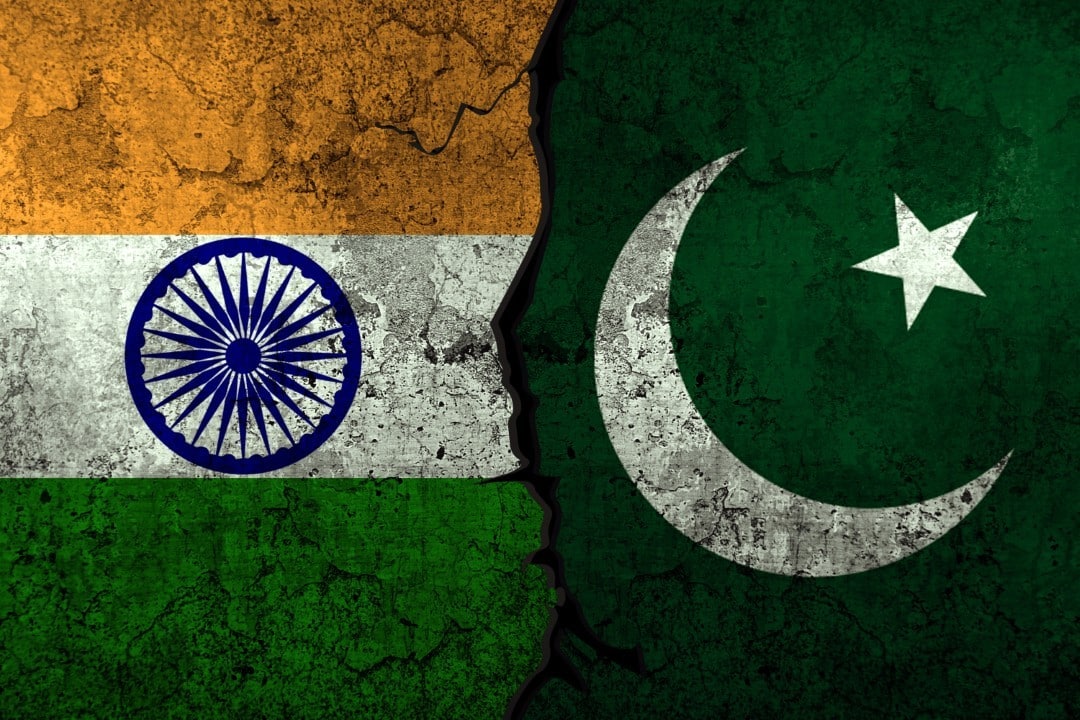
Tensions between India and Pakistan surged to dangerous levels following a deadly militant attack in Pahalgam, Jammu and Kashmir, on April 22, which claimed 26 lives, including 25 Indian civilians and one Nepali national. In response, India launched Operation Sindoor on May 7, executing missile strikes on nine terrorist camps across Pakistan and Pakistan-administered Kashmir, targeting groups like Jaish-e-Mohammed and Lashkar-e-Taiba. The strikes, described as precise by Indian officials, killed at least 70 terrorists, though Pakistan reported 31 civilian deaths, including children. Both nations have since engaged in retaliatory drone and missile attacks, with heavy shelling along the Line of Control, raising fears of a broader conflict between the nuclear-armed neighbors.
The Pahalgam attack, the deadliest on civilians in Kashmir since the 2008 Mumbai attacks, targeted male tourists in the scenic Baisaran Valley, prompting India to accuse Pakistan of orchestrating the violence through proxy groups. Pakistan denied involvement, condemning India’s strikes as an “act of war” and vowing retaliation. The escalating military exchanges have disrupted civilian life, with blackouts, school closures, and heightened security measures in border regions like Jammu, Samba, and Rajouri.
- Pahalgam attack: 26 killed, including 25 Indians and one Nepali, on April 22.
- Operation Sindoor: India struck nine terror camps on May 7, killing 70 terrorists.
- Retaliation: Pakistan reported 31 civilian deaths and vowed to respond.
The crisis has drawn international attention, with countries like Nepal and Israel expressing support for India’s anti-terrorism efforts, while Pakistan’s allies, including China, monitor the situation closely. The suspension of the Indus Waters Treaty by India further underscores the deepening rift between the two nations.
Roots of the Pahalgam attack
The April 22 attack in Pahalgam shocked India, occurring in a popular tourist destination known for its serene meadows and cool climate. Militants, identified by India as members of The Resistance Front, an offshoot of Lashkar-e-Taiba, singled out Hindu male tourists, killing 26 in a brutal assault. The attack marked a significant escalation in violence, being the first major civilian-targeted incident since India revoked Article 370 in 2019, stripping Kashmir of its semi-autonomous status.
Indian authorities swiftly linked the attack to Pakistan-based terror groups, citing intelligence that pinpointed training camps in Pakistan and Pakistan-administered Kashmir. The National Investigation Agency deployed teams to Pahalgam, conducting searches and interviewing witnesses to gather evidence. The attack’s brutality, with families separated and men executed, fueled public outrage and prompted calls for a strong military response.
- Targeted violence: Militants singled out Hindu men, killing 26 in Baisaran Valley.
- The Resistance Front: Claimed responsibility, linked to Lashkar-e-Taiba.
- Investigation: NIA teams stationed in Pahalgam to collect evidence.
Operation Sindoor’s precision strikes
India’s military response, codenamed Operation Sindoor, began at 1:25 a.m. on May 7, with 24 missiles launched in 25 minutes targeting nine terror camps. The operation hit key strongholds, including the Jaish-e-Mohammed headquarters in Bahawalpur and Lashkar-e-Taiba’s Markaz Taiba in Muridke. Indian officials described the strikes as a “befitting reply” to the Pahalgam attack, aimed at dismantling infrastructure used for attacks like the 2008 Mumbai assaults and the 2019 Pulwama bombing.
The operation resulted in the deaths of 70 terrorists, including high-ranking commanders like Hafiz Abdul Malik of Lashkar-e-Taiba. Satellite imagery revealed significant destruction at targeted sites, though Pakistan claimed civilian casualties, including 10 relatives of Jaish-e-Mohammed chief Masood Azhar. Foreign Secretary Vikram Misri emphasized that no military targets were hit, only terrorist infrastructure, underscoring India’s intent to avoid broader escalation.

Pakistan’s response and civilian toll
Pakistan condemned India’s strikes as an “unprovoked act of war,” reporting at least 31 deaths, including two children, in six cities, including Muzaffarabad and Bahawalpur. The Pakistani military claimed to have shot down five Indian aircraft and vowed “corresponding action.” Heavy shelling along the Line of Control followed, with at least 12 civilians killed and 42 injured on the Indian side, while Pakistan reported six deaths.
Residents in border areas described chaotic scenes, with explosions and artillery fire disrupting daily life. In Jammu and Kashmir, schools and colleges in districts like Rajouri, Poonch, and Samba closed, and blackouts were enforced in some areas. Pakistan’s Prime Minister Shehbaz Sharif rejected India’s allegations of involvement in the Pahalgam attack, calling for a neutral investigation.
- Civilian casualties: Pakistan reported 31 deaths, India reported 12 in shelling.
- Military response: Pakistan claimed to down five Indian jets, vowed retaliation.
- Border disruptions: School closures and blackouts in Jammu, Rajouri, and Poonch.
Historical tensions over Kashmir
The Kashmir dispute has fueled India-Pakistan tensions since their partition in 1947. The region, divided between India, Pakistan, and China, remains a flashpoint, with both nations claiming it in full. The first Kashmir war in 1947-48 established the Line of Control, but subsequent conflicts in 1965, 1971, and 1999 (Kargil War) deepened hostilities. The 1980s saw a rise in armed insurgency in Indian-administered Kashmir, with India accusing Pakistan of supporting separatist groups.
Key agreements, like the 1972 Simla Agreement and the 1999 Lahore Declaration, aimed to foster peace, but incidents like the 2001 Indian Parliament attack and the 2008 Mumbai attacks derailed progress. The revocation of Article 370 in 2019, which ended Kashmir’s special status, further strained relations, with Pakistan suspending trade and diplomatic ties. The Pahalgam attack and Operation Sindoor mark the latest chapter in this long-standing conflict.
Military escalation and drone warfare
The current crisis has seen unprecedented use of drones and missiles, with both sides accusing each other of launching attacks. On May 8, India’s Border Security Force foiled an infiltration attempt in Samba, Jammu and Kashmir, while Pakistan allegedly targeted cities like Srinagar, Amritsar, and Chandigarh with drones. India reported neutralizing Pakistani defense systems in Lahore, escalating the technological dimension of the conflict.
Air traffic in Mumbai surged by 60% as airlines rerouted flights amid heightened tensions, with 27 airports nationwide closed. Security drills were conducted across 244 districts in India, with air raid sirens and mock evacuations preparing civilians for potential hostilities. The Indian Army released footage of its strikes, showcasing the destruction of terror camps, while Pakistan’s military shared videos of its “befitting reply” to ceasefire violations.
- Drone attacks: Pakistan allegedly targeted 15 Indian cities, India struck Lahore.
- Airport closures: 27 airports shut, Mumbai air traffic up 60%.
- Security measures: Drills in 244 districts, air raid sirens activated.
Political and diplomatic reactions
India’s government briefed opposition parties on Operation Sindoor, with Prime Minister Narendra Modi urging unity. Unlike the 2019 Balakot strikes, opposition leaders praised the armed forces’ valor, reflecting bipartisan support. Union Home Minister Amit Shah called the operation a testament to India’s zero-tolerance policy against terrorism, while Maharashtra Deputy Chief Minister Eknath Shinde warned Pakistan to “stay within limits.”
Internationally, Nepal condemned the Pahalgam attack, expressing solidarity with India, while Israel’s Consul General in Mumbai, Kobbi Shoshani, praised Operation Sindoor as a “proud act of self-defense.” China, Pakistan’s ally, remained cautious, with its media reporting on the strikes but no official comment issued. The European Union condemned the Pahalgam attack, calling for de-escalation.
Economic and social disruptions
The conflict has disrupted daily life in border regions, with economic activities grinding to a halt. In Jammu and Kashmir, markets in Kupwara and Karnah remained closed, and residents were advised to stay indoors. Hydropower projects in Jammu and Kashmir and Rajasthan activated crisis management plans to protect critical infrastructure. The suspension of the Indus Waters Treaty raised concerns about water access, given the treaty’s historical resilience through multiple wars.
Farmers in border villages like Balakot reported losses due to shelling, with homes and crops damaged. Community centers in Rajouri and Poonch opened as temporary shelters, while social media platforms buzzed with updates on the conflict, amplifying public anxiety. The government set up an emergency center in Srinagar to coordinate relief efforts.
- Economic impact: Markets closed, hydropower projects on high alert.
- Shelters opened: Community centers in Rajouri and Poonch for displaced residents.
- Water concerns: India suspended Indus Waters Treaty participation.
Past terror attacks and India’s responses
India’s military actions echo previous responses to terror attacks. The 2008 Mumbai attacks, which killed over 160 people, were linked to Lashkar-e-Taiba, with India alleging Pakistani intelligence involvement. The 2016 Uri attack, killing 17 soldiers, prompted surgical strikes across the Line of Control. The 2019 Pulwama bombing, which claimed 40 paramilitary lives, led to airstrikes in Balakot, marking the first Indian air raid inside Pakistan since 1971.
Operation Sindoor stands out for its scale, targeting infrastructure of three major groups—Jaish-e-Mohammed, Lashkar-e-Taiba, and Hizbul Mujahideen—simultaneously. The operation’s codename, chosen by Prime Minister Modi, references the vermilion mark worn by Hindu women, symbolizing the avenging of the Pahalgam victims, many of whom were killed in front of their families.
Security measures and public response
India intensified security measures following Operation Sindoor, with the Jammu and Kashmir Police conducting searches at over 30 locations to dismantle terror networks. The government refuted rumors of a suicide attack in Rajouri and a drone strike in Jalandhar, urging the public to avoid misinformation. Civil defense drills, including blackouts and evacuation setups, were held nationwide to prepare for potential Pakistani retaliation.
Public sentiment in India reflected anger over the Pahalgam attack, with protests in cities like Delhi and Mumbai demanding justice. In Assam, devotees offered prayers at the Kamakhya temple for the Indian Army’s success. Social media platforms saw hashtags like #OperationSindoor trend, with users sharing videos of the strikes and expressing support for the military.
- Police searches: Over 30 locations targeted in Jammu and Kashmir.
- Public protests: Demonstrations in Delhi and Mumbai after Pahalgam attack.
- Religious support: Prayers at Kamakhya temple for Indian forces.
International implications
The conflict’s global ramifications are significant, given India and Pakistan’s nuclear capabilities. The British Parliament debated the crisis on May 8, with members urging de-escalation. The United States engaged in diplomatic talks with both nations, while the European Union condemned the Pahalgam attack but called for restraint. Pakistan’s Foreign Ministry accused India of igniting an “inferno” in the region, while India’s embassy countered disinformation from Chinese media.
The involvement of groups like Jaish-e-Mohammed, linked to the 2001 Indian Parliament attack and the 2019 Pulwama bombing, underscores the transnational nature of the threat. India’s strikes on Bahawalpur and Muridke, deep inside Pakistan, signal a shift from past operations, which focused on Pakistan-administered Kashmir. The escalation has raised concerns about regional stability, particularly in South Asia.
Civilian life under siege
Civilians in Kashmir and Pakistan’s border regions bear the brunt of the conflict. In Indian-administered Kashmir, shelling damaged homes and religious sites, with ambulances transporting victims’ remains. In Pakistan-administered Kashmir, residents reported chaos during India’s strikes, with smoke rising from targeted sites like the Bilal Mosque in Muzaffarabad. Farmers like Gulzar Ahmad in Balakot village described living in fear, with their livelihoods disrupted by cross-border fire.
The psychological toll on border communities is immense, with children unable to attend school and families relocating to safer areas. The Indian government’s emergency center in Srinagar provides medical and logistical support, but the ongoing violence has left residents on edge, uncertain about when normalcy will return.