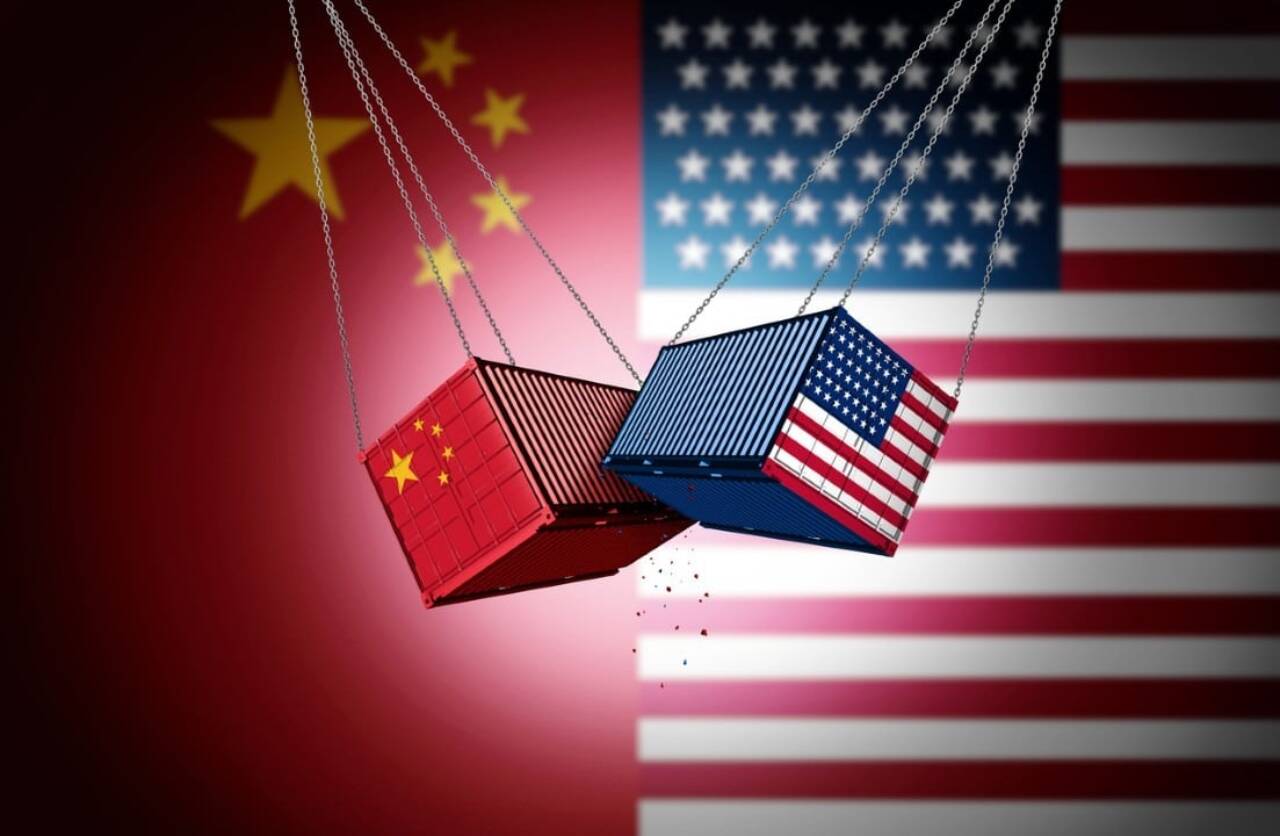
Global financial markets roared to life early Monday as the United States and China announced a temporary reduction in tariffs following intense weekend negotiations in Switzerland. The breakthrough, which promises to ease trade tensions, sent U.S. stock futures soaring, with the Dow Jones Industrial Average futures climbing over 1,000 points. Investors, buoyed by the prospect of reduced costs for businesses and consumers, poured into sectors heavily impacted by tariffs, such as technology and retail. The agreement marks a pivotal moment in the ongoing trade dispute, offering a glimmer of stability in an otherwise volatile economic landscape.
This development follows months of escalating tensions, with both nations imposing steep tariffs that disrupted supply chains and rattled markets. The latest round of talks, described as “highly productive” by U.S. officials, has shifted sentiment dramatically. Key details of the deal include:
- A 115% reduction in reciprocal tariffs for a 90-day period.
- U.S. tariffs on Chinese goods dropping to 30%.
- Chinese tariffs on U.S. imports falling to 10%.
- A commitment to further negotiations to address long-term trade imbalances.
The market’s immediate reaction underscores the significance of the agreement, with futures for major U.S. indices posting sharp gains. While challenges remain, the temporary truce has sparked optimism about global economic recovery.
Tariff reductions reshape market dynamics
The announcement of tariff cuts sent shockwaves through Wall Street, with futures for the Dow Jones Industrial Average surging by 1,009 points, or 2.4%, in premarket trading. S&P 500 futures climbed 3.1%, while Nasdaq-100 futures led the pack with a 4.1% increase. The rally reflects investor confidence that lower tariffs will alleviate pressure on industries reliant on cross-border trade, particularly electronics, semiconductors, and retail.
Best Buy, a major retailer of consumer electronics, saw its shares jump 8% in premarket trading, making it one of the top performers in the S&P 500. Other companies, including Dell Technologies and On Semiconductor, also gained more than 8%, driven by expectations of reduced costs for imported components. Amazon, a global e-commerce giant, advanced over 7%, signaling strong investor faith in the retail sector’s recovery. These gains highlight the ripple effect of the tariff reductions across industries heavily exposed to U.S.-China trade dynamics.
The agreement comes at a critical juncture for global markets, which have faced significant volatility in recent months. The S&P 500, for instance, narrowly avoided bear market territory—defined as a 20% drop from its February peak—following the initial tariff hikes. The latest deal has positioned the index to potentially end the year in positive territory, provided the morning’s gains hold through the trading session.
Roots of the trade dispute
Tensions between the U.S. and China escalated sharply last month when President Donald Trump announced 145% tariffs on Chinese imports. The move, described as a response to perceived trade imbalances, prompted swift retaliation from Beijing, which imposed 125% duties on U.S. goods. The tit-for-tat measures disrupted global supply chains, increased costs for manufacturers, and fueled uncertainty in financial markets.
The impact was particularly pronounced in technology and retail, where companies rely heavily on Chinese manufacturing and components. For example, electronics retailers faced higher prices for products like televisions and laptops, while U.S. agricultural exporters struggled under China’s retaliatory tariffs. The standoff pushed the S&P 500 to the brink of a bear market, erasing gains accumulated earlier in the year.
Despite the challenges, Trump’s decision to lower tariffs on other countries provided a partial reprieve for global markets. However, investors remained cautious, awaiting progress in U.S.-China negotiations. The weekend talks in Switzerland, facilitated by neutral mediators, marked a turning point, with both sides agreeing to a temporary de-escalation to stabilize trade relations.
🚨BREAKING: USA and China agree to a 90-day trade pause.
— Teslasti Basti (@BastianBraun121) May 12, 2025
US Treasury Secretary Bessent says the US will lower tariffs on Chinese goods to 30% (from 145%) for 90 days, while China will reduce its tariffs to 10% (from 125%) for the same period.pic.twitter.com/yVHcQlPF4N
Key sectors poised for recovery
The tariff reductions are expected to provide immediate relief to industries battered by the trade war. Technology and retail, in particular, stand to benefit from lower costs and improved supply chain efficiency. The premarket surge in stocks like Best Buy, Dell Technologies, and Amazon reflects investor optimism about the sector’s rebound.
Other industries, such as agriculture and automotive, are also likely to see gains. For instance:
- U.S. soybean farmers, hit hard by China’s earlier tariffs, may regain access to one of their largest export markets.
- Automakers reliant on Chinese parts could see reduced production costs, potentially lowering vehicle prices for consumers.
- Semiconductor firms, critical to global tech supply chains, are expected to benefit from stabilized trade flows.
- Retailers may pass on savings to consumers, boosting demand ahead of the holiday shopping season.
While the 90-day tariff reduction is temporary, it provides a window for companies to recalibrate their strategies and prepare for further negotiations. Industry leaders have expressed cautious optimism, noting that sustained progress will depend on both nations’ commitment to long-term trade reforms.
Global markets react to the news
The U.S.-China agreement reverberated beyond Wall Street, with global markets posting significant gains. European indices, including Germany’s DAX and France’s CAC 40, climbed by more than 2% in early trading, reflecting optimism about improved global trade conditions. In Asia, China’s Shanghai Composite rose 1.8%, while Hong Kong’s Hang Seng surged 2.5%, driven by strong performances in technology and consumer goods stocks.
The rally was fueled by expectations that lower tariffs would ease inflationary pressures and support global economic growth. Central banks, including the Federal Reserve and the European Central Bank, have closely monitored trade developments, as prolonged tensions could exacerbate inflation and slow recovery efforts. The temporary truce offers a reprieve, though analysts caution that uncertainties remain until a permanent agreement is reached.
Investors are also eyeing upcoming economic data to gauge the broader impact of the tariff cuts. The consumer price index for April, due Tuesday, will provide insights into inflation trends, while Thursday’s retail sales and producer price index reports will shed light on consumer spending and wholesale prices. These indicators will be critical in assessing whether the tariff reductions translate into tangible economic benefits.
U.S. officials hail productive talks
U.S. Treasury Secretary Scott Bessent described the Switzerland negotiations as “very productive,” emphasizing the reciprocal nature of the tariff reductions. The agreement, which lowers U.S. tariffs on Chinese goods to 30% and Chinese tariffs on U.S. imports to 10%, is seen as a pragmatic step toward de-escalation. Bessent noted that both sides are committed to further talks to address structural issues, such as intellectual property protections and market access.
Commerce Secretary Howard Lutnick echoed this sentiment, stating that the 10% baseline tariff rate on imports from other countries is likely to remain in place for the foreseeable future. The comment aligns with President Trump’s earlier remarks, signaling a consistent U.S. trade policy focused on protecting domestic industries while fostering global cooperation.
The negotiations were not without challenges, as both nations grappled with domestic pressures. In the U.S., manufacturers and farmers have urged swift resolution to the trade dispute, citing mounting losses from higher costs and reduced exports. In China, policymakers face the task of balancing economic growth with national interests, particularly in technology and manufacturing.
Investor sentiment shifts dramatically
The market’s reaction to the tariff cuts reflects a broader shift in investor sentiment, which had been dampened by months of uncertainty. The Dow, S&P 500, and Nasdaq Composite all posted losses last week, with the Dow slipping 0.2%, the S&P 500 shedding 0.5%, and the Nasdaq declining 0.3%. The tariff announcement has reversed this trend, with futures pointing to a strong start to the trading week.
Analysts attribute the rally to renewed confidence in corporate earnings, particularly for companies with significant exposure to international trade. The technology sector, which accounts for a substantial portion of the S&P 500’s market capitalization, is expected to lead the recovery. Firms like Apple, which rely on Chinese manufacturing, could see improved margins as import costs decline.
However, some investors remain cautious, noting that the 90-day tariff reduction is a temporary measure. The outcome of future negotiations will be critical in determining whether the current rally is sustainable or merely a short-term bounce.
Economic indicators under scrutiny
As markets celebrate the tariff cuts, attention is turning to upcoming economic data that will reveal the health of the U.S. economy. The consumer price index, scheduled for release on Tuesday, is expected to show whether inflation is moderating in response to improved trade conditions. Economists predict a slight uptick in consumer prices for April, driven by higher energy costs, but the tariff reductions could help offset these pressures.
Thursday’s retail sales report will offer insights into consumer spending, a key driver of economic growth. Strong retail performance, particularly in electronics and apparel, would signal that the tariff cuts are boosting consumer confidence. The producer price index, also due Thursday, will provide a glimpse into wholesale inflation, which has been a concern for manufacturers grappling with higher input costs.
These reports will play a crucial role in shaping investor expectations for the remainder of the year. While the tariff agreement has sparked optimism, persistent inflation or weak consumer spending could temper the market’s enthusiasm.
Industry leaders weigh in
Business leaders across various sectors have welcomed the tariff reductions, though many are tempering their optimism with caution. The National Retail Federation, representing major U.S. retailers, issued a statement praising the agreement for its potential to lower costs and stabilize supply chains. However, the organization urged both governments to pursue a permanent resolution to avoid future disruptions.
In the technology sector, executives from companies like Intel and Qualcomm have highlighted the importance of predictable trade policies. The semiconductor industry, which relies on global supply chains, has been particularly vulnerable to tariff-related disruptions. The tariff cuts are expected to ease these pressures, though industry leaders stress the need for long-term clarity.
Agricultural groups, including the American Soybean Association, expressed relief at the prospect of regained access to Chinese markets. Soybean exports, a major component of U.S. agricultural trade, plummeted during the height of the trade war, costing farmers billions in revenue. The temporary tariff reductions offer a lifeline, though farmers remain wary of future uncertainties.
Global trade landscape evolves
The U.S.-China agreement has broader implications for the global trade landscape, which has been strained by protectionist policies and geopolitical tensions. The temporary tariff cuts signal a willingness to prioritize economic stability over short-term political gains, a move that could encourage other nations to pursue similar de-escalation efforts.
For instance, the European Union, which has faced its own trade challenges with both the U.S. and China, may take cues from the agreement to advance its trade agenda. The EU has been negotiating with the U.S. to resolve disputes over steel and aluminum tariffs, and the U.S.-China deal could provide momentum for these talks.
Emerging markets, particularly in Asia and Latin America, are also likely to benefit from improved global trade conditions. Countries like Vietnam and Mexico, which have become manufacturing hubs amid the U.S.-China trade war, could see increased investment as supply chains stabilize.
Path forward for negotiations
The 90-day tariff reduction period sets the stage for further negotiations, with both the U.S. and China expressing a commitment to resolving longstanding trade issues. Key areas of focus include intellectual property protections, forced technology transfers, and market access for foreign firms. These issues have been at the heart of the trade dispute, and their resolution will require significant concessions from both sides.
U.S. negotiators are likely to push for stronger enforcement mechanisms to ensure China adheres to any future agreements. Meanwhile, Chinese officials have emphasized the need for mutual respect and equal treatment in trade talks. The Switzerland negotiations demonstrated that progress is possible, but the path to a permanent deal remains fraught with challenges.
As the 90-day period unfolds, markets will closely monitor developments in the talks. Any signs of renewed tensions could trigger volatility, while steady progress could sustain the current rally. For now, the tariff cuts have provided a much-needed boost to global markets, offering hope for a more stable economic future.