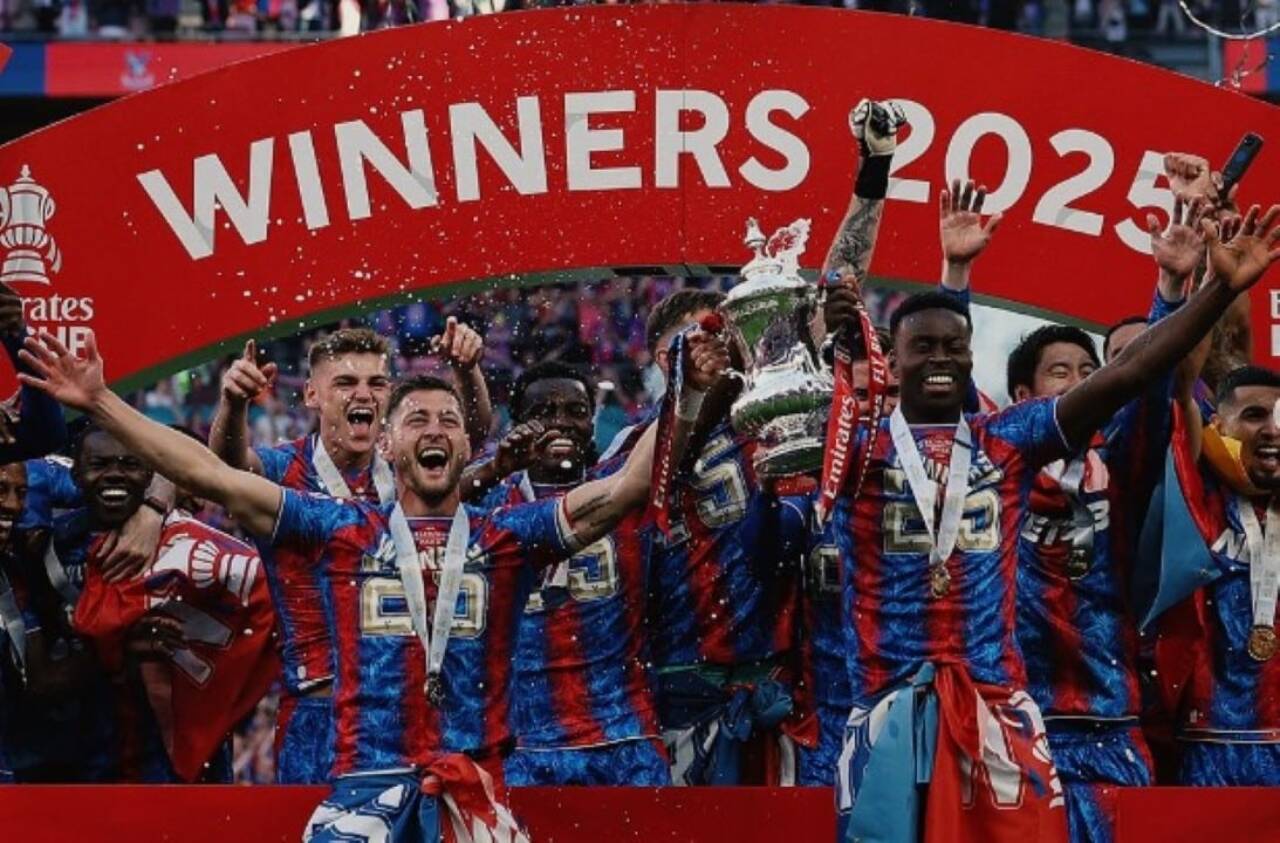
Wembley Stadium in London erupted with joy on May 17, 2025, as Crystal Palace, a south London club, defeated Manchester City 1-0 to claim the FA Cup, their first-ever triumph in the competition. The solitary goal, scored by Eberechi Eze in the 18th minute, ended a 119-year wait for a major trophy. Fans, overcome with emotion, celebrated a victory that etched the club’s name into English football history.
The final pitted an underdog with a modest trophy cabinet against one of the sport’s modern giants. Under manager Oliver Glasner, Crystal Palace displayed tactical discipline and resilience to withstand Manchester City’s relentless pressure, led by Pep Guardiola. The match hinged on a single moment of brilliance, with Eze’s strike proving decisive.
This victory was more than a trophy for Crystal Palace. It was a generational milestone for fans who had waited decades for such a moment. Below are key highlights of the achievement:
- First FA Cup title in the club’s history, founded in 1905.
- Ending a 119-year drought without a major domestic trophy.
- Validation of the Eagle Football Group’s management strategy.
- Defeating Manchester City, the reigning four-time Premier League champions.
The match also showcased stories of passion and perseverance, with fans of all ages filling Wembley with chants and tears. The triumph thrust Crystal Palace into the global spotlight, sparking discussions about the potential of mid-tier clubs in modern football.
Fan reactions and social media buzz
Wembley’s atmosphere was electric, with over 80,000 fans packing the stands. When the final whistle blew, Crystal Palace supporters erupted in song, while players embraced on the pitch. Eberechi Eze, the goal-scoring hero, was hoisted by teammates as the crowd roared. Manager Oliver Glasner praised the team’s unity and determination in post-match interviews.
Beyond the stadium, social media platforms lit up with reactions. Fans posted videos of the celebrations, and rival clubs like Everton and West Ham congratulated Palace online. The hashtag #CPFC trended across the UK, with thousands of posts celebrating the upset. Even international fans, including those of Brazil’s Botafogo, another Eagle Football Group club, joined the festivities online.
Global media outlets amplified the story. Sports pages hailed the historic upset, with headlines emphasizing Palace’s courage against a heavily favored opponent. The coverage underscored football’s enduring capacity for surprises, even in an era dominated by financial powerhouses.
Journey to the final
Crystal Palace’s path to the FA Cup final was fraught with challenges. In the semifinals, they faced Aston Villa, a formidable Premier League side, and secured a convincing victory in April 2025. Earlier rounds saw them dispatch teams like Leicester City and Sheffield United, showcasing consistency throughout the tournament.
Each match tested the squad, which blends young stars like Eze and Adam Wharton with seasoned players like Marc Guéhi. Glasner’s strategy, emphasizing quick transitions and defensive solidity, proved effective against stronger opponents. Key moments from the campaign include:
- A 2-0 win over Leicester City in the round of 16.
- A 4-1 thrashing of Sheffield United in the quarterfinals.
- A semifinal triumph against Aston Villa, sealed by Jean-Philippe Mateta’s goal.
- Flawless defensive organization in the final against Manchester City.
Fan support was a constant throughout the run. Palace supporters filled stadiums for every match, creating an intimidating atmosphere for opponents. This energy peaked at Wembley, where fans sang tirelessly for over 100 minutes, including stoppage time.
Eberechi Eze’s starring role
At 26, Eberechi Eze emerged as the final’s standout performer. The London-born midfielder scored the decisive goal with a precise shot from outside the box, catching City’s goalkeeper Ederson off guard. The move, sparked by a swift passing sequence, highlighted Eze’s technical skill and composure under pressure. He was named man of the match by attending media.
Eze’s journey with Crystal Palace has been one of resilience. Signed from Queens Park Rangers in 2020, he battled injuries that hampered his early seasons. In 2024/2025, however, he hit peak form, becoming the linchpin of Glasner’s system. His final performance solidified his reputation as a Premier League star.
Beyond his goal, Eze contributed with tackles and accurate passes, helping Palace maintain control. His rise from youth academies to FA Cup hero drew comparisons to club legend Wilfried Zaha. Fans now view him as the face of Palace’s new era.
Tactical masterclass by Crystal Palace
Crystal Palace’s victory was no fluke. Oliver Glasner, renowned for his meticulous preparation, devised a plan to neutralize Manchester City’s strengths. Palace deployed a compact five-man defense to thwart City’s attacking stars, Erling Haaland and Phil Foden. In midfield, Adam Wharton and Jefferson Lerma tirelessly marked opponents, while Eze and Michael Olise spearheaded counterattacks.
The strategy also involved pressing City’s buildup play, forcing uncharacteristic errors. One such mistake led to Eze’s goal, as City’s defense lost possession under pressure. Tactical highlights include:
- A disciplined backline, led by Guéhi and Joachim Andersen.
- Intense midfield pressing that stifled Kevin De Bruyne.
- Rapid counterattacks, driven by Olise and Eze.
- Resilience during 10 minutes of stoppage time.
Analysts lauded Glasner’s approach, crediting his adaptability against a technically superior side. The victory elevated his status as one of Europe’s rising coaching talents, building on his successful tenure at Eintracht Frankfurt.
Eagle Football Group’s vision
The FA Cup triumph reflects the success of the Eagle Football Group, the consortium managing Crystal Palace, Brazil’s Botafogo, and France’s Lyon. Led by businessman John Textor, the group has invested in infrastructure, recruitment, and long-term planning since taking over Palace. The 2025 title marks a milestone for this ambitious project, which aims to elevate the club’s standing in the Premier League.
Recent years saw Palace upgrade their training facilities and sign promising talents like Wharton and Olise. Textor’s focus on nurturing local players and financial sustainability gained traction with the Wembley win. The achievement drew parallels with Botafogo’s resurgence in Brazil under the same ownership.
Fans have embraced the Eagle Football Group’s influence. Banners and chants honoring Textor filled Wembley, and media outlets highlighted the group’s role in reviving Palace’s fortunes. The FA Cup victory is seen as the first step toward establishing the club as a consistent contender.
FA Cup’s storied history
The FA Cup, launched in 1871, is the world’s oldest football competition. It brings together teams from all levels of English football, from Premier League giants to amateur sides in regional leagues. Crystal Palace’s 2025 victory earned them a place among the tournament’s storied champions, alongside clubs like Manchester United, Arsenal, and Liverpool.
Palace had reached the FA Cup final twice before, in 1990 and 2016, but fell short both times. Their 2025 triumph echoed other historic upsets, such as Wigan’s 2013 win. Notable FA Cup facts include:
- The tournament’s 154th edition occurred in 2025.
- Arsenal holds the record with 14 titles.
- Manchester United was the previous champion in 2024.
- The format encourages upsets, pitting minnows against giants.
Palace’s victory reaffirmed the FA Cup’s allure, drawing millions of viewers for its unpredictability. The Wembley final, broadcast to over 100 countries, cemented the competition’s status as a global sporting highlight.
The fans’ moment
Crystal Palace fans were the heartbeat of the final. Known for their unwavering loyalty, they filled Wembley’s stands, creating a vibrant atmosphere. Their chants echoed throughout the match, lifting the players during City’s most intense attacks. The victory held special meaning for lifelong supporters who had endured decades of near-misses.
Many fans traveled from across the UK to witness the historic moment. Stories of multi-generational Palace families dominated post-match coverage, with grandparents and children celebrating together. The win resonated deeply with older fans who had supported the club through lean years.
The supporters’ creativity shone through, with choreographed displays and flags turning Wembley into a sea of red and blue. After the match, thousands stayed to sing club anthems, while players completed a lap of honor to thank the crowd, cementing the bond between team and fans.
Match statistics
The 2025 FA Cup final was a tightly contested affair, with statistics reflecting Palace’s efficiency. Despite Manchester City’s 68% possession compared to Palace’s 32%, the Londoners made their chances count. Key figures from the game include:
- Shots on goal: Manchester City (12), Crystal Palace (5).
- Corners: City (8), Palace (3).
- Fouls committed: City (10), Palace (14).
- Goalkeeper saves: Dean Henderson (Palace) with 5, Ederson (City) with 2.
The numbers highlight Palace’s ability to withstand a dominant opponent. Goalkeeper Dean Henderson’s five saves were pivotal in preserving the 1-0 lead. The team’s discipline, with only one yellow card, underscored their composure under pressure.
Lasting legacy
Crystal Palace’s FA Cup win will reverberate for years. The title secures a spot in the next UEFA Europa League, marking a return to European competition after decades. The global exposure is expected to attract new sponsors and boost revenue, with plans to upgrade Selhurst Park stadium already in discussion.
For the squad, the victory builds momentum for the Premier League season. Players like Eze, Olise, and Wharton, already on scouts’ radars, are now targets for top European clubs. The win also strengthens Glasner’s position, potentially drawing high-profile signings to south London.
Locally, the triumph has sparked pride in Croydon, where Palace is a cultural cornerstone. Schools are planning events to honor the achievement, and the local council announced a public tribute to the team. The victory has united the community in celebration.
Global resonance
The Crystal Palace win echoed beyond the UK. In Brazil, Botafogo fans, linked through the Eagle Football Group, celebrated as if it were their own triumph. Social media posts showed Brazilian supporters waving Palace flags, emphasizing the clubs’ shared ownership. Brazilian media covered the final, focusing on Eze’s goal and Textor’s leadership.
In countries like the US and Australia, where the Premier League enjoys a massive following, Palace’s underdog story captivated audiences. The final, broadcast by the BBC and global sports networks, reached millions, boosting the club’s international profile. The win also fueled discussions about the FA Cup’s role in leveling football’s playing field.