

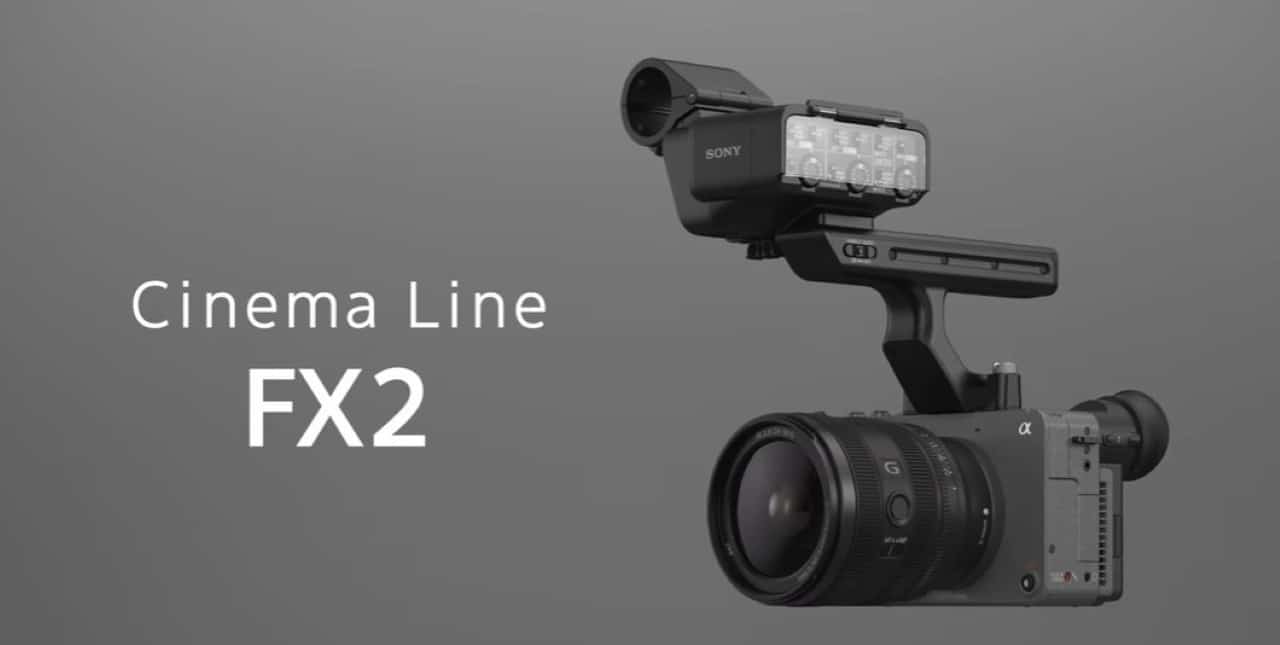
Sony expanded its compact cinema camera lineup on May 28, 2025, with the announcement of the Sony FX2, a hybrid camera merging advanced video features with robust still photography capabilities. Built around a 33-megapixel full-frame sensor derived from the Alpha 7 IV, the FX2 targets filmmakers and content creators seeking versatility without compromising quality. Its standout feature, a tilting electronic viewfinder (EVF), sets it apart in the market, while its FX3-inspired body ensures ergonomic handling. Priced at $2,698 and available for pre-order, the FX2 has sparked excitement for its ability to deliver oversampled 4K video from 7K capture.
The FX2 strengthens Sony’s dominance in imaging technology, offering a camera that balances innovation with practicality. Unlike its predecessors, the FX3 and FX30, the FX2 emphasizes high-resolution stills alongside cinematic workflows, catering to hybrid creators. Key specifications include:
- 33-megapixel full-frame sensor with 15 stops of dynamic range.
- Oversampled 4K at 30p and 4K 60p with S35 crop.
- Tilting 3.68-million-dot EVF, a rare feature in its class.
The camera has generated buzz among filmmakers and photographers, with social media discussions highlighting its potential as a game-changer. Below, we dive into the technical details and innovations that make the FX2 a compelling addition to the FX lineup.
High-resolution sensor
The Sony FX2 features a 33-megapixel back-illuminated Exmor R CMOS full-frame sensor, delivering exceptional detail for both video and stills. It supports oversampled 4K video from 7K capture at up to 30p, ensuring superior sharpness for cinematic productions. In S35 (APS-C) mode, the camera records 4K at 60p, expanding optical options with compact lenses. With 15 stops of dynamic range and dual-gain architecture (base ISO 800 and 4000 for S-Log), the sensor excels in varied lighting conditions.
Optimized for low noise, the sensor’s ISO range extends from 80 to 409,600, ideal for low-light scenarios like nighttime shoots or controlled studio settings. Recording in 10-bit 4:2:2 with S-Log3 and S-Cinetone profiles ensures rich colors and extensive post-production flexibility. The FX2 also supports 16-bit RAW output via HDMI, meeting the demands of professional workflows.
Tilting electronic viewfinder
The FX2’s tilting 3.68-million-dot EVF, adjustable from 0 to 90 degrees, is a standout feature rarely seen in hybrid or cinema cameras. It enables precise composition in challenging angles, such as low shots or high tripod setups, offering an alternative to external LCD monitors. Unlike the EVF-less FX3, the FX2 caters to filmmakers who prefer viewfinders for accurate framing.
Paired with a 3-inch, 1.04-million-dot LCD screen, the EVF provides versatile viewing options. Its integration addresses a long-standing request from videographers, enhancing on-set efficiency without relying on bulky accessories. Sony’s inclusion of this feature underscores its focus on ergonomic advancements tailored to dynamic shooting environments.
Recording capabilities
The FX2 offers a versatile range of recording formats for filmmakers and content creators. It captures oversampled 4K from 7K at up to 30p, delivering crisp, detailed footage. For smoother motion, 4K 60p is available with an S35 crop, though it lacks the 4K 120p capability of the FX3. Full HD at 120p supports slow-motion sequences, meeting the needs of most projects.
Supported codecs include XAVC S, XAVC S-I, and XAVC HS, all in 10-bit 4:2:2 with Long GOP and All-I compression. Picture profiles like S-Cinetone provide a cinematic look straight out of the camera, while S-Log3 offers flexibility for color grading. Additional features include:
- 16-bit RAW output via HDMI for external recorders.
- Custom LUT support for real-time visualization.
- Cine EI and Cine EI Quick modes for optimized exposure settings.
While some filmmakers may miss a 7K open gate option for creative aspect ratios, the FX2’s 4K quality meets the industry’s predominant standard.
Ergonomic design
Drawing from the FX3, the FX2’s body prioritizes ergonomics and functionality. Weighing just 646 grams (including battery and SD card), it’s lightweight and compact, ideal for extended shoots. Its magnesium alloy chassis, resistant to dust and moisture, ensures durability in harsh conditions. Four ¼-20 UNC and one M3 mounting points eliminate the need for cages in basic setups, streamlining accessory integration.
An internal fan provides active cooling, enabling prolonged 4K recording without overheating. The optional XLR handle, compatible with professional microphones, enhances audio capture for compact setups. The updated menu system, featuring a “BIG6” screen for key parameters, keeps the frame clear for monitoring, improving usability on set.
Advanced autofocus
The FX2 boasts a fast hybrid autofocus system with an AI-processing unit, featuring 759 phase-detection and 425 contrast-detection points across 92% of the frame. Its Eye-AF tracks humans, animals, birds, insects, cars, trains, and planes, with auto modes for subject recognition. Real-time tracking, enhanced by AI, ensures focus on moving subjects in complex scenes.
Operating down to -4 EV, the autofocus excels in low light. Features like Focus Map visualize depth of field, while Breathing Compensation minimizes angle-of-view shifts during focus changes. These tools make the FX2 a reliable choice for fast-paced shoots, from documentaries to action sequences.
Image stabilization
The FX2’s in-body image stabilization (IBIS) offers up to 5 stops of compensation, with Dynamic Active, Active, and Standard modes. Dynamic Active applies a slight crop for enhanced smoothness in video, while Standard preserves the full frame. Compatible lenses leverage lens-body communication for additional stability.
For dynamic shoots, software stabilization via Catalyst Browse uses gyro data for post-processing corrections. This hybrid approach, combining IBIS and software, delivers steady footage without gimbals, benefiting low-budget productions or handheld work.
Stills photography features
Despite its cinema focus, the FX2 excels in still photography. Its 33-megapixel sensor supports high-resolution images suitable for large prints or detailed crops. Continuous shooting at 10 fps (mechanical or electronic shutter) handles up to 583 compressed RAW frames. Log shooting for stills ensures color consistency with video workflows.
Photographers benefit from LUT support for accurate EVF/LCD previews and Creative Look profiles for in-camera adjustments. Silent shooting suits discreet environments like weddings or wildlife photography, positioning the FX2 as a true hybrid tool.
Connectivity and streaming
The FX2 meets modern content creation demands with robust connectivity. UVC/UAC support transforms it into a 4K webcam for streaming or video calls. A USB-C 3.2 Gen 2 port and 5 GHz/2.4 GHz Wi-Fi enable fast data transfers and remote control via the Imaging Edge Mobile app.
The “Shot Mark” feature streamlines editing by tagging key moments during recording, compatible with Catalyst Browse. HDMI Type-A, microphone, and headphone ports support external devices, making the FX2 ideal for live productions and studio setups.
Comparison with FX lineup
The FX2 slots between the FX3 and FX30, balancing resolution and video performance. The FX3’s 12-megapixel sensor excels at 4K 120p, while the FX30’s 26-megapixel APS-C sensor is more budget-friendly but S35-limited. Key distinctions include:
- FX2: 33 MP full-frame, tilting EVF, 4K 60p with S35 crop.
- FX3: 12 MP full-frame, no EVF, 4K 120p without crop.
- FX30: 26 MP APS-C, no EVF, 4K 120p with crop.
Priced mid-range, the FX2 appeals to filmmakers seeking versatility without the FX3’s premium cost or the FX6’s complexity. Its full-frame/S35 flexibility supports diverse lens options, from APS-C to G Master.
Battery and storage
Powered by the NP-FZ100 battery (16.4 Wh), the FX2 delivers approximately 440 shots (EVF) or 530 shots (LCD), and about 100 minutes of continuous video recording, aided by active cooling. Dual media slots support CFexpress Type-A and SD UHS-II cards, offering flexibility for high-bitrate codecs like XAVC S-I.
CFexpress Type-A ensures fast write speeds for demanding recordings, while SD cards suffice for lighter workflows. Simultaneous recording to both media types provides backup or extended capacity, critical for professional shoots.
Build and accessories
The FX2’s FX3-inspired body includes tally lights for multicamera setups, enhancing production efficiency. Tactile buttons and dials ensure intuitive operation in challenging conditions. Dust and moisture resistance, with sealed battery and chassis joints, supports outdoor reliability.
The optional $400 XLR handle adds professional audio inputs and controls, ideal for documentaries or interviews. Built-in mounting points reduce reliance on cages, lowering setup costs and weight for independent creators. The FX2’s accessory compatibility, including monitors and rigs, maximizes its production versatility.
Market reception
The FX2’s launch drew praise from filmmakers and creators, particularly for its tilting EVF and stills capabilities. X posts lauded Sony’s blend of Alpha and FX strengths, though some noted the lack of 4K 120p as a drawback. Pre-orders surged post-announcement, reflecting demand among videographers seeking an affordable FX3 alternative.
Compared to the Canon EOS R5 C, which offers 8K and 4K 120p, the FX2 prioritizes cine ergonomics and 4K efficiency. Sony’s focus on industry-standard 4K aligns with most production needs, positioning the FX2 as a strong contender for professionals and enthusiasts alike.