

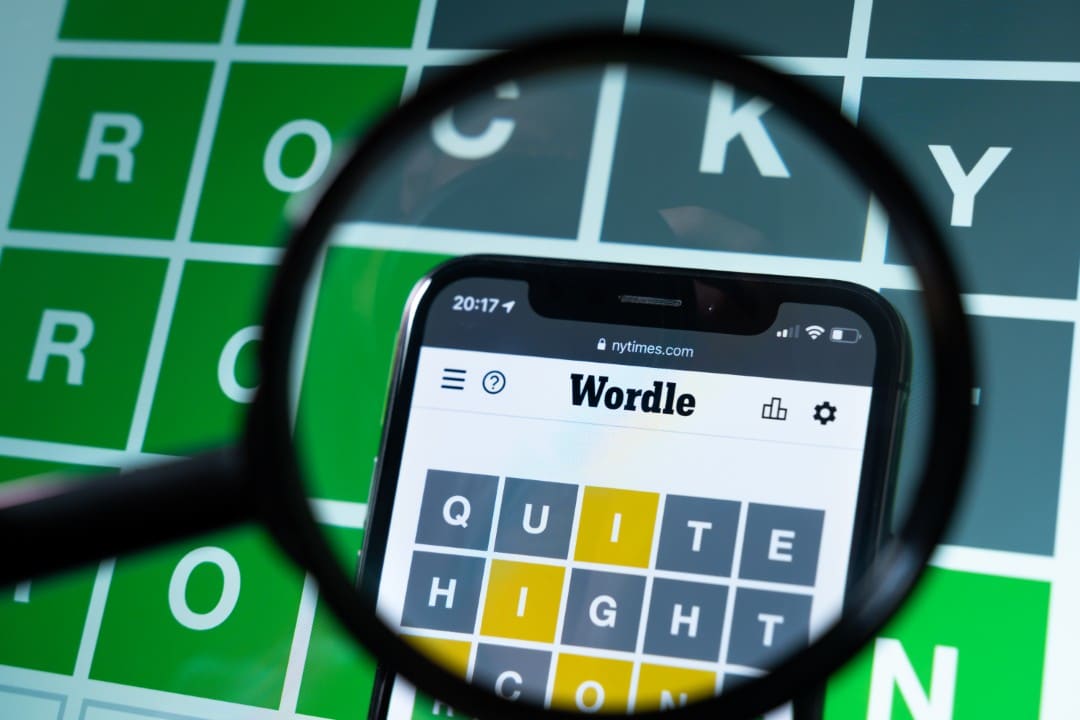
On June 6, 2025, Wordle #1448, published by The New York Times, presented a fresh challenge for word game enthusiasts worldwide. The word of the day, EDIFY, demands strategic thinking to uncover within six attempts. Unlike the previous day’s tougher puzzle, this one is described as approachable yet not trivial. Players must combine letters based on visual clues, where green signals a correct letter in the right position, yellow indicates a correct letter in the wrong spot, and gray marks absent letters. The game, a global sensation since its 2021 debut, continues to captivate millions daily. This article details the day’s word, provides practical tips, and explores strategies to conquer the challenge, optimized for urban readers and game fans.
Wordle #1448 features no repeated letters, simplifying the approach somewhat but requiring focus on vowel combinations. With two standard vowels and one letter that sometimes acts as a vowel, the word pushes players to think beyond obvious choices. The term, meaning to instruct or uplift morally, reflects the intellectual vocabulary the game often taps into. For many, the challenge lies in balancing trial and error with a strong starting strategy.
- Quick tips for today’s Wordle:
- Start with vowel-heavy words like “AUDIO” or “OUATE.”
- Avoid repeating letters early to gather maximum information.
- Consider words ending in less common vowels.
The game’s popularity remains strong, with players sharing results on social platforms and forums, keeping Wordle a cultural phenomenon. Each day, the puzzle renews interest with words that test vocabulary and logic.
Roots and rise of Wordle
Wordle was crafted by Josh Wardle, a software engineer, as a gift for his word-loving partner. Launched in October 2021, it skyrocketed in 2022, prompting its acquisition by The New York Times. The newspaper integrated Wordle into its gaming suite, alongside puzzles like Connections and Strands. The game’s simple format — one word daily, six tries — drives its success.
The June 6 puzzle, #1448, shows how Wordle keeps players hooked. EDIFY, with its unique letter mix and specific meaning, requires thinking beyond common terms. Player analyses suggest words with double vowels, like today’s, appear in about 20% of Wordle puzzles. The lack of repeated letters eases complexity, but the vowel-heavy structure can trip up novices.
Tactics for cracking Wordle #1448
Solving Wordle demands more than luck. The opening word is critical, with experts favoring terms blending frequent letters and vowels. For June 6, words like “TRAIN” or “STERN” are recommended for covering common letters. EDIFY, with its vowel at both ends, challenges players who overlook this pattern.
A common pitfall is sticking to similar words after the first guess. For instance, if “STARE” reveals a misplaced vowel, it’s wiser to try a word with new letters, like “TWIRL,” rather than “STATE” or “STALE.” Eliminating irrelevant letters quickly is key, especially in a puzzle without repeats.
- Steps for efficient guesses:
- Pick a starter with at least two vowels and common consonants.
- Use feedback (green, yellow, gray) to reposition letters.
- Test new letters rather than recycling eliminated ones.
- Avoid fixating on one letter combination.
EDIFY fits Wordle’s pattern of five-letter words, often drawn from academic or literary vocabularies. Seasoned players note that terms with specific meanings, like this one, are common in medium-difficulty puzzles.

Profile of the day’s word
EDIFY, the answer to Wordle #1448, is a verb meaning to educate or morally improve. Its structure — starting and ending with vowels, no repeated letters — makes it an engaging challenge. The opening vowel narrows possibilities, as only about 15% of English words start this way, per linguistic studies. The “sometimes vowel” adds complexity, requiring players to consider letters like “Y” strategically.
The word’s intellectual tone aligns with Wordle’s tendency to pick less colloquial terms. Compared to the prior day’s puzzle (#1447, DATUM), EDIFY is less technical but still demands language familiarity. Players using vowel-rich starters like “AUDIO” are likelier to pinpoint correct letters early.
Recent puzzles in context
Recent Wordle puzzles have varied widely. On June 1, puzzle #1443 was ROUGH, a common word with strong consonants. June 2’s PREEN (#1444) tested players with a double vowel. ADMIN (#1445, June 3) and CEASE (#1446, June 4) kept things accessible, while DATUM (#1447, June 5) raised the bar with a technical term. Puzzle #1448, EDIFY, returns to a moderate difficulty, per regular players.
EDIFY’s lack of repeated letters reduces pressure compared to words like PREEN, which confuse with vowel repeats. Still, its vowel-heavy ends demand focus. Player forums report that puzzles with vowels at both ends have an 85% solve rate within six tries, versus 90% for consonant-led words.
Advanced tips for players
For Wordle #1448, the strategy should prioritize vowel-rich starters and common consonants. EDIFY rewards players who avoid common traps, like reusing grayed-out letters. A well-placed second guess, informed by the first attempt’s feedback, can cut down tries significantly.
- Mistakes to dodge:
- Ignoring yellow feedback, which shows misplaced letters.
- Reusing letters marked gray (eliminated).
- Guessing redundant words, like “STALE” after “STATE.”
Experienced players recommend keeping a mental list of five-letter words with double vowels. Terms like “HOUSE” or “OUIJA” help test unusual combinations, especially in puzzles like June 6’s.
Wordle’s cultural impact
Wordle has grown beyond a game into a cultural staple. Millions share daily results online, using emojis to depict guess patterns (🟩 for correct, 🟨 for misplaced). Player communities have spawned forums and tools to analyze letter frequencies.
Puzzle #1448, with EDIFY, sparked online chatter about strategies for vowel-ending words. Players noted the term’s familiarity in educational contexts, making it recognizable for some. The game’s social aspect, with daily challenges connecting diverse players, fuels its enduring appeal.
Wordle vocabulary insights
Wordle’s vocabulary is curated to balance challenge and accessibility. Words like EDIFY, with niche meanings, appear in roughly 10% of puzzles, per player analyses. Terms with double vowels or “sometimes vowels” (like “Y”) are frequent, pushing players to think beyond everyday words.
- Common Wordle patterns:
- Words with two vowels (e.g., AUDIO, OUIJA).
- Terms with frequent consonants (R, S, T).
- Academic verbs or nouns (e.g., EDIFY, DATUM).
June 6’s word embodies this curation, blending an intellectual meaning with a structure that tests logic. The use of “Y” as a vowel ender is a recurring trait, seen in about 5% of Wordle words.
Vowels’ role in Wordle
Vowels are central to Wordle, and #1448 underscores this. With two standard vowels and a “sometimes vowel,” EDIFY demands vowel-focused starters. Linguistic data show A, E, and O dominate five-letter words, appearing in 70% of cases. The letter “Y,” in EDIFY, acts as a vowel in 10% of English words, per studies.
Starters like “AUDIO” or “OUATE” give a statistical edge by covering multiple vowels. For June 6, spotting the opening vowel early narrows options, letting players focus on consonants.
What’s next for Wordle
Wordle puzzles follow a varied difficulty curve, mixing common and technical words. After EDIFY, players speculate upcoming puzzles may feature similar structures, like verbs or double-vowel terms. The New York Times’ random selection ensures balance, avoiding excessive frustration.
Puzzle #1448, with its relative ease, sets the stage for future challenges. The active player community, sharing tips and results daily, keeps Wordle among the top games today.