

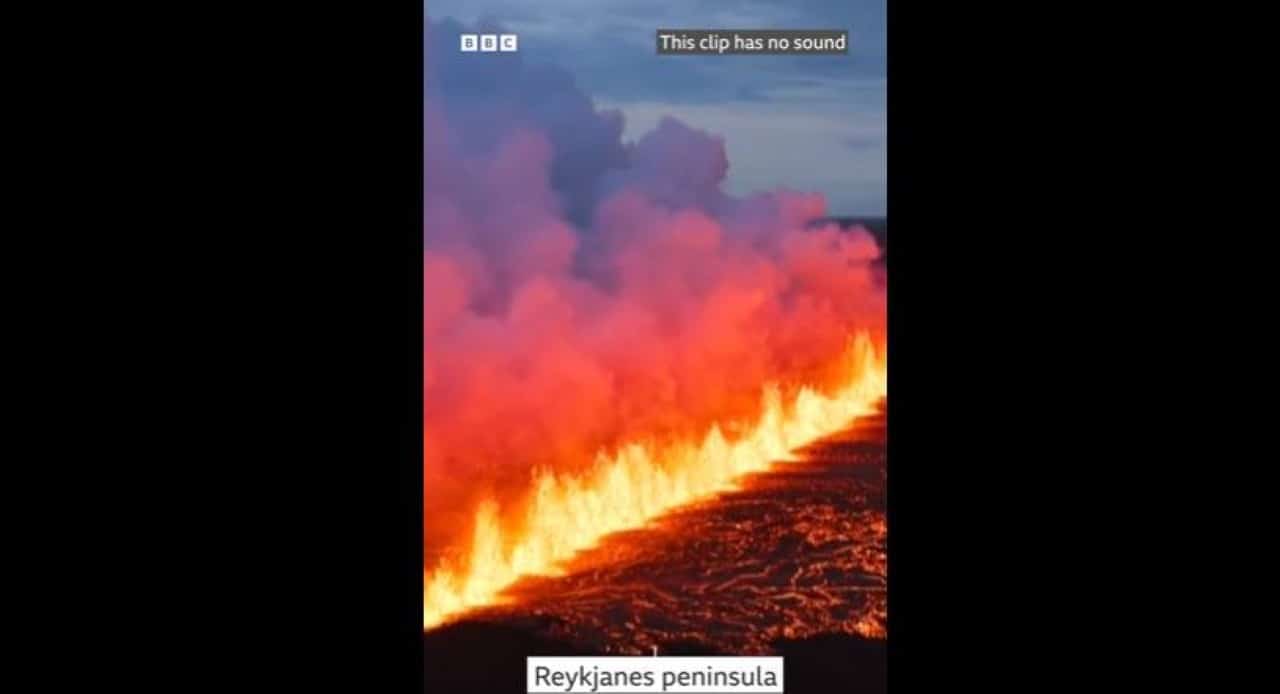
A new volcanic eruption shook the Reykjanes Peninsula in southwest Iceland in the early hours of July 16, 2025, marking the 12th such event in four years in the region. Lava began spewing from an 800-meter fissure in the Sundhnukur crater, near the fishing village of Grindavik and the renowned Blue Lagoon geothermal resort, prompting the immediate evacuation of both. The event, which started at 3:56 a.m. local time after a series of earthquakes, poses no immediate threat to infrastructure or residents, according to authorities. The gray smoke and lava flow, directed southeast, have drawn global attention but also raised concerns about safety and the impact on tourism. Iceland, known for its intense geological activity, faces another chapter in its relationship with volcanoes.
The eruption was preceded by a series of tremors that alerted residents and authorities. The evacuation of Grindavik, a village of about 4,000 inhabitants, and the Blue Lagoon, a major tourist attraction, was carried out efficiently. Volcanic activity in the Reykjanes Peninsula, dormant for 800 years until 2021, has intensified, and experts suggest this pattern may persist for years.

- Key initial impacts: Evacuation of Grindavik and Blue Lagoon.
- Eruption location: Sundhnukur crater, between Grindavik and the resort.
- Current risk: Low, with lava flowing southeast, away from infrastructure.
- Geological context: 12 eruptions since 2021 in the Reykjanes Peninsula.
Geological context of the Reykjanes Peninsula
The Reykjanes Peninsula, located about 40 km from the capital Reykjavik, is one of Iceland’s most geologically active areas. Since 2021, when the Fagradalsfjall volcano erupted after nearly eight centuries of dormancy, the region has experienced a series of volcanic events. The current eruption in the Sundhnukur volcanic system reinforces this trend of continuous activity. Experts note that Iceland, situated on a tectonic plate boundary, is prone to such events due to magma movement beneath the Earth’s crust.
The Sundhnukur volcanic system is closely monitored by the Icelandic Meteorological Office, which recorded signs of magma buildup in recent months. The current 800-meter fissure is smaller compared to previous eruptions, but the volume of lava remains significant. The southeast flow direction minimizes immediate risks to Grindavik and the Blue Lagoon, though authorities remain vigilant.
Safety measures and evacuation
Icelandic authorities acted swiftly to ensure the safety of residents and tourists. The evacuation of Grindavik was completed within hours, with residents relocated to nearby safe areas. The Blue Lagoon, hosting around 800 visitors at the time of the alert, was also evacuated efficiently. According to Helga Arnadottir, a civil defense spokesperson, the process was “smooth, as in previous evacuations.”
- Grindavik evacuation: Residents relocated to neighboring towns.
- Blue Lagoon closure: Resort halted operations temporarily.
- Ongoing monitoring: Authorities track the speed of the lava flow.
- Volcanic gas alert: Winds may carry smoke to populated areas.
Experience from prior eruptions enabled a more coordinated response. Since 2023, protective rock barriers have been built to divert lava flows from Grindavik and the Svartsengi geothermal power plant, which supplies the region with hot water. However, the unpredictability of eruptions continues to challenge authorities.
Impact on tourism and the local economy
Tourism is a cornerstone of Iceland’s economy, with the Blue Lagoon being one of the country’s top attractions, drawing thousands of visitors annually. The temporary closure of the resort could affect tourism revenue. In 2024, Icelandair reported an 8% drop in bookings to Iceland due to frequent eruptions, despite an overall increase in passenger numbers.
Conversely, eruptions also attract tourists interested in “volcano tourism.” Between 2021 and 2023, less hazardous eruptions, like those at Fagradalsfjall, allowed safe viewing routes for visitors. However, recent eruptions, including the 2025 event, have been more unpredictable, leading authorities to restrict access to affected areas.
- Temporary closure: Blue Lagoon suspended operations for safety.
- Economic impact: Decline in tourism bookings in 2024.
- Volcano tourism: Eruptions attract visitors but with restrictions.
- Government support: Offers to buy homes in Grindavik for relocation.
Eggert Solberg Jonsson, Grindavik’s recreation and culture director, expressed hope that tourism operations could resume as early as July 16. However, uncertainty about the eruption’s duration keeps the sector on alert.
History of eruptions in Iceland
Iceland is known as the “land of ice and fire” due to its combination of glaciers and active volcanoes. The country has over 30 volcanic systems, and the Reykjanes Peninsula, though dormant for centuries, has become a focal point since 2021. The Fagradalsfjall eruption in 2021 marked the start of a new cycle of activity, followed by events in Meradalir and Litli-Hrútur.
The current eruption, while less intense than some previous ones, underscores the unpredictability of volcanic activity. In 2024, an eruption disrupted the hot water supply to thousands of homes by damaging a pipeline from the Svartsengi plant. Authorities now closely monitor for potential new damage to infrastructure.
- 2021: Fagradalsfjall eruption, first in 800 years.
- 2023: Three eruptions in the Reykjanes Peninsula.
- 2024: Five eruptions, including infrastructure damage.
- 2025: 12th eruption since 2021, focused on Sundhnukur.
Environmental risks and monitoring
The current eruption poses no immediate threat to infrastructure, but volcanic gases are a concern. Southeast winds could carry smoke toward areas near Keflavik International Airport, though air traffic remains unaffected. Iceland has experience managing eruptions without major disruptions to flights, unlike the 2010 Eyjafjallajökull eruption, which paralyzed air travel across Europe.
The Icelandic Meteorological Office monitors air quality in real time, providing pollution maps to inform residents and visitors. People with respiratory issues are advised to avoid areas near the volcano.
- Volcanic gases: May affect populated areas, depending on winds.
- Air monitoring: Pollution maps help prevent risks.
- Flight safety: No impact on air traffic so far.
- Prevention: Alerts for sensitive groups, such as asthmatics.
Outlook for Grindavik and Blue Lagoon
Grindavik faces an uncertain future. Since 2023, the Icelandic government has offered to buy homes from residents to facilitate relocation, with most accepting the offer. The village, repeatedly evacuated, has suffered significant damage from earthquakes and lava flows. Still, some residents plan to return once the situation stabilizes.
The Blue Lagoon, a symbol of Icelandic tourism, awaits safety clearance to reopen. Its reopening depends on assessments of lava flow direction and gas concentrations. Past eruptions suggest the resort could resume operations within days if no complications arise.
Curiosities about Icelandic volcanic activity
Iceland is a natural laboratory for volcanologists. Recent eruptions have provided valuable data on magma movement and mantle composition. The Fagradalsfjall eruption, for instance, revealed crystals in lava samples indicating materials from different mantle layers.
- Magma composition: Current lava differs from past eruptions.
- Scientific studies: Eruptions aid understanding of mantle dynamics.
- Volcano tourism: Attracts scientists and tourists worldwide.
- Local resilience: Residents adapt to frequent evacuations.
Iceland’s volcanic activity is a reminder of nature’s power and the country’s ability to adapt. As authorities monitor the situation, residents and visitors await updates on safety and the reopening of affected areas.