Trump pulls US out of UNESCO, criticizes UN body’s ideological agenda


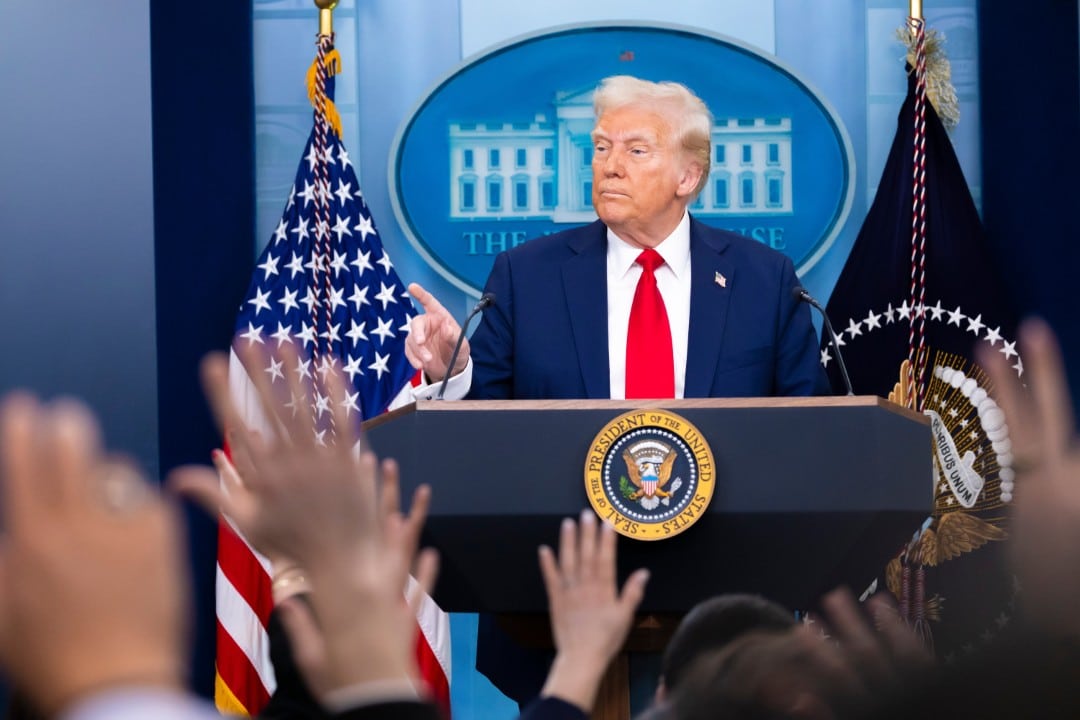
In a move that marks another chapter in Donald Trump’s foreign policy, the United States announced on Tuesday, July 22, 2025, its withdrawal from the United Nations Educational, Scientific and Cultural Organization (UNESCO), with the decision taking effect in December 2026. The measure, confirmed by the U.S. State Department, reflects the Trump administration’s view that UNESCO promotes an “ideological” and “globalist” agenda, contrary to the “America First” policy. The withdrawal, the third in the country’s history, was lamented by UNESCO’s Director-General, Audrey Azoulay, but did not surprise the agency, which had anticipated the decision. The U.S. exit, accounting for about 8% of the organization’s budget, could impact global programs in education, science, and culture, including the preservation of World Heritage Sites.
The announcement reflects a revival of Trump’s isolationist stance, as he previously withdrew the U.S. from UNESCO in 2018 during his first term, citing “anti-Israel bias” and the need for reforms. The decision was reversed in 2023 by the Biden administration, but with Trump’s return to the White House, the policy of exiting multilateral organizations has gained new momentum.
- Reasons for withdrawal: Criticism of the UN’s sustainable development agenda.
- Financial impact: 8% reduction in UNESCO’s budget.
- Historical context: U.S. previously left UNESCO in 1984 and 2018.
- Timeline: Withdrawal effective in December 2026.
Reactions to Trump’s decision
Trump’s decision to withdraw the U.S. from UNESCO sparked immediate reactions on the international stage. UNESCO Director-General Audrey Azoulay expressed deep regret but noted that the agency was prepared for the impact. “UNESCO remains committed to its mission of promoting peace through education, science, and culture, even amidst financial challenges,” Azoulay stated. The Paris-based organization now faces the task of diversifying its funding sources to sustain global programs.
Non-governmental organizations and international relations experts also weighed in. Amnesty International criticized the withdrawal, arguing it undermines global cooperation mechanisms at a critical time. Meanwhile, Trump’s supporters, particularly within the Republican Party, defended the move, claiming UNESCO adopts positions misaligned with U.S. interests.
- Amnesty’s criticism: Withdrawal harms global education and culture efforts.
- Republican support: Decision aligns with “America First” policy.
- UNESCO’s preparation: Agency seeks new funding sources.
- Political context: Move reinforces Trump’s isolationism.
History of tensions with UNESCO
The United States has had a turbulent relationship with UNESCO since its founding in 1945. The first withdrawal occurred in 1984 under Ronald Reagan, citing financial mismanagement and anti-American bias. The U.S. rejoined in 2003 under George W. Bush after organizational reforms. In 2011, the U.S. suspended financial contributions following Palestine’s admission as a full member, leading to a debt of approximately $500 million. The 2018 exit under Trump was driven by claims of “anti-Israel bias,” and the 2025 decision continues this pattern.
The current withdrawal is tied to Trump’s view that UNESCO promotes “divisive causes” and prioritizes the UN’s Sustainable Development Goals (SDGs), described by State Department spokesperson Tammy Bruce as a “globalist agenda.” The admission of Palestine as a full member in 2011 remains a point of contention, with the U.S. and Israel accusing UNESCO of anti-Israel stances.
- 1984 withdrawal: Driven by mismanagement and anti-American bias claims.
- 2011 suspension: Reaction to Palestine’s membership.
- 2018 exit: Allegations of anti-Israel bias.
- SDG criticism: Trump questions sustainable development agenda.
UNESCO programs at risk
UNESCO is widely recognized for preserving World Heritage Sites, such as the historic center of Ouro Preto in Brazil and the Grand Canyon in the U.S. The agency also supports literacy programs, press freedom, language preservation, and science and technology initiatives for sustainable development. The U.S. withdrawal, which accounts for 8% of UNESCO’s budget, could jeopardize these efforts, particularly in vulnerable regions.
The agency faced financial challenges after the U.S. suspended funding in 2011, when contributions represented 20% of its budget. Since then, UNESCO has diversified its revenue sources, but the new withdrawal may force cuts in educational and cultural programs. Developing countries, reliant on UNESCO projects, may be the hardest hit.
- World Heritage Sites: Ouro Preto and Grand Canyon among those protected.
- Literacy programs: Global initiatives may face cuts.
- Press freedom: Efforts threatened by reduced funding.
- Science and technology: Sustainable development projects at risk.
Other withdrawals from UN bodies
The UNESCO withdrawal is not an isolated move in Trump’s foreign policy. Since taking office in January 2025, Trump has announced the U.S. exit from the World Health Organization (WHO) and suspended funding to UNRWA, the UN agency for Palestinian refugees. These actions are part of a broader review of U.S. participation in UN bodies, set to conclude in August 2025.
The WHO exit was justified by criticism of its handling of the COVID-19 pandemic, while the UNRWA funding suspension aligns with Israel’s accusations of the agency’s ties to Hamas. These decisions underscore Trump’s focus on national interests over multilateral cooperation.
- WHO exit: Criticism of pandemic management.
- UNRWA suspension: Alignment with Israel.
- UN review: Set to conclude in August 2025.
- Isolationism: Trump prioritizes U.S. interests.
UNESCO’s future without the US
UNESCO now faces the challenge of maintaining its relevance and financial sustainability without U.S. participation. The agency has shown resilience in past financial crises, but the loss of one of its largest donors could limit its ability to implement ambitious projects. Countries like China and France, which have increased their contributions, may fill part of the gap left by the U.S., but American leadership in cultural and educational issues will be hard to replace.
The decision also raises questions about the future of multilateralism. With the U.S. stepping back from global bodies, other nations may seek greater influence within UNESCO, shifting the organization’s power dynamics. UNESCO plans to intensify efforts to attract new donors and partners.
- UNESCO’s resilience: History of adapting to financial crises.
- New donors: China and France may increase contributions.
- Power dynamics: U.S. exit may strengthen other nations’ influence.
- Multilateralism: Trump’s decision challenges global cooperation.
Luís Henrique Costa é jornalista formado pela FMU, editor-chefe e fundador do Mix Vale, portal de notícias em atividade desde 2013. Responde pela direção editorial do veículo, que cobre Brasil e mundo em economia, benefícios sociais, esportes, tecnologia, ciência e entretenimento. Atua na área há mais de 15 anos e lidera uma equipe de cerca de 15 colaboradores.