
Starting August 6, 2025, Brazilian products like coffee, beef, fruits, fish, and honey will face a 50% tariff to enter the United States, as per a decree signed by President Donald Trump. Announced on July 30, the measure directly impacts key sectors of Brazil’s economy, raising prices in domestic and international markets. The Brazilian government, led by Vice-President Geraldo Alckmin, is preparing a contingency plan to support affected companies, while states like São Paulo and Minas Gerais announce emergency measures. The tariff, justified by Trump as a response to alleged Brazilian government actions against Jair Bolsonaro, excludes nearly 700 items, such as orange juice and aircraft. The cost increase is expected to pressure consumers and exporters, with estimated losses in billions.
The 50% tariff significantly affects agribusiness, which relies on the US as its second-largest export market. In 2024, Brazil sold $40.4 billion to the US, with coffee and beef among the top products. The measure, which raises the 10% tariff applied in April to 50%, could reduce exports by up to $7 billion in 2025, according to BTG Pactual. While the government negotiates with the US, affected sectors seek new markets like China but face logistical and pricing challenges.

- Key affected products:
- Coffee: $2 billion exported in 2024.
- Beef: 532,000 tons sold to the US last year.
- Fruits: Mango and honey among the most impacted.
- Fish: Losses estimated at up to $1 billion in six months.
The Brazilian government is intensifying diplomatic efforts to reverse the tariff, but the White House signals that negotiations depend on Trump’s direct approval. Meanwhile, US companies like Amazon and Coca-Cola have voiced support for Brazil, highlighting the measure’s negative impact on both countries.
Sectors hardest hit by the tariff
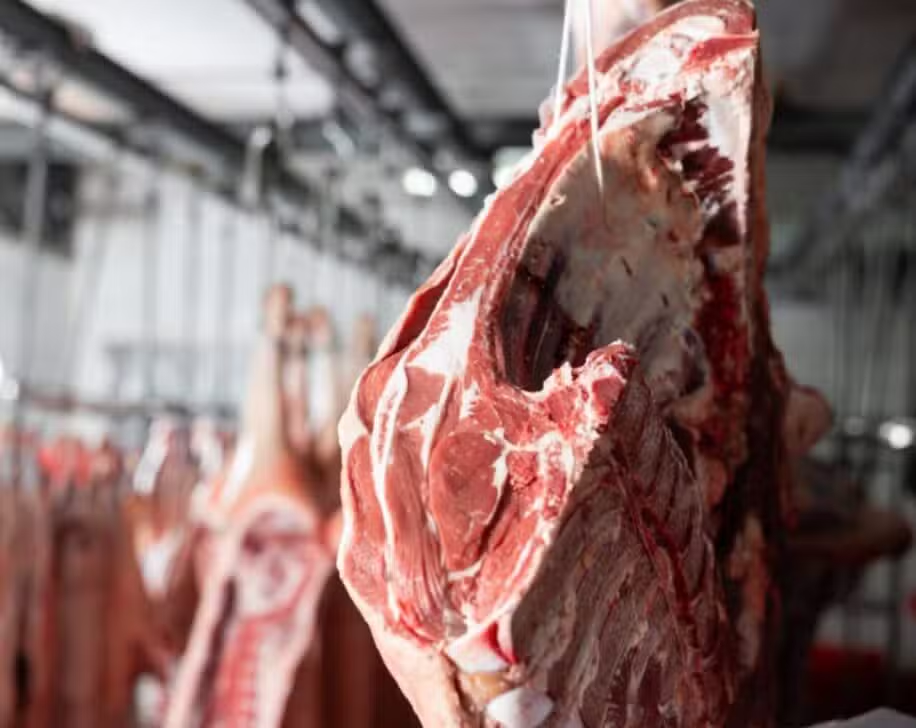
The 50% tariff undermines the competitiveness of Brazilian products in the US market, especially those without exemptions. Coffee, the main agricultural export, faces a potential 4% price increase in the US, which could reduce demand. Beef, with 16.7% of Brazilian exports destined for the US in 2024, becomes nearly unviable, according to the Brazilian Beef Exporters Association.
The fruit sector, including mango and pineapple, also suffers, as the US lacks sufficient domestic production. Cogo consultancy predicts significant losses for small producers reliant on the US market. Fish, prominent in states like Santa Catarina, projects production cuts and layoffs.
- Sectoral impacts:
- Coffee: Prices may rise 4% in the US, affecting exporters and consumers.
- Beef: Sales unfeasible without tariff reduction, with $1.6 billion in losses.
- Fruits: Small producers lose market share to Asian competitors.
- Fish: Layoffs expected in Santa Catarina and Paraná.
Despite exemptions for orange juice and oil, preserving 43.4% of Brazilian exports, taxed sectors face uncertainty. The National Confederation of Industry warns that the measure jeopardizes supply chains and jobs.
Brazilian government response
The Brazilian government is working on a contingency plan to mitigate the tariff’s effects. Vice-President Geraldo Alckmin stated that the package includes tax relief, credit lines, and financial support for sectors like coffee and beef. The plan, finalized on July 24, awaits approval from President Luiz Inácio Lula da Silva.
Additionally, Brazil sent a confidential letter to the US on May 16, proposing advancements in trade agreements, but received no response. The Ministry of Foreign Affairs keeps diplomatic channels open, while Brazilian senators, like Tereza Cristina, negotiate in Washington. The government also considers appealing to the World Trade Organization, despite the entity’s limited influence.
- Measures under consideration:
- Suspension of US patents on medicines and seeds.
- Taxation of dividends from US multinationals in Brazil.
- Redirection of exports to markets like China and Europe.
Brazil’s strategy focuses on pressure via the private sector, with US companies like General Motors and Caterpillar advocating for tariff reversal. Amcham Brazil notes that 3.2 million jobs in Brazil depend on US exports.
Brazilian states on the frontline
Seven states account for 80% of Brazil’s exports to the US: São Paulo, Rio de Janeiro, Minas Gerais, Espírito Santo, Rio Grande do Sul, Santa Catarina, and Paraná. São Paulo, responsible for $13.5 billion in sales in 2024, leads potential losses. Minas Gerais, with significant coffee exports, also faces severe impacts.
State governments announced emergency packages to support producers. São Paulo allocated funds for coffee cooperatives, while Minas Gerais plans subsidies for small farmers. In the South, Santa Catarina and Paraná focus on fish and beef with tax incentives.
- Most affected states:
- São Paulo: 31.9% of Brazilian exports to the US.
- Minas Gerais: Coffee accounts for 12.4% of sales to the US market.
- Santa Catarina: Fish and beef at risk of collapse.
State actions aim to complement the federal plan, but governors demand faster central government response. The tariff also strengthens the dollar, pressuring domestic prices in Brazil.
Search for new markets
With the 50% tariff, Brazilian exporters explore alternatives to redirect products. China, Brazil’s largest trading partner, is a viable destination for commodities like coffee and beef, but its export profile is less diversified than the US market. Europe, the main market for orange juice, would not absorb surplus products without price drops.
Experts warn that redirection faces logistical and competitiveness barriers. Coffee, for instance, has global prices limiting profit margins. Beef faces competition from countries like Australia and Argentina.
- Challenges for new markets:
- China: Focus on commodities, with low demand for industrialized products.
- Europe: Oversupply could lower fruit and coffee prices.
- Logistics: High transportation costs for distant markets.
Economist Welber Barral, former Foreign Trade Secretary, notes that commodities are more flexible for finding buyers, but higher-value products like machinery face difficulties.
International and corporate pressure
The 50% tariff sparked reactions from US companies and politicians. SkyWest, which ordered 74 planes from Embraer, criticized the measure, stating it won’t pay the tariff. The U.S. Chamber of Commerce and Amcham Brazil called for high-level negotiations to avoid taxation. US Congressional Coffee Caucus members advocate for coffee exemptions, vital to the US economy.
In Brazil, the private sector pushes for dialogue. The National Confederation of Industry estimates that every $1 billion exported to the US generates 24,300 jobs. The tariff threatens long-term contracts and investments, especially in beef and coffee.
- Corporate actions:
- SkyWest: Plans to delay Embraer plane deliveries.
- Amcham Brazil: Advocates for exemptions on strategic products.
- CitrusBR: Warns of orange juice supply chain collapse without exemptions.
Joint pressure from companies and governments may influence Trump, but the final decision rests with the White House. Until then, Brazilian exporters face uncertainty, with coffee, beef, and fruit prices already rising.