Maduro: Trump steps up warship experiment against cartels near Venezuela Por Luís Henrique Costa
8 min de leitura
 |
The United States has launched a robust military operation in the southern Caribbean, deploying three Aegis guided-missile destroyers—USS Gravely, USS Jason Dunham, and USS Sampson—to the Venezuelan coast, with arrival expected within the next 36 hours from August 18, 2025. The operation, mobilizing approximately 4,000 sailors and Marines, aims to combat drug cartels classified as global terrorist organizations, such as the Sinaloa Cartel and Tren de Aragua. Authorized by President Donald Trump, the mission operates in international waters and airspace, focusing on intensifying surveillance and potentially conducting targeted strikes. In addition to the ships, the operation includes P-8 Poseidon surveillance aircraft and a nuclear attack submarine. The initiative also pressures Nicolás Maduro’s regime, accused by Washington of ties to drug trafficking. The strategy reflects Trump’s priority to curb drug trafficking and strengthen security along the U.S. southern border.
The operation, expected to last for months, is described as a show of force but with the potential for direct action if ordered. The deployment follows Trump’s secret signing of a directive authorizing the use of military forces against Latin American cartels, as revealed by sources to the U.S. media. The move raises legal questions, as operations on foreign soil would require approval from local governments, something Mexico has already categorically rejected.
- Main targets of the operation:
- Sinaloa Cartel, known for fentanyl trafficking.
- Tren de Aragua, a Venezuelan group accused of transnational activities.
- Other organizations classified as narcoterrorists, such as MS-13.
- Intelligence gathering to map trafficking routes and leadership.
The decision to send forces to the Caribbean reinforces Trump’s policy of classifying cartels as national security threats, an approach intensified since February 2025, when eight groups were designated as global terrorist organizations.
Details of the military deployment
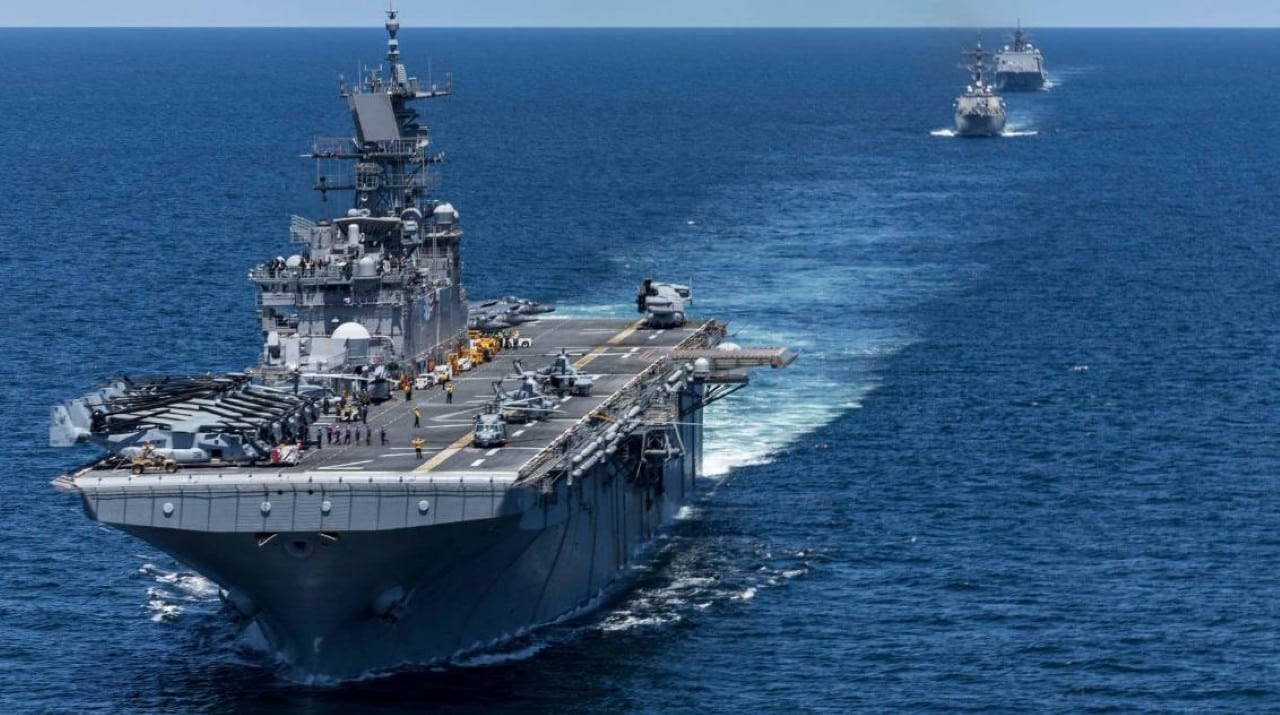
The operation in the southern Caribbean involves a significant military setup, coordinated by the U.S. Southern Command (Southcom). In addition to the three destroyers, the fleet includes the USS Iwo Jima, USS Fort Lauderdale, and USS San Antonio, all with amphibious capabilities. A nuclear submarine and P-8 Poseidon aircraft complement the mission, focused on surveillance and intelligence. U.S. officials emphasized that the assets can be used for both monitoring and precise strikes if Trump authorizes.
The deployment operates in international waters, avoiding, for now, the need for agreements with local governments. However, the military presence so close to Venezuela heightens tensions with Maduro’s regime, which already faces sanctions and direct accusations of involvement in drug trafficking. The operation is also seen as a response to the fentanyl crisis in the U.S., partly attributed to Latin American cartels.
- Mobilized assets:
- Three guided-missile destroyers: USS Gravely, USS Jason Dunham, and USS Sampson.
- Amphibious ships: USS Iwo Jima, USS Fort Lauderdale, and USS San Antonio.
- One nuclear-powered attack submarine.
- P-8 Poseidon reconnaissance aircraft for aerial surveillance.
- Approximately 4,000 Marines and sailors.
Operating in international waters reflects U.S. caution to avoid direct conflicts with sovereign nations, but it does not lessen the political impact of the maneuver, particularly in Venezuela.
Regional reactions
The military deployment sparked immediate reactions across Latin America. In Mexico, President Claudia Sheinbaum stated that no U.S. operations would be allowed on Mexican soil, rejecting any form of interventionism. This stance reflects regional concerns about sovereignty, especially after Trump’s secret directive authorizing actions on foreign soil, raising debates about international law.
In Venezuela, Maduro’s government labeled the operation a “war of words” and an attempt at intimidation. Interior Minister Diosdado Cabello denounced alleged terrorist plans backed by foreign forces, while Maduro warned that Venezuela’s response could mark “the beginning of the end of the American empire.” Despite U.S. accusations that Maduro leads the Cartel of the Suns, the regime denies any involvement in drug trafficking and maintains its anti-U.S. rhetoric.
- Regional stances:
- Mexico: Categorical rejection of U.S. military operations on its territory.
- Venezuela: Accusations of interference and reinforcement of anti-imperialist rhetoric.
- Brazil: Diplomatic concern, with questions about the PCC not being classified as terrorist.
- Panama: Agreement with the U.S. for military presence near the Panama Canal.
The operation also reignited debates about border militarization and the use of armed forces in anti-drug missions, which some Pentagon sectors consider inappropriate for Marines, who are not traditionally trained for drug interdictions.
Context of Trump’s strategy
The offensive against cartels is part of Trump’s broader agenda, which, since the start of his second term in January 2025, has prioritized cracking down on drug trafficking as a national security issue. Designating cartels like the Sinaloa Cartel and Tren de Aragua as global terrorist organizations reflects a hardening stance against drug trafficking and illegal immigration. In February, the White House pressed Latin American countries, including Brazil, to adopt the same classification for groups like the PCC, but without success so far.
The naval deployment is also tied to U.S. strategic interests in the Panama Canal, vital for global trade. A memo from Defense Secretary Pete Hegseth emphasizes the priority of “sealing the borders” and ensuring unrestricted access to the canal, with an agreement signed with Panama in April 2025 allowing U.S. military presence in the region.
- Trump’s strategic objectives:
- Combat fentanyl trafficking, which has killed thousands of Americans in recent years.
- Pressure hostile regimes, like Maduro’s, accused of protecting drug traffickers.
- Strengthen security along the U.S. southern border against immigration and smuggling.
- Ensure military and economic influence in the Caribbean and Latin America.
The operation, though described as a show of force, has the potential to escalate into more direct actions, depending on Trump’s decisions and regional reactions.
Regional and international implications
The presence of U.S. warships so close to Venezuela raises the risk of diplomatic and military tensions in the region. Analysts warn that Trump’s strategy could further destabilize countries already weakened by economic and political crises, such as Venezuela. The operation also revives memories of past U.S. interventions in Latin America, fueling narratives of imperialism in nations like Cuba and Bolivia, which have expressed solidarity with Maduro.
On the international stage, the deployment comes amid a reconfiguration of global alliances. While Trump seeks to reassert U.S. influence in the Western Hemisphere, countries like China and Russia, which maintain ties with Caracas, may view the action as a provocation. Russia, in particular, has previously demonstrated military support for Venezuela, potentially complicating the geopolitical landscape.
- Geopolitical risks:
- Escalation of tensions with Venezuela and its allies, such as Russia and China.
- Negative reactions from Latin American countries concerned about sovereignty.
- Potential rise in anti-U.S. rhetoric in the region.
- Impact on regional trade, particularly in the Panama Canal.
The operation also raises questions about its practical effectiveness. Experts note that combating drug trafficking requires multilateral cooperation, which is hindered by Trump’s unilateral approach. Additionally, relying on Marines for anti-drug missions, rather than the Coast Guard, may limit results, as the military is not specialized in such operations.
Next steps of the operation
The military deployment in the Caribbean is expected to continue for months, focusing on surveillance and intelligence gathering. Pentagon sources indicate that the U.S. plans to map trafficking routes and identify cartel leadership, laying the groundwork for potential targeted strikes. The absence of an explicit order for offensive actions suggests that, for now, the operation aims to intimidate cartels and pressure Maduro, but the possibility of escalation remains.
The response from other Latin American countries will be crucial in shaping the operation’s trajectory. While Mexico and Venezuela reject any intervention, nations like Colombia, which already collaborates with the U.S. on anti-drug efforts, may adopt a more neutral stance. In Brazil, the government is monitoring the situation cautiously, especially after U.S. pressure to classify the PCC as a terrorist organization.
- Possible developments:
- Increased aerial and maritime surveillance in the Caribbean regionmpz
- Negotiations with allied countries for joint operations.
- Diplomatic responses from Maduro, including potential retaliations.
- Debates in the U.S. Congress about the legality of actions on foreign soil.
The naval operation in the southern Caribbean marks a new chapter in Trump’s foreign policy, with implications extending beyond the fight against drug trafficking. The combination of military pressure, anti-Maduro rhetoric, and strategic interests in the Caribbean puts the region on alert, while the world watches the U.S.’s next moves.