Mota-Engil wins $6.8B bid for Santos-Guarujá submerged tunnel Por Luís Henrique Costa
7 min de leitura
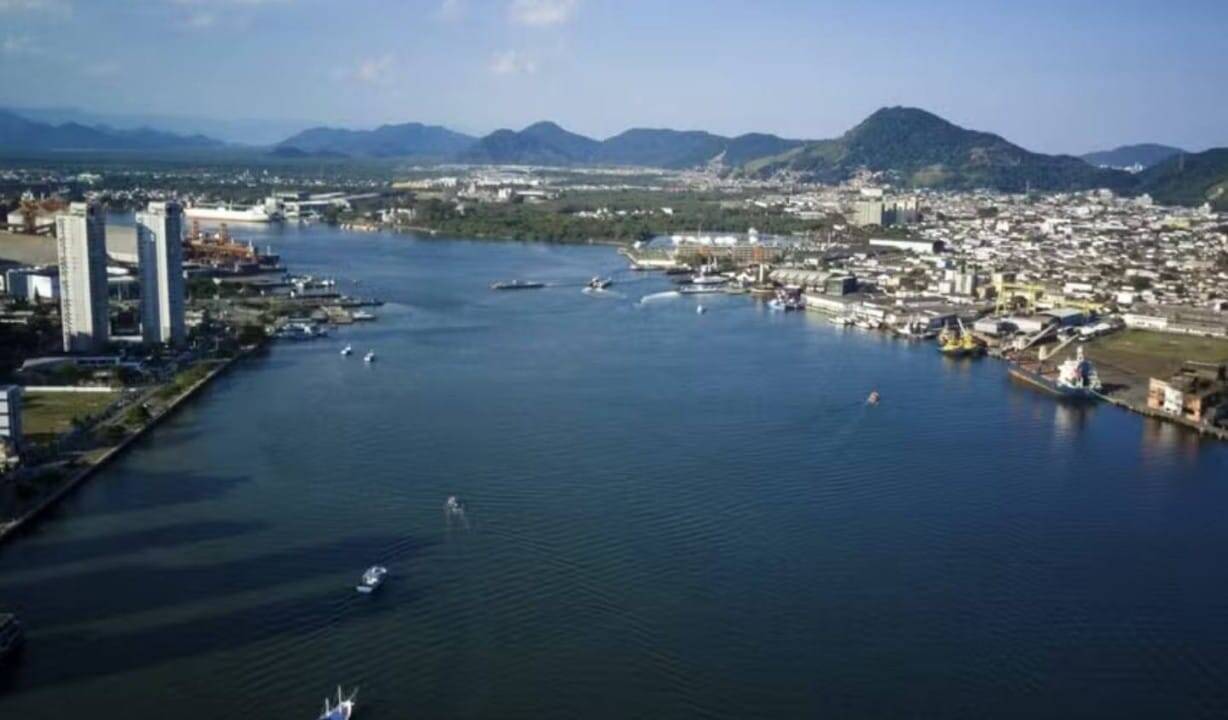 |
Mota-Engil Latam Portugal won the bid to build Brazil’s first submerged tunnel, connecting Santos and Guarujá on the São Paulo coast, with a $6.8 billion investment. The auction, held on September 5, 2025, at B3 in São Paulo, marked a decisive step for a project envisioned nearly a century ago. The tunnel, linking Outeirinhos and Macuco in Santos to Vicente de Carvalho in Guarujá, will cut crossing time from one hour to two minutes. Using the immersed tunnel technique, a first in Brazil, the 1.5-km structure, with 870 meters submerged, will be executed through a 30-year public-private partnership (PPP). Scheduled for completion in 2030, it will transform mobility in Baixada Santista and boost logistics at Latin America’s largest port. Part of the Growth Acceleration Program (PAC), the project will serve 78,000 people currently reliant on ferries.
Mota-Engil outbid Spain’s Acciona Concesiones by offering the largest discount on the monthly public payment. The project includes $5.14 billion in public funding, split between federal and state governments, and $1.78 billion from the private sector. The initiative promises to ease daily commutes and drive regional tourism and economic growth.
- Key project goals:
- Reduce crossing time between Santos and Guarujá.
- Enhance logistics at the Port of Santos.
- Promote mobility for pedestrians, cyclists, and public transport.
- Introduce cutting-edge technology to Latin America.
The tunnel is a historic milestone for Baixada Santista, delivering long-term benefits for residents and port infrastructure.
Pioneering construction technique
The immersed tunnel method, a first in Brazil, stands out for its efficiency and reduced environmental impact. Precast concrete modules will be built in dry docks, tested on land, and floated to the canal. There, they will be submerged with precision, anchored to the seabed with steel pins, and protected by layers of sand and stone. Proven in countries like the Netherlands and Japan, this technique suits the region’s clay-heavy, fluvial sediment soil, which complicates traditional excavation.
The immersed tunnel avoids the visual and logistical issues of a bridge, which could disrupt ship traffic and operations at the Santos Air Base. It also minimizes land expropriations, preserving the urban fabric of both cities. The environmental permit, issued by Cetesb in August 2025, assessed impacts on mangroves, fauna, and flora, ensuring compliance with regulations.
- Key construction stages:
- Excavation and preparation of the canal bed.
- Fabrication and transport of precast modules.
- Controlled submersion with electronic monitoring.
- Structural protection with stone layers.
The project positions Brazil as a leader in Latin American engineering with this advanced solution.
A century-old dream
The idea of a fixed crossing between Santos and Guarujá dates back to 1927, when engineer Enéas Marini proposed a tunnel inspired by the Holland Tunnel in the U.S. In the 1940s, a drawbridge was considered but dismissed due to port impacts. Economic crises and technical limitations delayed progress for decades, with failed attempts under governors Adhemar de Barros, José Serra, and Geraldo Alckmin.
The turning point came with the New PAC, led by the Ministry of Ports and Airports. Collaboration between President Luiz Inácio Lula da Silva and Governor Tarcísio de Freitas, despite political tensions, enabled the 2025 bidding process. Cetesb’s environmental permit was a key milestone, providing legal certainty for investors.
The project reflects Baixada Santista’s persistence in overcoming logistical barriers. The current ferry crossing, serving 78,000 people daily, faces delays and queues, impacting workers and students. The tunnel will resolve these issues, ensuring efficient connectivity.
- Historical milestones:
- 1927: Enéas Marini’s initial tunnel proposal.
- 1948: Drawbridge idea rejected.
- 2013: Geraldo Alckmin’s tunnel proposal, unrealized.
- 2025: Environmental permit and Mota-Engil’s auction win.
Boosting economy and mobility
The Santos-Guarujá tunnel will transform Baixada Santista, slashing crossing time from 18 minutes by ferry (or an hour by road) to two minutes. The 1.5-km structure will feature three lanes per direction, including one for a Light Rail Vehicle (VLT), plus a bike path and pedestrian walkway. This setup will accommodate cars, trucks, public transport, and active mobility.
The Port of Santos, handling 30% of Brazil’s foreign trade, will benefit significantly. The direct connection will lower transport costs and streamline cargo flow, attracting investments. Tourism will also thrive, with faster access to Guarujá’s beaches and hospitality infrastructure.
- Mobility and economic impacts:
- Two-minute crossing for 78,000 daily users.
- Optimized cargo transport at the Port of Santos.
- Boost to regional tourism and local commerce.
- Reduced logistics costs for businesses.
The project is a game-changer, fostering urban integration and economic growth in the region.
Sustainability and technological innovation
The tunnel prioritizes sustainability, with measures to minimize environmental impact. The controlled submersion technique reduces disruption to the marine ecosystem, and Cetesb’s environmental permit ensures protection for mangroves and local wildlife. The project also requires fewer expropriations, preserving communities in Santos and Guarujá.
Mota-Engil, experienced in Brazilian infrastructure projects like Petrobras’ underwater services, will employ cutting-edge technology. Electronic monitoring during submersion ensures precision, while stone layers protect the structure from marine currents.
- Sustainability measures:
- Minimal impact on the port canal and ecosystems.
- Reduced expropriations in urban areas.
- Efficient precast module construction.
- Continuous monitoring for environmental safety.
The tunnel aligns modern infrastructure with environmental responsibility, setting a model for future projects.
Public-private partnership spotlight
The PPP model was crucial to the project’s viability, with $5.14 billion in public funding and $1.78 billion from Mota-Engil, which will handle construction, operation, and maintenance for 30 years. The Portuguese company’s auction win, secured by offering the largest discount on monthly public payments, highlights the competitive bidding process.
Collaboration between the federal government, led by Lula, and the state, under Tarcísio, overcame political rivalries, though recent events show tensions as neither mentioned the other. The PPP ensures financial sustainability, balancing public and private benefits.
- Partnership highlights:
- 30-year contract with Mota-Engil.
- Public funding split evenly between federal and state governments.
- Operation and maintenance by the concessionaire.
- Discount-based bidding as the winning criterion.
The PPP structure guarantees the project’s timely execution and long-term success.
Expectations for 2030 delivery
With the auction finalized, construction is set to begin in 2026, targeting completion by 2030. Mota-Engil has pledged to start work promptly, leveraging its expertise in complex projects. Baixada Santista eagerly awaits the promised transformation, eliminating long-standing logistical barriers.
The tunnel will not only meet a century-old demand but also establish Brazil as a pioneer in immersed tunnel technology in Latin America. The project is expected to inspire similar initiatives nationwide, cementing Brazil’s reputation in innovative infrastructure.
- Estimated timeline:
- 2026: Construction begins and canal bed preparation.
- 2028: Completion of precast modules.
- 2030: Submersion and tunnel finalization.
- 2030: Public operation begins.
The Santos-Guarujá tunnel marks the end of a century-long wait and the start of a new era for Baixada Santista.