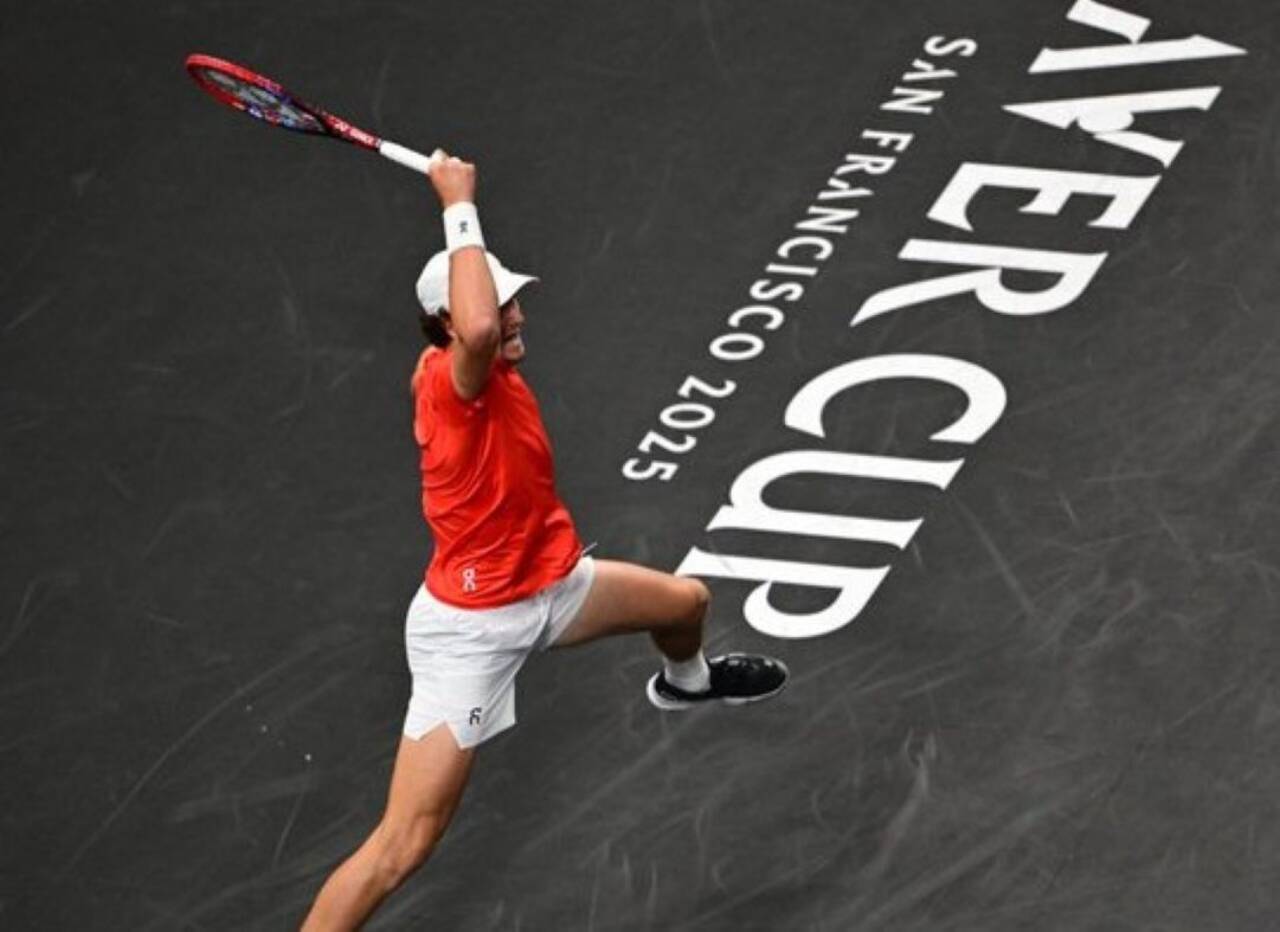
João Fonseca, the 19-year-old tennis prodigy, stunned the tennis world by securing a landmark victory at the Laver Cup, a tournament that brings together the planet’s top players in a fierce continental showdown. The match took place in San Francisco, United States, pitting the Brazilian against a formidable opponent. With partial scores of 6/4 and 6/3, he overcame Italian Flavio Cobolli, currently ranked 25th in the ATP, in a display of technique and determination that resonated across global sports arenas.
This achievement was no fluke, but the result of an upward trajectory that has positioned Fonseca as one of the circuit’s hottest prospects. Born in 2006, the Rio native had already notched wins in challengers and Grand Slam qualifiers, but nothing compares to the Laver Cup stage, where legends like Roger Federer and Novak Djokovic have shone. Fans back in Brazil, even from afar, cheered the feat, elevating Brazilian tennis to a new level of visibility.
- Fonseca became the youngest player to win a match in Laver Cup history, surpassing previous records by more than a year.
- The clash occurred on the tournament’s first day, securing the sole initial point for Team World against the dominant Team Europe.
- His on-court maturity, highlighted by controlled rallies, contrasted with the pressure of debuting in an elite event.
The impact of this victory extends beyond the court, inspiring a new generation of athletes in Brazil, where tennis is gaining ground in academies and sports clubs.
Innovative format fuels excitement at Laver Cup
The Laver Cup stands out on the tennis calendar for its compact and electrifying structure, turning three days of competition into a spectacle of continental rivalries. Unlike traditional tournaments, the event divides players into Team Europe and Team World, with matches awarding progressively larger points each day. This mechanic creates an atmosphere of urgency, where every set can shift the final outcome.
In Fonseca’s case, his debut match fit perfectly into this dynamic, taking place on Friday when wins yield just one point. Despite the seemingly low stakes, the Brazilian capitalized on the chance to boost his team’s confidence. The packed San Francisco arena, filled with enthusiastic fans, witnessed a duel blending aggression with strategy—hallmarks of the tournament since its 2017 inception.
🔹 Saiu a programação de hoje e não teremos o João em quadra.
— João Fonseca Updates (@fonsecaupdates) September 20, 2025
Vamos torcer para o Time Mundo ir bem e termos o João em um dos jogos decisivos no domingo. pic.twitter.com/aRfmxpjObS
The competition, inspired by golf’s Ryder Cup, features nine singles matches and three doubles, totaling 12 encounters. Each day includes four matches: three singles and one doubles, always in a best-of-three sets format. This brevity, combined with the escalating scoring system—one point on Friday, two on Saturday, and three on Sunday—forces captains to manage their stars with surgical precision.
- Friday: Focus on warming up, with single points building momentum without excessive pressure.
- Saturday: Intensity doubles as wins are worth two points, heightening risk and reward.
- Sunday: Climax with three points per match, where mistakes are costly and heroes emerge.
This setup not only keeps audiences glued to their screens but also allows young talents like Fonseca to shine in pivotal moments, without the exhaustion of full-week tournaments.
Fonseca’s strategies reveal early maturity
João Fonseca stepped onto the court bearing the weight of representing Team World, but his tactical approach showed a composure rare for his 19 years. Against Cobolli, who boasts experience in Masters 1000 and a powerful serve, the Brazilian opted for rhythm variations, alternating defensive slices with aggressive baseline winners. This versatility frustrated the Italian, who committed unforced errors at key moments in the second set.
The match lasted just over an hour and a half, an ideal duration to conserve energy in a short tournament. At 1.85m tall with a topspin-loaded forehand, Fonseca exploited his opponent’s return weaknesses, converting three service breaks throughout the clash. His 2-0 win not only secured the point but also served as a practical lesson for teammates like Taylor Fritz and Alex de Minaur.
Trained in Rio de Janeiro academies and with stints at U.S. excellence centers, Fonseca credits part of his success to a disciplined routine. He trains six days a week, emphasizing physical and mental conditioning, which reflected in his ability to stay focused under Laver Cup lights. Captain Andre Agassi, a three-time Roland Garros champion legend, publicly praised the rookie’s demeanor, noting how his fresh energy revitalizes the group.
In a sport where longevity hinges on constant adaptations, Fonseca already shows signs of a complete game. His current ranking in the top 100 is set to surge with this result, opening doors to invitations for bigger events.
Captain Agassi and the legacy of mentorship in Team World
At 55, Andre Agassi took on the Team World captaincy with the same intensity that defined his career of eight Grand Slam titles. His presence at the Laver Cup goes beyond strategy; it’s a bridge between generations, where lessons in resilience are shared in locker rooms. For Fonseca, born in the year of the American’s 2006 retirement, Agassi is a beacon of inspiration, guiding him through the emotional nuances of high-stakes competitions.
During the match, the captain watched closely, signaling subtle adjustments that helped the Brazilian neutralize Cobolli’s serve. Post-victory, Agassi gathered the team for a debriefing session, stressing the importance of celebrating wins without losing collective focus. This group mentorship strengthens Team World, which has historically struggled against European dominance—Europe has won five of the previous seven editions.
- Agassi as mentor: Emphasizes emotional control, drawn from his own epic final comebacks.
- Team impact: His tactical interventions, like player rotations, balance strengths in crucial doubles.
- Connection with rookies: Agassi’s personal stories motivate young players like Fonseca to embrace pressure as fuel.
- Laver Cup legacy: As a former player, he infuses the event with authenticity, drawing record crowds.
Under Agassi’s leadership, Team World aims to turn the tide, and Fonseca’s contribution emerges as a key piece in that equation.
Continental rivalry elevates the tournament’s level
The Laver Cup throbs with the essence of a rivalry that transcends borders, pitting Europe against the rest of the world in a symbolic battle for modern tennis dominance. Team Europe, stacked with stars like Casper Ruud and Alexander Zverev, enters as favorite, but the format’s unpredictability allows upsets like Fonseca’s. This dynamic crafts captivating narratives, where underdogs like the Brazilian can rewrite the script.
On the first day in San Francisco, Fonseca’s lone point contrasted with European wins, setting up a Saturday redemption for Team World. The crowd, split between continental flags, turns the event into a festival of passion, with shows and interactions extending beyond the court. This unique atmosphere, paired with generous prize money, attracts top talents and elevates tennis to global entertainment status.
The 2025 edition, the tournament’s eighth, unfolds at the Chase Center, a modern arena seating 18,000 with immersive visuals. Broadcast in over 100 countries, the Laver Cup reaches audiences rivaling the Majors, solidifying its status as tennis’s “Super Bowl.” For Team World, accumulating at least 13 points across the 12 matches is the path to the trophy; ties are settled by a decisive doubles match.
In this context, Fonseca emerges not just as a winner, but as a catalyst for a larger narrative, where South American talent challenges established hegemonies.
Highlights from other first-day clashes
While Fonseca stole the spotlight, the Laver Cup’s opening day delivered parallel duels that intensified the competition. American compatriot Taylor Fritz faced a seasoned European in singles, keeping Team World’s hopes alive despite initial losses. Doubles, always a wildcard, closed the schedule with fierce exchanges, where synchronicity and instinct trump individual rankings.
These matches reveal the tournament’s depth, with players alternating between singles and doubles to maximize points. Zverev, for Team Europe, showed why he’s top 3 worldwide with solid play, but tie-break lapses exposed vulnerabilities. The day’s accumulated score—Europe leading comfortably—forecasts a weekend of turnarounds, where each of Agassi’s choices could prove decisive.
- Fritz in action: His fast serve neutralized attacks, but baseline errors cost sets.
- European doubles: Pairings like Ruud and another top player secured extra points with aggressive net tactics.
- Viral moments: A Fonseca passing shot in the second set went viral, racking up millions of online views.
- Saturday prep: Teams tweak lineups, prioritizing freshness for the two-point duels.
These elements weave the Laver Cup’s tapestry, where individual triumphs fuel the collective fire.
Fonseca’s rising trajectory on the ATP circuit
Before Laver Cup glory, João Fonseca paved his path with gradual conquests on the professional circuit. In 2024, he lifted trophies at South American challengers, steadily climbing the ATP rankings. His runs in Roland Garros and Wimbledon qualifiers flashed brilliance, but consistency came with wins over players ranked above 50.
In Brazil, Fonseca represents a renewed wave of talent, following in the footsteps of names like Thiago Seyboth Wild and João Lucas Reis da Silva. His playing style, marked by a fluid one-handed backhand and lateral mobility, adapts well to varied surfaces, from clay to hard courts. At 19, he boasts over 20 professional-level wins, outpacing many peers.
The win over world No. 25 Cobolli isn’t isolated; it reflects intense training in Miami and Rio, where local coaches hone his competitive mindset. Fonseca balances the sport with online studies, ensuring a solid foundation for a long career. His agent, market-savvy, negotiates 2026 invites that could land him in more elite events.
This rise inspires Brazilian academies, where tennis lesson enrollments grow 15% annually, per sports federation data.
Laver Cup’s influence on global tennis
The tournament, named after Australian Rod Laver, revolutionized tennis by introducing a team model that humanizes individual stars. Since 2017, editions in cities like London and Boston have drawn record crowds, with sold-out tickets and daily TV viewership in the tens of millions. This popularity boosts the sport, attracting sponsors like Rolex and Rakuten.
For players like Fonseca, the Laver Cup offers unmatched exposure, with digital platform broadcasts expanding reach. The event also fosters diversity, gathering athletes from varied continents and promoting cultural exchanges behind the scenes. In 2025, with San Francisco as host, the focus on innovation includes real-time analytics tech, aiding captains in decisions.
The progressive points structure encourages calculated risks, yielding longer, more thrilling matches—frequent tie-breaks and dramatic comebacks. This contrasts with other tournaments’ rigidity, making Laver Cup a magnet for casual and hardcore fans alike.
- Audience growth: From 5 million in 2017 to projected 15 million in 2025.
- Key sponsorships: Brands invest in visibility, with logos on rackets and uniforms.
- Tech innovation: Tracking apps deliver live stats, engaging remote viewers.
- Geographic diversity: Team World includes Asians, Africans, and Americans, enriching the cultural mix.
- Youth legacy: Events like this open paths to scholarships and ATP wild cards.
This influence spreads, shaping tennis’s future as a more accessible and unifying sport.