


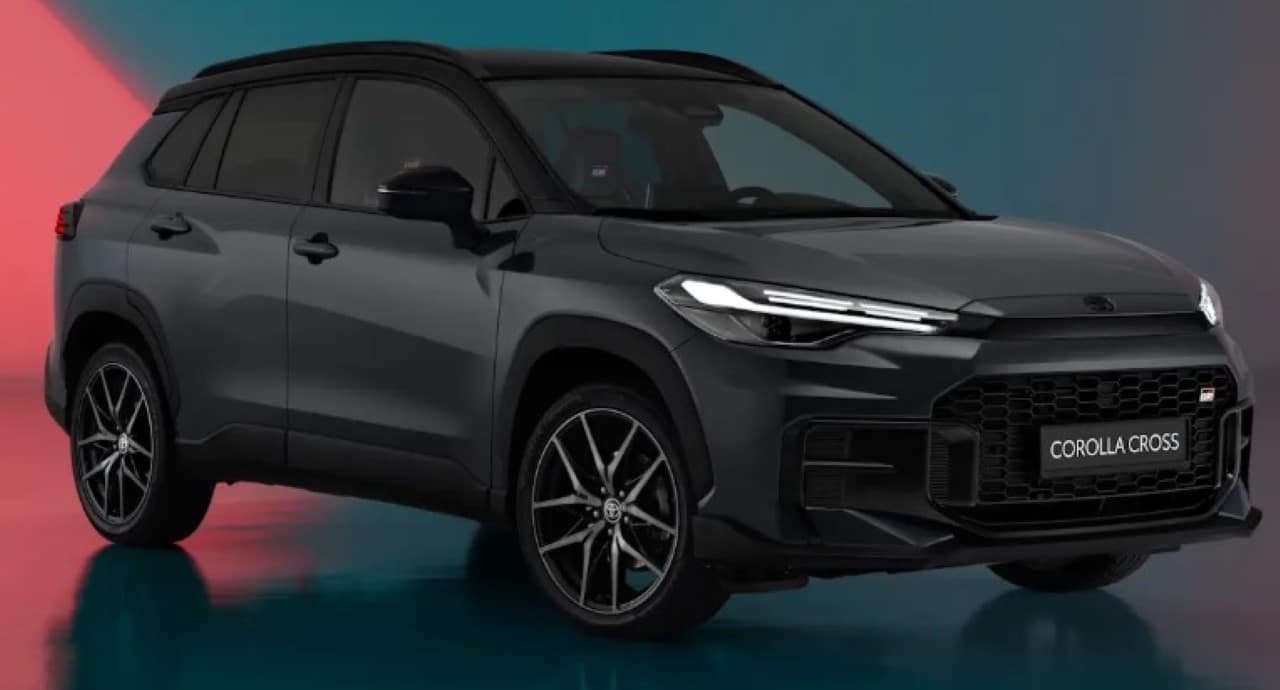
The Toyota is preparing a significant restyling for the Corolla Cross, with launch scheduled for the end of 2026 as the 2027 line, aiming to strengthen its position in the competitive medium SUV segment in the Brasil. The Esta strategic update is not just limited to a visual renovation, which will be inspired by the European version of the model, but will also introduce an unprecedented plug-in flex hybrid engine, a technology that could position the Corolla Cross among the first in its category to offer such innovation in the national market. The initiative represents a direct response to growing pressure from Chinese manufacturers, such as BYD and GWM, who have invested heavily in electrified models focused on high efficiency and performance. The Japanese automaker is betting on the combination of power and sustainability to ensure the relevance of its SUV.
The new PHEV mechanical configuration (Plug-in
Testing of the new engine and adjustments for the local market are already underway at the Sorocaba factory, in São Paulo, reinforcing Toyota’s commitment to national production and the offer of advanced technologies aligned with the needs of Brazilian consumers.
[[_0]
[[_0]
Advances in flex hybrid powertrain
The plug-in flex hybrid system represents a considerable technological advance compared to the 1.8-liter HEV configuration, which delivers 122 horsepower and is seen as a previous standard. Engenheiros involved in the development of this technology, already exhibited in models such as the Prius at industrial events, emphasize the priority in reducing pollutant emissions, especially in urban environments.
The integration of the electric motor enables purely electric driving modes for short distances, complementing the instantaneous torque of the 2.0 engine. Dados Preliminary tests indicate an average consumption of 20 km/l in the combined cycle, a significant increase compared to the 16 km/l of the current version. The latest generation CVT transmission improves the transition between engines and allows acceleration from 0 to 100 km/h in approximately 8 seconds.
This leap in efficiency and performance aims not only to meet consumer expectations for more sustainable vehicles, but also to establish a new level of competitiveness in the hybrid SUV segment in the country.
Design and internal technology
Full LED headlights with a renewed internal design stand out as the main external visual change, aligning the Corolla Cross with the style of the European version. The front grille now incorporates integrated lighting, giving the vehicle a premium touch, without changing the dimensions of the body.
The rear lights, linked by a light bar, and the redesigned bumper complete the update, strengthening the SUV’s safety and nighttime visibility. The interior follows international trends, with a simplified center console and an ergonomically designed gear knob.
Enhancements in the GR-Sport version
The GR-Sport edition will receive an exclusive bumper with enlarged air intakes, clearly inspired by the GR Corolla sedan, reinforcing its sporty identity. Rodas 18-inch light alloy, shod with 225/50R18 tires, ensure superior grip in curves, optimizing the driving experience.
Sport driving mode adjusts throttle response and adaptive suspension for more dynamic performance, providing an engaging ride. Internamente, synthetic leather seats with red stitching and a flat-bottomed steering wheel highlight the vehicle’s athletic character.
Although the 2.0 naturally aspirated engine maintains 169 horsepower, the 20.6 kgfm torque contributes to improved acceleration. Fuel consumption is estimated at 11 km/l in mixed use, and the 55 liter tank offers a range of approximately 600 km.
This variant promises to be a significant part of projected sales, attracting sports enthusiasts in a predominantly family segment.
Toyota strategy in the Brazilian market
The 2027 line will maintain the 169 horsepower 2.0 naturally aspirated engine for the XR and XRE versions, coupled to a CVT transmission with 10 simulated gears. Essa option will continue to meet the demand for good value for money, with a 36-liter flex tank and 4×2 traction.
The permanence of the 1.8-liter HEV hybrid variant is still debated, but there is a strong tendency for it to be replaced by the new 2.0 PHEV configuration, seeking to unify the electrified offer. Toyota plans annual production of 150 thousand units at the Sorocaba factory, with part destined for export to other América Latina countries.
The flex system’s emissions certification is at an advanced stage, in compliance with the strict Proconve L8 standards, which will come into force in the coming years. Esta strategy not only strengthens Toyota’s presence in the national market, but also positions it as one of the leaders in the transition to more sustainable vehicles.
Competitive landscape and positioning
In the current context of 2025, the Toyota faces increasing competition from Chinese rivals, who are introducing PHEV models with increasingly competitive prices. However, the Corolla Cross 2027 benefits from the Toyota’s consolidated technical assistance network, which has more than 200 dealerships throughout the country. Annual sales of the model already exceed 50,000 units, and the new version could boost this number by up to 20%, according to the automaker’s internal projections. Starting prices for naturally aspirated versions can be around R$180,000, while the top-of-the-line PHEV model can reach R$250,000. Safety upgrades include active lane keeping assist and improved autonomous braking system, which will be standard across all variants. The TNGA-C platform, which underpins the vehicle, received improvements that increased torsional rigidity by 30%, contributing to a 15% reduction in internal cabin noise. The official launch is scheduled for October 2026, with pre-sales starting in September, initially prioritizing corporate fleets and large customers.
Consumer comfort and guarantee
The center console adopts straight lines and soft-touch materials, in shades of gray and black, in addition to offering 15W wireless charging for mobile devices. The Toyota Play multimedia center promises a quick response of 0.5 seconds, integrating Android Auto and wireless Apple CarPlay.
Dual zone air conditioning, with special filters, guarantees thermal comfort for the cabin’s five occupants. The 440-liter trunk is capable of accommodating medium-sized luggage, and the rear seats fold down in a 60/40 ratio for greater versatility. Itens like sunroof and 360-degree parking sensors remain exclusive to top-of-the-line variants. The standard 5-year unlimited mileage warranty for the vehicle and 8-year warranty for the hybrid system offers owners peace of mind. The average cost of scheduled maintenance every 10,000 km is R$800, and the Toyota after-sales network continues to expand.
National production and investments
Toyota will invest a total of R$2 billion in the Sorocaba factory by 2027, with a special focus on the local production of batteries for PHEV vehicles. Parcerias strategies with national suppliers aim to reduce costs by approximately 10%, an essential factor for the viability of competitive prices in the market. Atualmente, Corolla Cross is already responsible for 40% of the demand for hybrid vehicles in the country, a segment that records annual growth of 25%. Strict Testes on highways, like the Dutra, validate the vehicle’s durability in tropical climates, with an improved cooling system for the batteries. The plug-in system’s home charging is compatible with 220V sockets, present in around 80% of urban homes. Essa balanced approach between innovation and accessibility is essential to consolidate Toyota’s leadership in the medium SUV segment.



