
Nearly 89,000 BYD Qin Plus DM-i model cars recalled due to battery failure By Carolina Costa
5 min read
 |
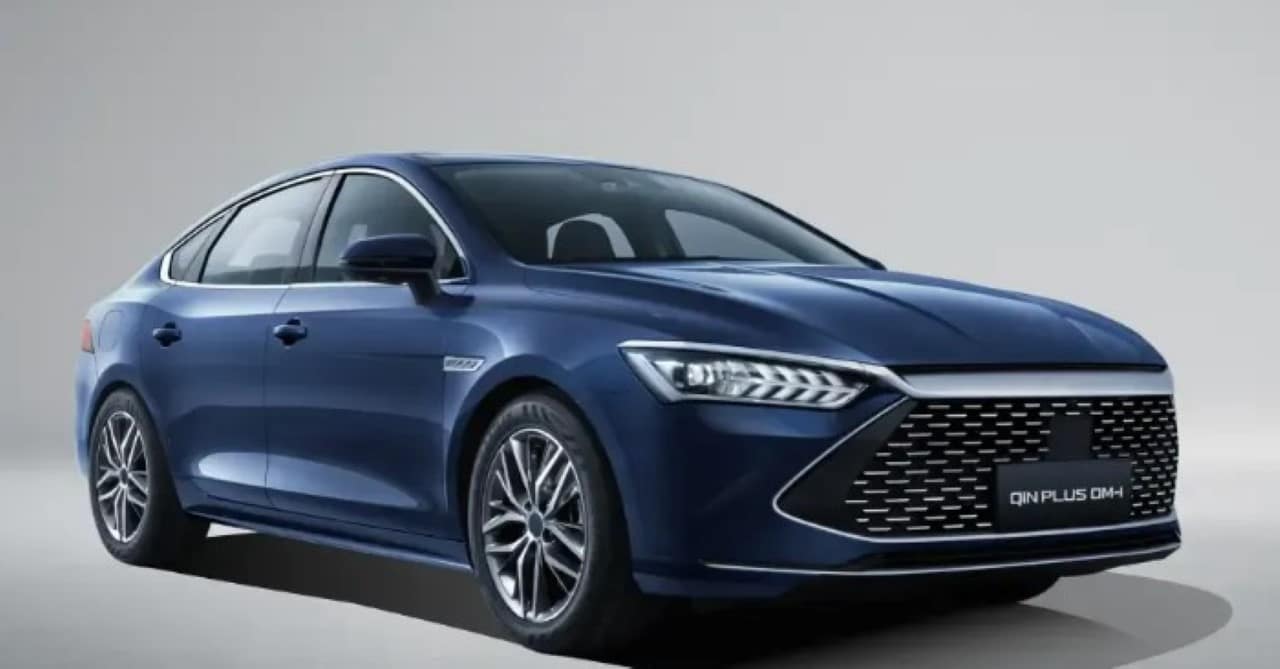
BYD, one of the world’s largest electric vehicle manufacturers, announced a large-scale recall on China involving almost 89,000 units of its popular plug-in hybrid sedan, the Qin Plus DM-i. The measure was motivated by the detection of a manufacturing flaw in the lithium battery pack, which could compromise the safety and operation of the cars. The call was made official with the Administração Estatal of Regulação of the Mercado of the China (SAMR), the body responsible for monitoring products and consumer safety in the country.
The recall specifically affects 88,981 vehicles produced over an extended period extending from January 2021 to September 2023. The breadth of the production interval indicates that the issue may be present across multiple manufacturing batches, requiring a comprehensive check to mitigate any risks associated with the fault identified by the automaker.
BYD’s main concern is related to a potential security risk. According to the official statement, inconsistency in the battery manufacturing process could lead to a sudden loss of power while driving or, in more extreme scenarios, create conditions for a thermal runaway event, a chain reaction that could result in component overheating and fire.
Understanding the manufacturing fault in the battery
The origin of the problem lies in an inconsistency detected in the manufacturing of the battery pack protector, a crucial component for the safety and stability of the energy storage system. Investigações internal BYD pointed out that this variation in the production process could compromise the structural integrity and electrical insulation of the assembly. Under normal conditions of use, this failure may not manifest itself, but under certain circumstances of thermal or electrical stress, the protection may become ineffective. Isso significantly increases the risk of an internal short circuit. Quando a short circuit occurs in a high-density lithium-ion battery, it can trigger so-called thermal runaway. Este é um processo perigoso no qual o aumento da temperatura em uma célula da bateria causa uma reação que eleva a temperatura nas células adjacentes, criando um ciclo vicioso e incontrolável que pode levar à combustão e liberação de gases inflamáveis, representando um sério perigo para os ocupantes do veículo e para o entorno.
Proposed solutions and the recall procedure
To solve the problem, BYD will take a two-step approach, combining remote technology with physical intervention at dealerships. The first action consists of releasing an over-the-air (OTA) software update for all vehicles involved in the recall.
This new software aims to improve the battery management system (BMS), making it more sensitive in detecting anomalies. The system logic will be adjusted to more rigorously monitor the voltage, temperature and internal resistance of the battery cells, identifying early any sign that could indicate a manufacturing defect.
The second stage of the process will be triggered if the updated system detects any irregularity or for vehicles that require a physical check as a precaution. In Nestes cases, owners will be notified to take their cars to an authorized dealership of the brand.
At the workshop, specialized technicians will carry out a detailed inspection of the battery pack. If the presence of a manufacturing defect is confirmed, the complete battery pack will be replaced at no cost to the customer, ensuring that the vehicle returns to operating within the highest safety standards.
Context of other recent company recalls
This call for the Qin Plus DM-i is not an isolated event for BYD in recent months. The automaker has faced a series of issues related to the quality and safety of its components, resulting in other significant recalls in the Chinese market.
In October, the company had already announced a recall for more than 115 thousand units of the Tang DM-i and Yuan Pro models, also due to a potential fire risk associated with the battery system. Essa succession of problems raises questions about quality control challenges amid an extremely accelerated production expansion.
The paradox between sales and quality issues
Despite consecutive recalls, BYD’s market performance continues to impress. The company has recorded record sales, consolidating its position as one of the global leaders in the new energy vehicle sector. In October, for example, the brand’s global sales grew 12% compared to the previous month, reaching a total of more than 441 thousand units sold. Esse growth is primarily driven by strong demand for its plug-in hybrid (PHEV) models, which continue to be extremely popular in the Chinese domestic market due to the balance between electric range and the convenience of a combustion engine.
This scenario creates a paradox for the brand: at the same time as it celebrates unprecedented commercial success, it needs to deal with public perception about the reliability of its products. The automaker’s response has been to act proactively in identifying and correcting problems, communicating recalls transparently to try to preserve consumer confidence. How BYD manages this quality crisis will be crucial to sustaining its reputation, especially in its expansion plans into demanding international markets, such as Europe and Latin America, where the perception of security is a decisive factor in purchasing.
Strict oversight by Chinese regulators
The actions of Administração Estatal of Regulação of Mercado (SAMR) have been fundamental in ensuring consumer safety in the largest automotive market in the world. The agency has intensified oversight of new energy vehicles, reflecting growing concern about the risks associated with new technologies, such as high-voltage batteries.
The increasing frequency of recalls in the electric and hybrid sector in China does not necessarily indicate a drop in overall quality, but rather a maturing of the market. As these vehicles become more popular, regulators are setting stricter standards and improving surveillance mechanisms to identify and correct design and manufacturing flaws before they become large-scale safety problems.
Recommendations for affected owners
BYD advises that all owners of Qin Plus DM-i vehicles manufactured between January 2021 and September 2023 pay attention to the company’s official communications. The first step to take is to ensure that the vehicle receives the OTA software update as soon as it becomes available.
To confirm whether a specific vehicle is part of the recall, owners can check the Número of Identificação of Veículo (VIN) on BYD’s customer service channels or the automaker’s official website. It is crucial that drivers do not ignore the notification.
Even if the vehicle appears to operate normally, the latent defect represents a potential risk. Portanto, following the recall instructions and taking the car for inspection, if requested, is the safest way to ensure the integrity of the car and the safety of its occupants.
The challenge of scale production
The situation faced by BYD illustrates one of the biggest challenges facing the electric vehicle industry today: maintaining strict quality control while increasing production at an exponential pace to meet global demand. The complexity of battery systems and the need for high-precision components make the manufacturing process susceptible to failure, requiring continuous investment in inspection technology and validation processes to prevent defects from reaching the end consumer.


