New Webb observations offer unparalleled insight into Circinus Galaxy’s black hole engine
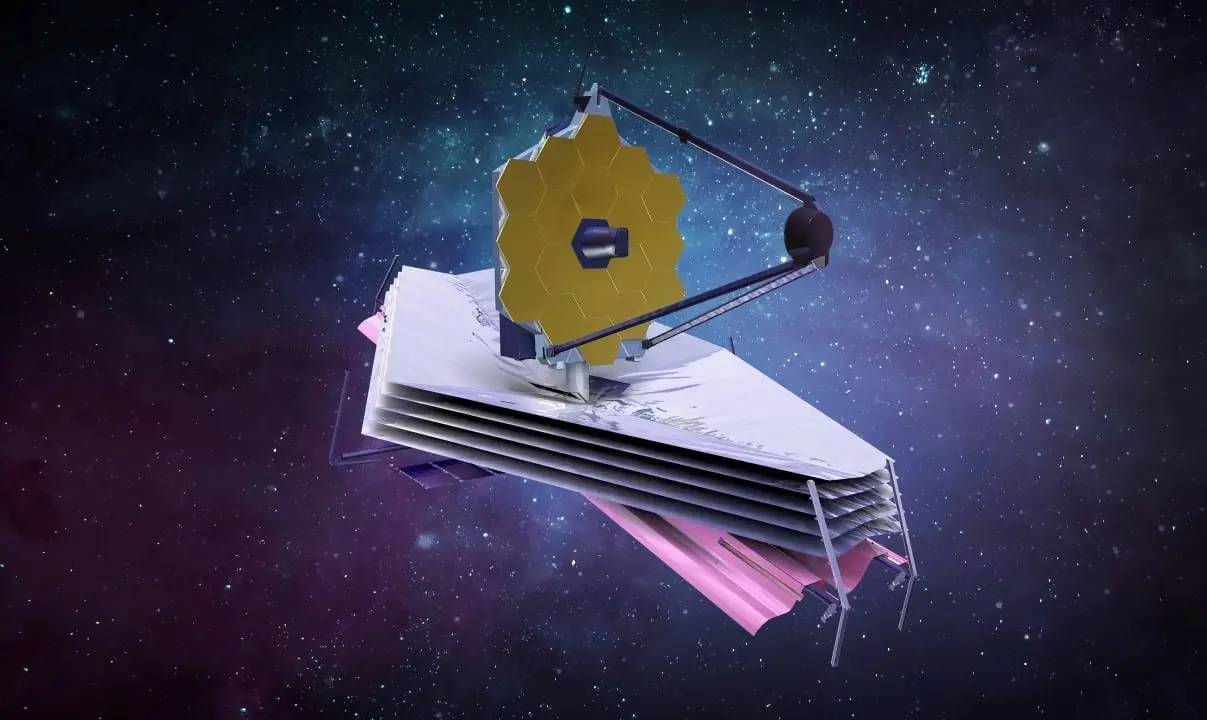
New observations from NASA’s James Webb Space Telescope have delivered unprecedented detail regarding the supermassive black hole nestled at the heart of the Circinus Galaxy. These findings fundamentally alter prior understandings of how this cosmic behemoth interacts with and influences its galactic surroundings.
Scientists previously theorized that the primary source of infrared light near the black hole originated from powerful outflows — streams of extremely hot matter expelled away from the galaxy’s center. This widely accepted model has guided research for decades, shaping our comprehension of active galactic nuclei.

However, the groundbreaking data from Webb, meticulously analyzed in conjunction with historical observations from the Hubble Space Telescope, now present a contrasting picture. The overwhelming majority of the hot, dusty material is, in fact, spiraling inward toward the black hole, actively fueling its growth and intense activity.
Unveiling galactic dynamics
The Circinus Galaxy, situated approximately 13 million light-years from Earth, hosts a vigorously active black hole that continuously expands by consuming surrounding gas and dust. This insatiable hunger drives many of the dynamic processes observed within the galaxy’s core.
By leveraging the advanced capabilities of the Webb telescope, researchers have obtained the clearest images ever captured of the immediate vicinity surrounding a supermassive black hole beyond our own Milky Way galaxy. This enhanced clarity has been pivotal in discerning the true mechanisms at play.
Saiba mais: James Webb telescope reveals ancient Milky Way-like barred spiral galaxy, refining cosmic history
The black hole’s fueling secret
A study published in Nature in February 2024 detailed these revelations, providing crucial insights into the growth mechanisms of these extreme cosmic objects and their profound influence on the galaxies they inhabit. The shift in understanding — from outflows being the primary light source to inflows — marks a significant advancement in astrophysics. This material, instead of being ejected, is a direct sustenance for the black hole’s continuous activity, challenging long-held assumptions about its energy budget and mass accretion.
Understanding supermassive black holes
Supermassive black holes sustain their formidable activity over millions of years by gravitationally attracting matter from the surrounding space. This influx of gas and dust coalesces into a dense, ring-shaped structure known as a “torus” that encircles the black hole.
As this material draws closer to the galactic core, it accelerates into a rapid spin, forming an accretion disk akin to a cosmic whirlpool. The immense friction generated within this disk heats the matter to extraordinarily high temperatures, causing it to emit intense light, predominantly in the infrared spectrum. This process is fundamental to the visibility and energetics of active galactic nuclei.
Overcoming observational challenges
Observing this critical region has historically presented formidable challenges for astronomers. The dense shroud of dust surrounding the galactic nucleus effectively blocks a direct visual pathway, while the brilliant light emanating from nearby stars further complicates efforts to isolate and differentiate various emission sources. For decades, scientists have relied heavily on theoretical models to interpret the faint and ambiguous signals detected from these complex environments.
Veja Também

David Jolly garante vaga democrata para disputar o governo da Flórida em 2026

Como funciona o pagamento do seguro-desemprego com o novo salário de 2026

Regras do INSS para liberar indenização por sequelas a trabalhadores em 2026
Webb’s revolutionary technique
According to Enrique Lopez-Rodriguez, a researcher at the University of South Carolina involved in the study, the new data significantly advances our capabilities beyond these previous limitations. A specialized technique employed by the Webb telescope, known as aperture masking interferometry, was instrumental in this breakthrough.
This sophisticated method allowed scientists to more effectively separate regions where material is being expelled from those where it is being absorbed by the black hole. The precision offered by this technique has been critical in resolving the long-standing debate over the dominant processes within the active galactic nucleus of Circinus.
Broader implications for galactic evolution
The conclusive evidence suggests that a substantial portion of the detected infrared light originates directly from the material fueling the black hole, rather than from outflows, contrary to previous beliefs. This discovery not only refines our understanding of the Circinus Galaxy but also provides a powerful new tool for cosmic exploration.
Cobertura completa: Últimas Notícias
The innovative technique utilized by Webb can be applied to the study of other nearby black holes, promising to clarify how these extreme objects fundamentally influence the evolution of galaxies over vast spans of cosmic time. This methodological advancement could unlock secrets across numerous galactic systems.
Such detailed observations are crucial for building more accurate models of galaxy formation and evolution. The interplay between supermassive black holes and their host galaxies is a cornerstone of modern astrophysics, dictating the birth and death of stars, the distribution of gas, and the overall structure of the cosmos.
The implications of these findings extend far beyond the Circinus Galaxy, setting a new benchmark for understanding the energetic processes that shape the universe we inhabit. This detailed view promises to reshape theoretical frameworks concerning active galactic nuclei and their crucial roles.
The ongoing quest for cosmic truths
The continuous advancements in space-based observatories, such as the James Webb Space Telescope, underscore humanity’s relentless pursuit of understanding the universe. Each new image and data set brings us closer to unraveling the profound mysteries of cosmic phenomena.
These observations from Webb highlight the dynamic and often counterintuitive nature of black holes, revealing them not just as destructive forces but as central, active architects of galactic structure. The ongoing scientific endeavor continually refines our knowledge, replacing older models with more precise and data-driven explanations.
Scientists remain dedicated to exploring these cosmic engines, recognizing their indispensable role in the grand narrative of the universe’s evolution. The quest for deeper understanding continues to propel us forward, driven by unparalleled instruments and human curiosity.