GAC Honda, one of the Japanese automaker’s joint ventures in China, officially launched a restyled version of the The model, which ended production at Brasil in 2021, arrives with a completely renewed and controversial front design, in line with the aesthetic preferences of Chinese consumers. The novelty, however, will have a very restricted circulation, with production limited to just 3,000 units.
The hatchback maintains the well-known 1.5 naturally aspirated engine, but presents significant visual changes that distance it from the fourth generation sold in other markets, such as the Japão and Europa. The changes are concentrated at the front, which adopts a more aggressive and geometric style. The starting price was set at 66,800 yuan, positioning the vehicle as an entry option in the competitive combustion hatchback segment.
The decision not to export the model reaffirms Honda’s strategy of focusing on SUVs and hybrid vehicles in markets such as Brazil. The visual update on the China is seen as an attempt to maintain the relevance of the Fit in a scenario increasingly dominated by electric vehicles from local brands, which rely heavily on bold designs.
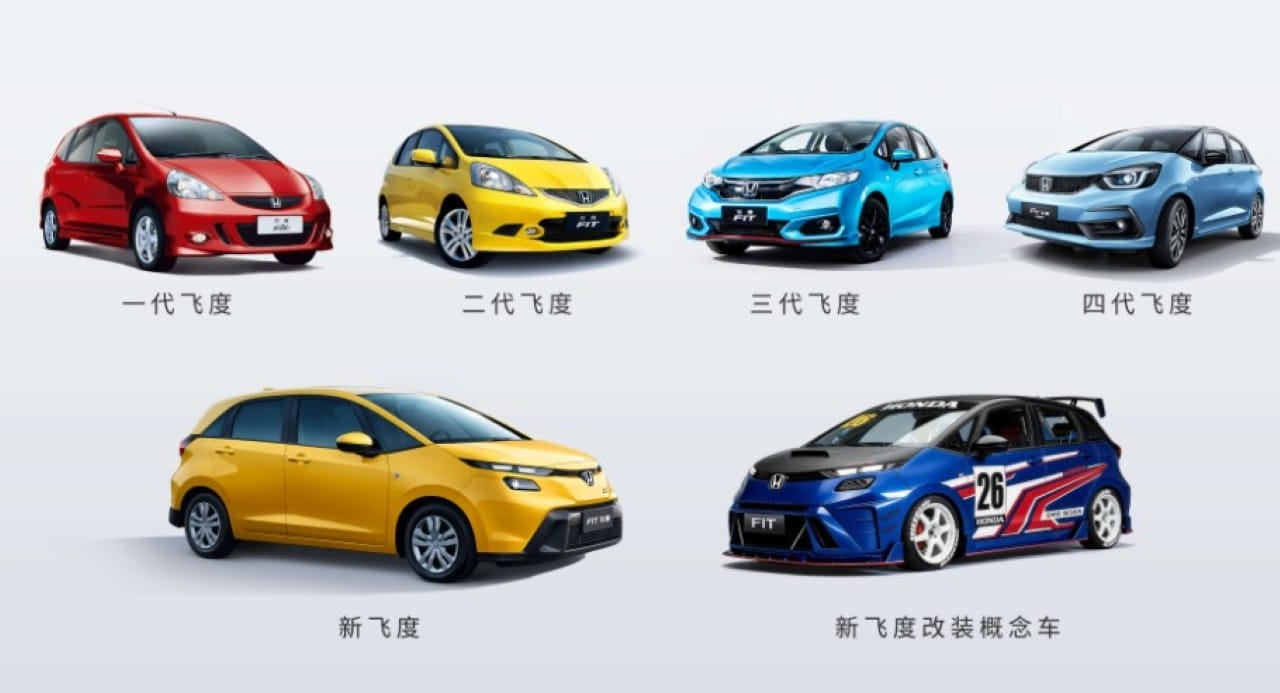
A completely transformed front design
The main change in the Chinese Honda Fit is at the front, which abandons the rounded and friendly lines of the global version to adopt a robust and angular appearance. The inspiration comes from trends observed in local electric vehicles, with headlights divided into two levels. At the top, a set of thinner LED daytime running lights are connected by a black horizontal bar that crosses the front of the car. Logo Below, the main headlights are positioned, integrated into a redesigned bumper with large false side air intakes, which reinforce the perception of width and aggressiveness. The front grille has been reduced to a more discreet hexagonal shape, while pronounced creases and glossy black details complete the look. A lateral mantém o perfil característico do monovolume, mas as rodas de 15 polegadas ganham um novo desenho exclusivo para esta edição. The rear, in turn, received minimal changes, preserving the original shape of the lights.
Engine details and performance
Under the hood, the restyled Fit does not bring any new mechanical features. The model is equipped with a 1.5-liter four-cylinder aspirated engine, which delivers 123 horsepower and 14.8 kgfm of torque. Este engine is already known for its reliability and efficiency, making it a safe choice for the compact segment. The transmission is an automatic CVT type (continuously variable), which was calibrated to simulate gear changes, providing a more linear response during acceleration and contributing to comfort in urban driving.
One of the highlights disclosed by GAC Honda is the vehicle’s autonomy, which can exceed 700 kilometers on a single tank of fuel. Esse number is the result of the combination between the efficiency of the mechanical assembly and a possible increase in the reservoir capacity. Although official average consumption data has not been detailed by the manufacturer, the declared autonomy suggests that the Fit maintains its vocation as an economical car for daily use, an important attribute to compete in such a fierce market.
Known dimensions and platform
The new version of the Fit was built on the same platform as the fourth global generation, launched in 2019. The architecture did not undergo significant structural changes for this restyling, maintaining the base that is already praised for its rigidity and good use of internal space.
In terms of measurements, the Chinese model is 4.17 meters long, 1.69 meters wide and 1.54 meters high. The 2.53 meter wheelbase remains unchanged, ensuring generous space for occupants, especially in the rear seat, one of the hallmarks of the Fit throughout its generations.
These dimensions represent a slight increase compared to the last generation sold in the Brasil, which measured 4.10 meters in length. The change, although small, contributes to a slightly more imposing visual presence on the street.
Simplified interior and equipment
Inside, the Chinese Fit’s panel maintains the functional and ergonomic layout of the Honda. The instrument cluster is digital, with a 7-inch screen, while the entertainment system is operated by a multimedia center with a 10.1-inch touchscreen, offering basic connectivity.
To maintain a competitive price, GAC Honda chose to simplify some items. The seats are covered in fabric and the sound system in the entry-level version has just two speakers. Notavelmente, the manufacturer did not mention the presence of the “Magic Seat” modular seating system, one of the Fit’s biggest differentiators in other markets, suggesting that the feature may have been removed to reduce costs.
Market strategy focused on China
The decision to limit production to 3,000 units indicates that Honda is testing acceptance of the new design or targeting the model at a specific niche of consumers. Essa exclusivity strategy can generate a sense of urgency and attract buyers looking for a different vehicle.
The geometric and aggressive design was a deliberate choice to please the young Chinese public, who have shown a preference for vehicles with a bolder and more technological look. Honda, through its local partnerships, adapts its products to compete more effectively with national brands.
GAC Honda is responsible for both manufacturing and marketing the model in the country. The restyled Fit arrives to compete for space in a segment that, although pressured by the popularity of electric cars, still has considerable demand.
The launch reinforces how global automakers need to adapt to the particularities of the Chinese market, the largest in the world, to maintain their relevance and competitiveness.
The concept of running as inspiration
To generate even more interest around the launch, Honda presented, in parallel, a racing concept based on the restyled Fit. Este prototype, called Fit Race Concept, explores the hatchback’s sporting potential, with significant visual and aerodynamic modifications.
The concept features a large rear spoiler, a pronounced front splitter to improve downforce, and white racing wheels that contrast with the dark blue paintwork of the body. The project aims to reinforce a more dynamic image for the model, despite its conventional engine in the street version. The brand, however, has not confirmed plans to produce this sports variant in series.
No forecast for other markets
Honda has made it clear that there are no plans to export this restyled version of Fit. The model sold in the Japão and Europa will continue with the original fourth generation design. Para Brazilian consumers, the absence of the Fit in the brand’s portfolio since 2021 remains, with the company focusing its operations on models with higher added value, such as the HR-V, ZR-V SUVs and the City sedan.