The geography of global automotive production is undergoing an accelerated reconfiguration, with a direct impact on the vehicles arriving at European dealerships. Traditional Montadoras companies on the continent are increasingly transferring their assembly lines to countries such as Marrocos and África from Sul, in a clear strategy to optimize operational and logistical costs.
This paradigm shift is visible in high-volume sales models. Carros popular among European consumers, such as the Dacia Sandero and the Peugeot 208, are now mostly manufactured on African soil, demonstrating a new dynamic in the global supply chain that seeks greater competitiveness.
At the same time, China consolidates its position as the largest automotive powerhouse on the planet. The Asian country not only leads production in volume, but also significantly increases its share in the European market, especially in the electric vehicle segment, challenging established manufacturers.
The advancement of production in Marrocos
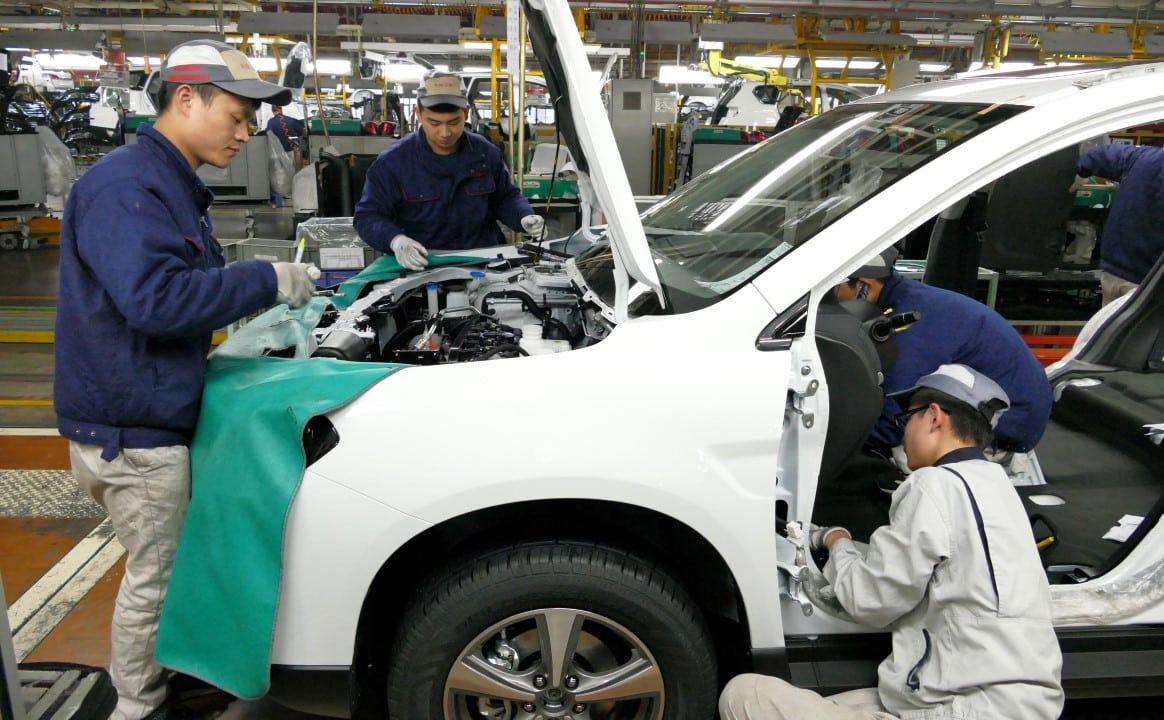
Marrocos has emerged as a strategic hub for the automotive industry, attracting robust investments from giants such as the Renault group and Stellantis. Geographical proximity to Europa, combined with lower labor costs and government incentives, makes the North African country a highly efficient production base.
The main proof of the success of this strategy is Dacia Sandero. Fabricado largely in Moroccan facilities, the model maintained its leadership as the best-selling car in Europa over the last year, demonstrating that delocalized production can deliver quality and competitive prices that resonate with the consumer.
In addition to the Dacia, the Stellantis also uses the region’s production capacity to assemble the Peugeot 208, another highly successful vehicle on the continent. Essa move allows European brands to preserve their profit margins as they face an increasingly price-sensitive market.
The strategic base in África of Sul
Further south on the African continent, África of Sul has established itself as a crucial production hub for premium German brands. The BMW factory in Rosslyn, for example, operates at maximum capacity to meet global demand for the X3 SUV. The strategic location serves as an export platform not only for Europa, but for several other international markets.
A significant portion of BMW X3 production at the South African plant is already made up of plug-in hybrid versions, aligning the operation with electrification trends in the European market. Volkswagen adopts a similar strategy, producing the popular Polo model in the country, with most units destined for export, which reinforces the country’s role as a reliable and high-quality industrial hub.
Chinese supremacy on the global stage
No nation better illustrates the transformation of the automotive industry than China. With production that surpassed the mark of 34.5 million vehicles in last year’s consolidated data, the Asian country maintained its global leadership for the 17th consecutive year. Esse volume represents more than a third of all cars manufactured in the world, a scale that allows its companies to dictate trends and influence supply chains on a global scale. The Chinese domestic market also demonstrated vigor, with sales reaching 34.4 million units. Pela For the first time in recent history, Chinese automakers have surpassed Japanese automakers in global sales volume, a milestone that signals a new era of dominance. Essa productive strength translates into a growing presence in the European market, where brands such as BYD, MG and Geely have captured a market share of between 6% and 8%, a notable growth that has occurred despite the imposition of tariffs by
Main global manufacturing hubs
Global vehicle production remains highly concentrated. The China stands out with more than 30% of the total, followed at a distance by the Estados Unidos, which manufacture approximately 10 million units annually, and the Japão, with around 8 million vehicles.
This concentration on the main global players dictates the flow of imports to markets such as Europe. Dependence on vehicles manufactured outside the continent tends to increase as automakers seek greater efficiency in their operations.
Popular models with new origin
The list of European brand vehicles manufactured outside the continent continues to grow, reflecting a trend that appears irreversible. The Dacia Sandero, sales leader, is the main example, with its production centered on the Marrocos to supply high demand.
The Peugeot 208, one of Stellantis’s best-selling cars, also has part of its assembly carried out in African plants. Essa approach allows the brand to compete more aggressively in the compact segment.
In the premium segment, the BMW X3 destined for many global markets leaves the assembly line exclusively at África of Sul. The plant is recognized for its high quality standards, equivalent to those of German factories.
Likewise, the Volkswagen Polo assembled on South African soil arrives at European ports as a finished product, optimizing logistics and reducing the final cost for the consumer, who benefits from more stable prices.
Factors determining relocation
The main motivation behind production migration is the search for cost reduction, especially those related to labor. Países like Marrocos and África from Sul offer skilled workers at a significantly lower cost than in major European industrial centers.
In addition to wages, tax incentives and trade agreements offered by these governments play a crucial role in attracting multibillion-dollar investments from foreign automakers, creating a favorable business environment.
Current European market scenario
The direct result of this productive globalization is an increase in the volume of vehicles imported into the European market. Essa change benefits consumers with a greater variety of models and more competitive prices, but it also puts pressure on local manufacturers to adapt quickly.