
BYD recalls almost 90,000 Qin Plus DM-i cars in China due to battery failure By Carolina Costa
5 min read
 |
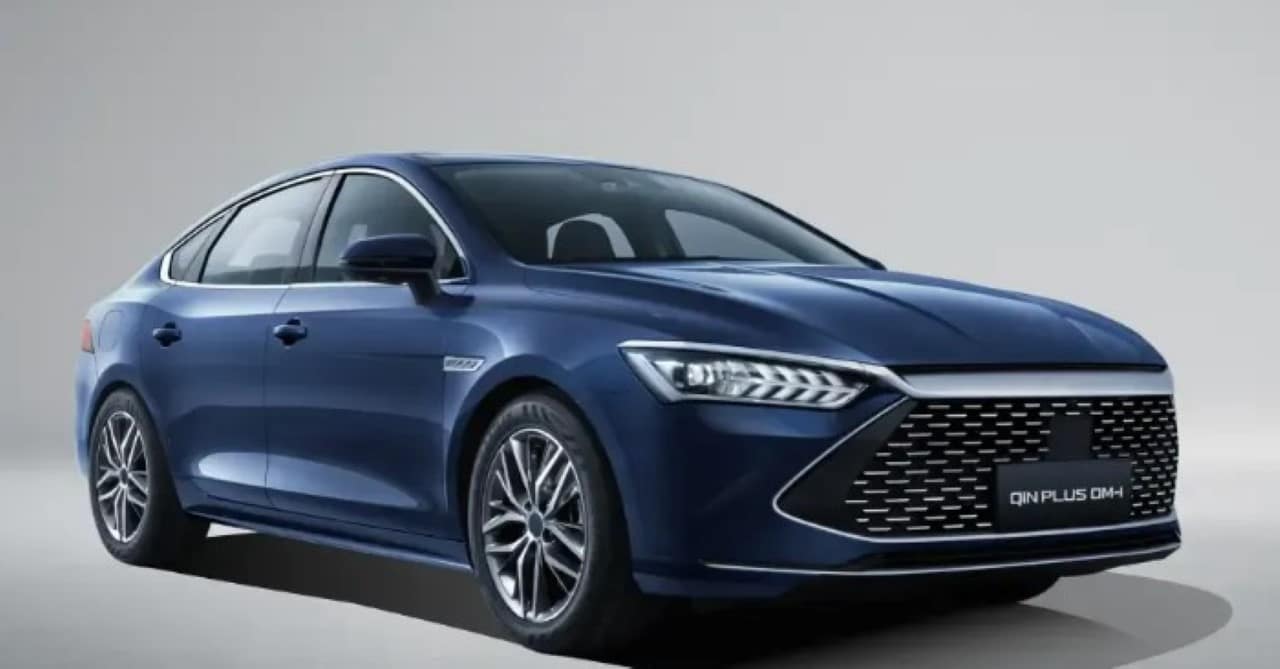
BYD, one of the world’s largest electric vehicle manufacturers, announced a large-scale recall on China involving 88,981 units of its popular plug-in hybrid sedan, the Qin Plus DM-i. The measure was motivated by the identification of a potential failure in the lithium battery pack, which presents risks to the safety and proper functioning of vehicles.
The call specifically affects cars that were produced between January 2021 and September 2023. The decision was formalized with the Administração Estatal of Regulação of the Mercado of the
The automaker has already started the communication process with the owners of the affected vehicles and has committed to carrying out the necessary repairs at no cost. Este recall adds to other recent corrective actions by the company, raising discussions about quality control challenges amid accelerated production growth.
The nature of the lithium battery defect
The technical investigation conducted by BYD indicated that the origin of the problem lies in an inconsistency in the manufacturing process of the wiring harness for the battery pack’s power distribution unit. Essa variation can lead to poor contact or incorrect data reading by the Sistema of Gerenciamento of the In conditions of continuous use or under high energy demand, this failure can evolve into localized overheating. In extreme scenarios, the defect increases the risk of an internal short circuit, which can trigger a thermal runaway event, with the potential to cause a fire in the battery compartment. BMS failure can also result in an unexpected interruption of the power supply to the engine, causing the vehicle to stop in motion, which poses a serious road safety risk.
Two-step correction strategy
To resolve the problem and ensure customer safety, BYD developed an action plan divided into two distinct phases. The first and most immediate solution consists of a remote software update, sent directly to vehicles via “over-the-air” (OTA) technology. Este new software improves the algorithms of the Sistema of Gerenciamento of the Bateria (BMS), making it more sensitive to anomalies and temperature variations, as well as optimizing the early warning strategy.
With the update, the system will be able to more accurately identify the signs of a possible defect in the wiring harness and will issue audible and visual warnings on the vehicle’s dashboard, instructing the driver to look for a dealer immediately. Esta approach allows a large portion of the problem to be mitigated quickly and conveniently for owners without the need for an initial workshop visit.
Physical inspection for critical cases
The second phase of the correction plan is aimed at vehicles that, even after the software update, present faults or for those in which the system has already detected an imminent risk. In Nesses cases, owners will be advised to take their cars to an authorized BYD dealer for a detailed physical inspection. Durante the procedure, specialized technicians will check the condition of the battery pack and its components.
If any abnormality or damage is found in the wiring harness or other related parts, the company will replace the defective parts free of charge. BYD assured that the entire diagnostic and repair process will be covered by warranty, at no cost to consumers, aiming to restore the reliability and safety of the Qin Plus DM-i models involved in the recall.
Context of other recent recalls
This call for the Qin Plus DM-i is not an isolated event for BYD in recent months. The automaker has faced a series of challenges related to quality control, resulting in multiple recalls affecting hundreds of thousands of vehicles.
In October of the previous year, the company recalled more than 115,000 units of the Tang DM-i and Yuan Pro models due to similar battery management issues, which also posed a fire risk.
Previously, in September, a recall of approximately 96,000 units of models Dolphin and Seal was announced. The failure, in this case, was related to a high voltage connector that could come loose, interrupting the vehicle’s propulsion.
Adding the three most recent safety campaigns, the number of BYD vehicles recalled for repair exceeds the mark of 300,000 units, a volume that highlights the logistical and engineering challenges posed by the brand’s rapid global expansion.
How owners should proceed
BYD has already begun the process of notifying owners of the nearly 89,000 Qin Plus DM-i vehicles affected by the recall. Contact is being made through the brand’s official channels at China, including correspondence, email and notifications via the automaker’s app.
To proactively check whether a specific vehicle is included in the campaign, owners can use the Número of Identificação of Essa verification is recommended to confirm the need for corrective actions.
After confirmation, the guidance is that vehicle owners wait for the remote software update and, if they receive any alert from the car’s system or are instructed by the manufacturer, to schedule a visit to the nearest dealership as soon as possible for inspection and, if necessary, physical repair of the components.
Sales performance continues to rise
Despite the negative news related to the recalls, BYD’s business performance continues to show robust growth. The company’s sales in the last quarter registered a significant increase, with emphasis on plug-in hybrid models (PHEV), which represented a significant portion of the more than 441,000 units sold.
The 100% electric vehicle (BEV) segment also demonstrated strength, with more than 223,000 units delivered in the same period. Esse continued sales success indicates that, to date, consumer confidence in the brand has not been critically shaken by quality issues, although the recurrence of recalls could become a point of concern for the company’s reputation in the long term.
The Chinese automotive market
The electric vehicle market in China is the largest and most competitive in the world, with dozens of local and international brands competing for consumer preference. Nesse scenario, the safety of lithium-ion batteries has become a top priority for both manufacturers and regulatory bodies such as SAMR.


