
BYD recalls almost 90,000 Qin Plus DM-i cars due to battery failure in China By Luís Henrique Costa
4 min read
 |
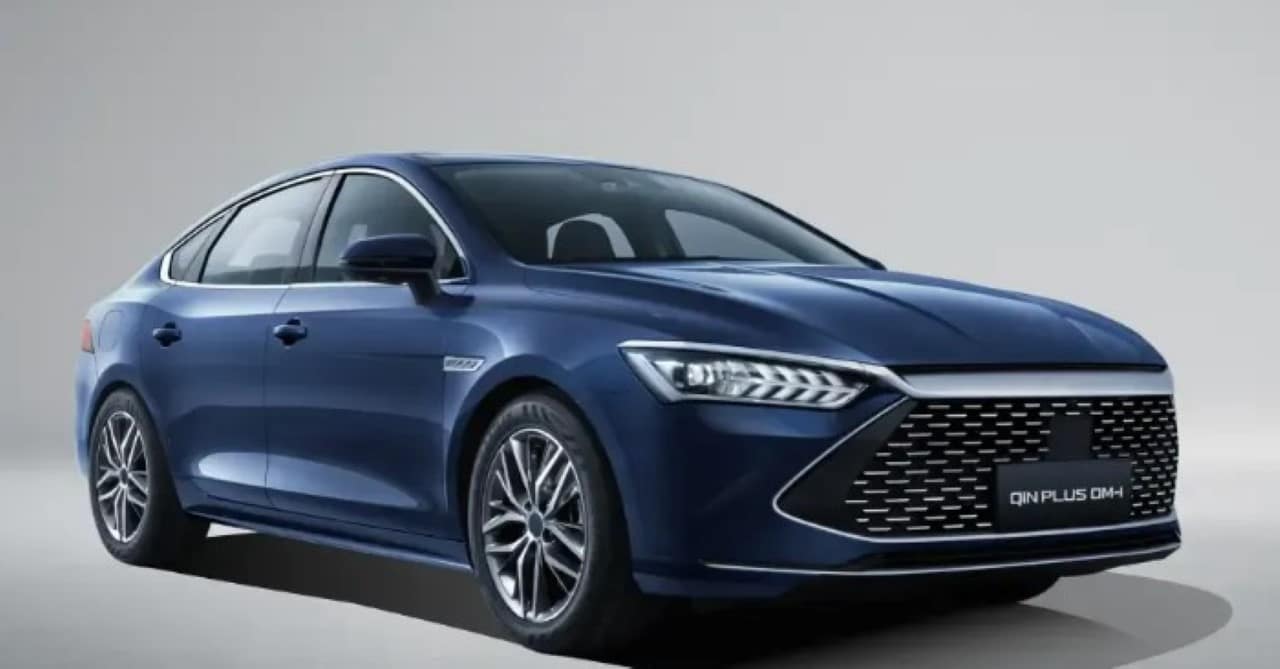
Chinese electric vehicle manufacturer BYD has begun a large-scale recall process affecting 88,981 units of its plug-in hybrid sedan, the Qin Plus DM-i. The summons, registered with Administração Estatal of Regulação of Mercado of China (SAMR), was motivated by a potential flaw in the battery management system (BMS) software, which could compromise vehicle safety. The models involved were manufactured between the beginning of January 2021 and the end of September 2023.
The central issue lies in the possibility that the BMS is unable to perform an accurate assessment of the battery status, which, in specific scenarios, could lead to an imbalance between the power cells. Essa inconsistency increases the risk of a thermal runaway event, a chain reaction that raises the battery’s temperature uncontrollably and can, in extreme cases, result in a fire. BYD stated that it is already working on a solution and contacting owners to carry out the necessary procedures at no cost.
Technical details of the management system failure
The battery management system, known by the acronym BMS, functions as the brain of an electric or hybrid vehicle’s battery pack, being a crucial component for safety and energy efficiency. Sua main function is to constantly monitor vital parameters such as voltage, current and temperature of each cell individually, in addition to controlling the charging and discharging process to optimize the component’s useful life. In the specific case of the affected Qin Plus DM-i models, BYD’s investigation pointed to an inconsistency in the BMS software algorithm. Essa failure may prevent the system from correctly identifying subtle variations in the internal resistance of battery cells, leading to inaccurate calculation of State of Charge (SoC) and State of Health (SoH). With this incorrect reading, the system can allow some cells to be overcharged during the recharging process, while others remain underutilized, generating an imbalance that, over time, degrades the component and raises the internal temperature to dangerous levels.
BYD’s action plan for remediation
To resolve the identified issue, BYD developed an action plan divided into two main steps, aiming to ensure a comprehensive and safe fix for all affected vehicles. The first phase consists of applying a remote software update, known as “over-the-air” (OTA). Essa update improves the BMS algorithm, making it more sensitive and accurate in detecting anomalies and managing cell balancing. Most owners will be able to perform this procedure without needing to visit a dealership, receiving the update directly on the vehicle’s multimedia system.
The second stage of the plan will be activated for vehicles where the software update is not sufficient to completely mitigate the risk or where a more detailed inspection is necessary. In Nesses cases, owners will be asked to take their cars to an authorized dealer. A specialized technical team will carry out a complete diagnosis of the battery pack. If any damage, premature degradation or potential risk is detected, BYD will replace the battery module completely, ensuring full safety and functionality of the system, at no cost to the customer.
How owners will be notified
BYD has already started communicating with the owners of the vehicles included in the recall. Notification is being made through the company’s official channels, including direct mail, email and notifications in the brand’s app.
Customers are advised to pay attention to these communications and follow the instructions provided by the manufacturer. The company also provided a customer service hotline to answer questions about the process.
Additionally, owners in China can check whether their vehicle is included in the recall campaign through the official SAMR portal or the BYD website by entering the Número of Identificação of
Recall scope and impacted models
The recall covers a total of 88,981 units of the BYD Qin Plus DM-i model. The recall is restricted to vehicles that were specifically produced between January 1, 2021 and September 30, 2023, the period in which the software version with the potential flaw was installed on the assembly line.
The importance of the BMS system in electric vehicles
The battery management system (BMS) is one of the most critical components in any vehicle that uses lithium-ion batteries. Ele is directly responsible for ensuring that the battery operates within its safe operating limits.
Its action prevents problems such as overcharging, excessive discharge and overheating, which not only reduce the battery’s useful life, but also pose serious safety risks.
In addition to protection, the BMS manages the balancing of the cells, ensuring that they are all charged and discharged evenly. Isso maximizes useful battery capacity and vehicle range.
Therefore, the accuracy and reliability of the BMS software are fundamental to the performance and safety of electric and hybrid cars, making any failure in this system a reason for immediate attention from manufacturers.
BYD’s positioning in the competitive Chinese market
This recall comes at a time when BYD is consolidating its position as a leader not only in the Chinese market, but also on a global scale. China represents the largest and most competitive electric vehicle market in the world, with dozens of brands competing for consumer preference.
The way the company manages this massive recall is seen by analysts as a test of its reputation. A transparent and efficient approach to resolving the issue is crucial to maintaining the trust of consumers and investors, reinforcing their commitment to the quality and safety of their products.


