


The Toyota prepares one of the most significant updates for its most successful global sports utility vehicle. The sixth generation of the RAV4 is in an advanced stage of development and promises to break with the current design, adopting a much more aggressive visual identity in line with the brand’s most recent launches. The main strategic change will be the total focus on electrification, with the model being offered exclusively with hybrid engines.
Information from international markets indicates that the official presentation of the new SUV is scheduled for the end of 2025. The start of sales will occur gradually, starting with the main global markets, such as Japão and Estados Unidos, in the same year, with expansion to other regions, including América of in one of the most competitive segments in the world.
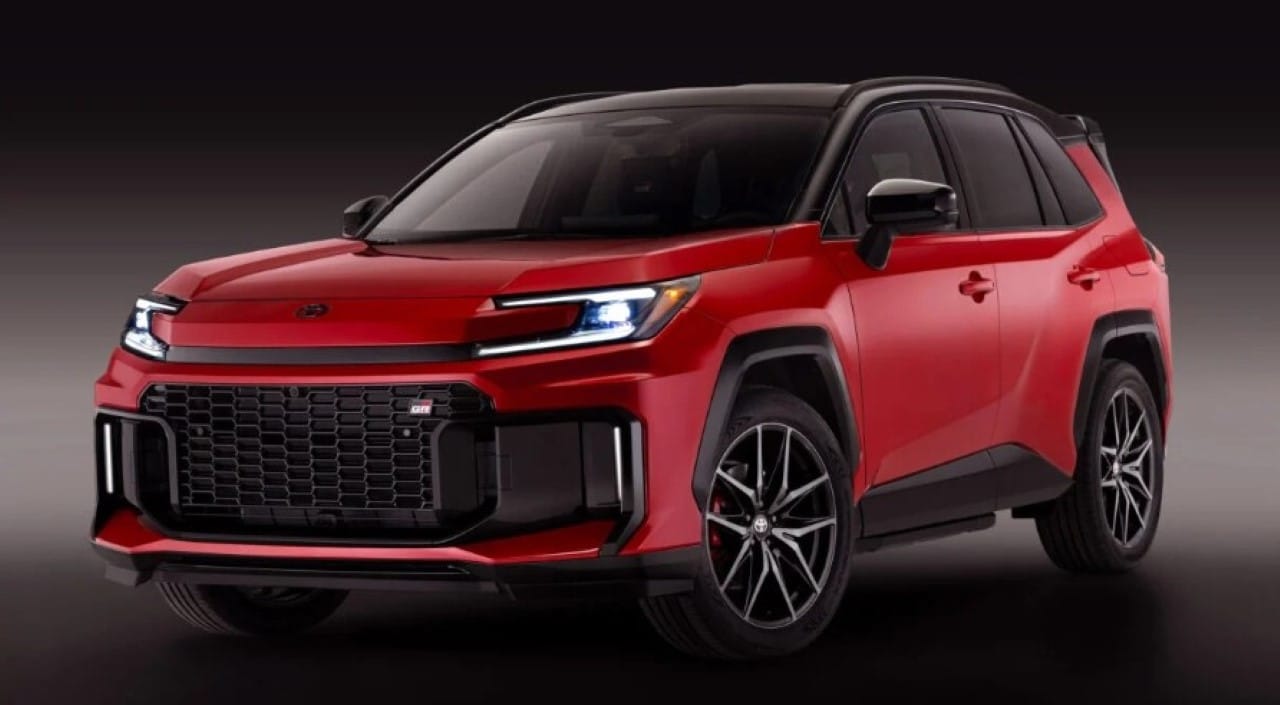
Built on an improved version of the global TNGA platform (Toyota New Global Architecture), the new RAV4 seeks not only a stronger visual identity, but also substantial improvements in drivability, safety and use of internal space. The expectation is that the model will raise the standard of technology and efficiency, consolidating its leadership position and attracting a new generation of consumers looking for a modern and sustainable SUV.
The ‘hammerhead’ design that redefines the SUV
Toyota’s biggest bet for the new RAV4 is its visual identity, inspired by the “hammerhead” or “hammerhead shark” concept. Essa design language, already seen in models such as the new Prius and the C-HR, will be mainly responsible for the SUV’s aesthetic transformation. The front part will undergo the most radical change, with “C”-shaped LED daytime running lights positioned at the top, while the main projectors will be housed lower on the bumper, creating a distinct and technological light signature. Essa approach not only gives the vehicle an imposing presence on the road, but also contributes to the optimization of aerodynamics, a crucial factor for the energy efficiency of the hybrid package. The body lines will abandon the smoother curves of the current model in favor of sharper creases and sculpted panels, reinforcing an appearance of robustness and modernity. The rear will also be redesigned, with taillights that must be interconnected by a light bar, increasing the perception of width and sophistication.
Improved TNGA platform as the basis for evolution
The basis for all improvements to the new RAV4 will be the evolution of its TNGA platform. Essa modular architecture, in its latest version, will allow an increase in the torsional rigidity of the chassis, directly resulting in more precise and safer driving. With a lower center of gravity, the SUV will have improved dynamic behavior, with less body roll in corners and greater stability at high speeds, providing a more engaging and comfortable driving experience for all occupants.
In addition to the gains in drivability, the improved platform will bring significant practical benefits. Espera The wheelbase is expected to be slightly extended, which will translate into an increase in interior space, especially for rear seat passengers. The intelligent use of space will also ensure that trunk capacity remains competitive within the segment, even with the presence of hybrid system components, reinforcing the versatility that has always been a hallmark of the RAV4.
Technological interior with a focus on comfort
The cabin of the Toyota RAV4 will undergo a complete modernization, in line with the brand’s highest standards of technology and finishing. The dashboard will be dominated by a new digital cockpit, designed to be cleaner and more functional.
The highlight will be the new multimedia center with a touch screen that, in the most complete versions, can reach 14 inches. The system will offer a faster and more intuitive interface, as well as wireless connectivity for Apple CarPlay and Android Auto.
The instrument panel will also be fully digital, with a high-resolution screen that will allow the driver to personalize the information displayed, from driving and hybrid system data to safety and navigation alerts.
Toyota will also invest in improving the quality of materials used in finishing. Superfícies soft to the touch, brushed metal details and new upholstery options for the seats will create a more premium and welcoming atmosphere.
Exclusively hybrid and more efficient engine
The sixth generation RAV4 will mark a turning point in its engine strategy. The model will abandon purely combustion options in several markets, focusing exclusively on hybrid sets to reinforce Toyota’s commitment to electrification.
The main option will be an evolution of the current system, which combines a 2.5-liter Atkinson cycle engine with electric motors. The combined power should surpass the 226 horsepower of the current version, ensuring more vigorous acceleration and more direct responses, while fuel consumption efficiency will be improved.
In addition to the conventional hybrid version (HEV), the Toyota will continue to offer the Plug-in Hybrid (PHEV) variant. Este model will come with a larger capacity battery, allowing a range in pure electric mode of more than 100 kilometers, ideal for daily urban use without pollutant emissions.
Enhanced security with the new Toyota Safety Sense
Safety will continue to be a fundamental pillar in the development of the new RAV4. The SUV will come equipped with the latest version of the driver assistance technology package, the Toyota Safety Sense, which will receive important updates to its sensors and software.
The pre-collision system will have its detection capacity expanded, identifying pedestrians, cyclists and motorcyclists with greater precision, even in low light conditions or at intersections. Adaptive cruise control (ACC) will operate more smoothly in heavy traffic and will include a cornering speed adjustment function based on data from the navigation system.
Versions and market positioning
To meet different consumer profiles, Toyota plans a diverse range of versions for the new RAV4. Modelos like the “Adventure” and “Woodland” are expected to be retained, offering a more rugged appeal and improved off-road capability, with mixed-use tires and tuned suspension.
On the other hand, the more sophisticated versions, such as the “Limited”, will focus on luxury and technology, with all comfort and convenience features available. With this strategy, the RAV4 will seek to strengthen its global leadership position against strong competitors such as the Honda CR-V, Volkswagen Tiguan and Hyundai Tucson.
Release Schedule
The global schedule foresees the start of mass production of the new RAV4 in the second half of 2025. The first markets to receive the model will be the Japão and the Estados Unidos, with deliveries starting at the end of the same year. Arrival in other important markets, such as Europe and South America, is expected to occur throughout 2026, with prices that should reflect advances in design, technology and engines.



