
BYD recalls almost 90,000 Qin Plus DM-i cars in China due to potential battery risk By Luís Henrique Costa
5 min read
 |
Chinese electric vehicle giant BYD has announced a large-scale recall involving 88,981 units of its popular plug-in hybrid model, the Qin Plus DM-i. The measure, registered with Administração Estatal of Regulação of Mercado of The call affects vehicles manufactured between January 2021 and September 2023.
The decision was taken after internal investigations identified an inconsistency in the battery pack assembly process for some batches. Segundo the official statement, this variation can lead to a malfunction of the Sistema of Gerenciamento of Bateria (BMS), the electronic brain that monitors the health and performance of power cells. The automaker has already begun preparations to contact the owners of affected vehicles.
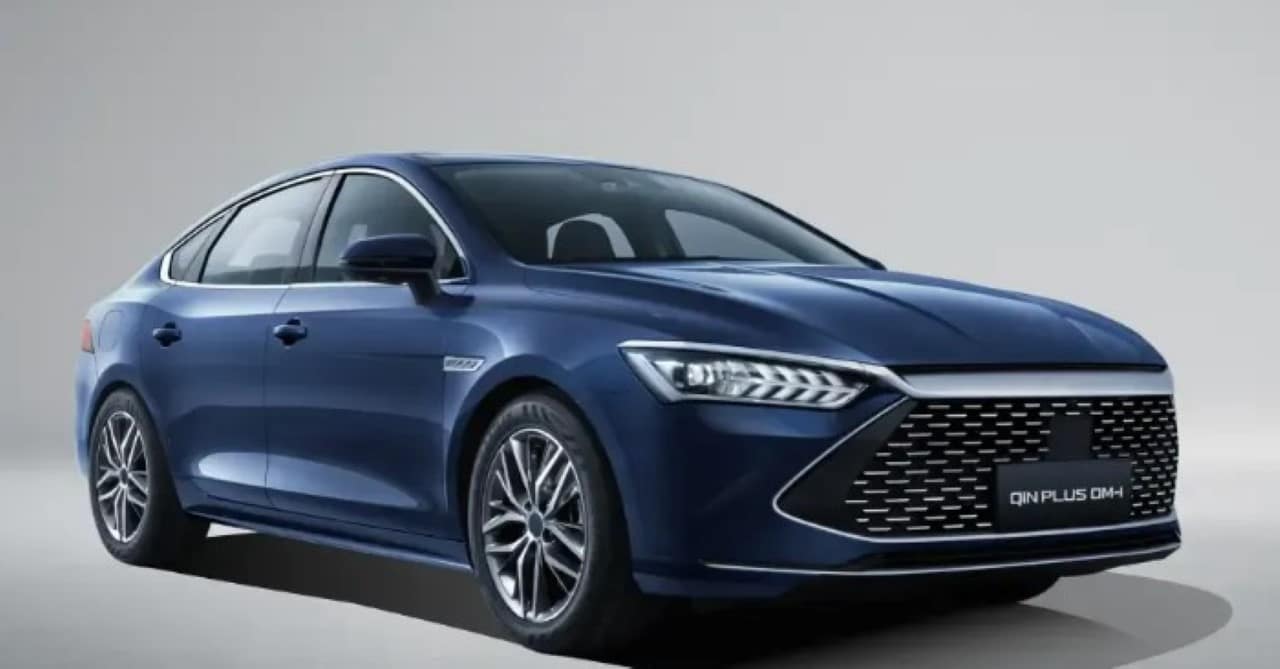
The preventive recall aims to mitigate any possibility of incidents, reinforcing the brand’s commitment to consumer safety in an increasingly competitive and regulated market. The company highlighted that the correction procedure will be carried out at no cost to customers and will seek to resolve the issue definitively, guaranteeing the integrity and performance of the cars.
The main risks associated with the identified failure include:
– Possibilidade of incorrect battery data readings by the BMS.
– Risco of overheating in scenarios of high humidity or continuous stress.
– In extreme and rare cases, failure could lead to a thermal runaway event.
Technical details of battery system failure
BYD’s investigation found that the main cause of the problem lies in an inconsistency in the software of the Sistema of Gerenciamento of Bateria (BMS). Esse system is crucial for the safe operation of an electric vehicle, being responsible for monitoring the voltage, current and temperature of each individual cell.
A failure in the BMS algorithm can result in a misinterpretation of the data, failing to activate protection mechanisms when necessary. In situations of high energy demand or in environments with high humidity, this deficiency can allow the battery pack to operate outside its ideal safety range, increasing the risk of internal damage.
Two-Step Solution for Homeowners
To comprehensively resolve the issue, BYD will implement a two-phase action plan. The first step consists of a remote software update, known as “over-the-air” (OTA). Esse new firmware improves BMS algorithms, making the system more sensitive to abnormal variations and improving early diagnosis capabilities.
The OTA update will be sent directly to the vehicles, without the need for the owner to visit a dealership. The system will issue clearer and more accurate alerts on the vehicle’s dashboard if any anomaly is detected, instructing the driver to seek an authorized service immediately.
The second phase of the recall involves a physical visit to an authorized BYD dealer. Durante this visit, technicians will perform a detailed inspection of the battery pack. Caso any physical component shows signs of wear or non-conformity, it will be replaced free of charge.
Procedures for verification and scheduling
BYD said it will actively notify all owners of vehicles included in the recall. Communication will be done through multiple channels, including correspondence, email and notifications on the brand’s official app.
Owners who wish to proactively check whether their vehicle is among those affected can do so simply. You can enter Número of Identificação of Veículo (VIN) on BYD’s official portal or Chinese regulatory agency (SAMR) website.
After confirmation, customers will be advised to schedule service at the nearest dealership. The company is reinforcing its service network to ensure that the process occurs quickly and with minimal inconvenience for users.
The automaker recommends that, until corrective procedures are carried out, drivers pay attention to any warning messages on the vehicle’s dashboard and avoid extreme conditions of use, such as complete battery discharge or prolonged exposure to high humidity environments.
Growth context and quality challenges
This recall is part of a context of accelerated expansion for BYD, which has established itself as one of the largest manufacturers of new energy vehicles in the world. The rapid increase in production scale, while demonstrating the brand’s success, also poses significant challenges to quality control processes and the supply chain. Ações like this, despite being negative at first, are seen by analysts as a sign of industrial maturity and a commitment to transparency and consumer safety.
In recent years, other recalls have been carried out by several automakers in the electric sector, both in China and globally. Questões related to batteries, software and electronic components are common in a rapidly evolving technology. The ability to proactively identify and correct these flaws is a crucial factor in building and maintaining public trust, especially in a market as competitive as China, where dozens of brands compete for consumer preference.
The Chinese automotive market and regulation
China represents the largest and most dynamic electric vehicle market on the planet, with an ecosystem that includes established manufacturers and innovative startups. Esse competitive environment drives technological development, but also increases the pressure on automakers to launch new products quickly. Nesse scenario, the role of regulatory agencies, such as SAMR, becomes essential to ensure that safety standards are strictly adhered to. Regulation has become stricter, requiring companies to be more transparent about potential defects and agile in implementing solutions. A recall of the size announced by BYD has a significant impact, not only on the company’s image, but on the entire sector, serving as a reminder that safety cannot be compromised in the name of speed of innovation or production volume. How BYD manages this process will be closely watched by consumers, competitors and regulators and could set a new standard for after-sales responsibility in the industry.
Recent history of brand calls
This is not an isolated event for BYD. Nos In recent months, the company had already made other calls for different models due to various problems, including failures in high voltage system components and defects in management software. The recurrence of these events raises discussions about the challenges of maintaining consistent quality control during a period of exponential growth.


