

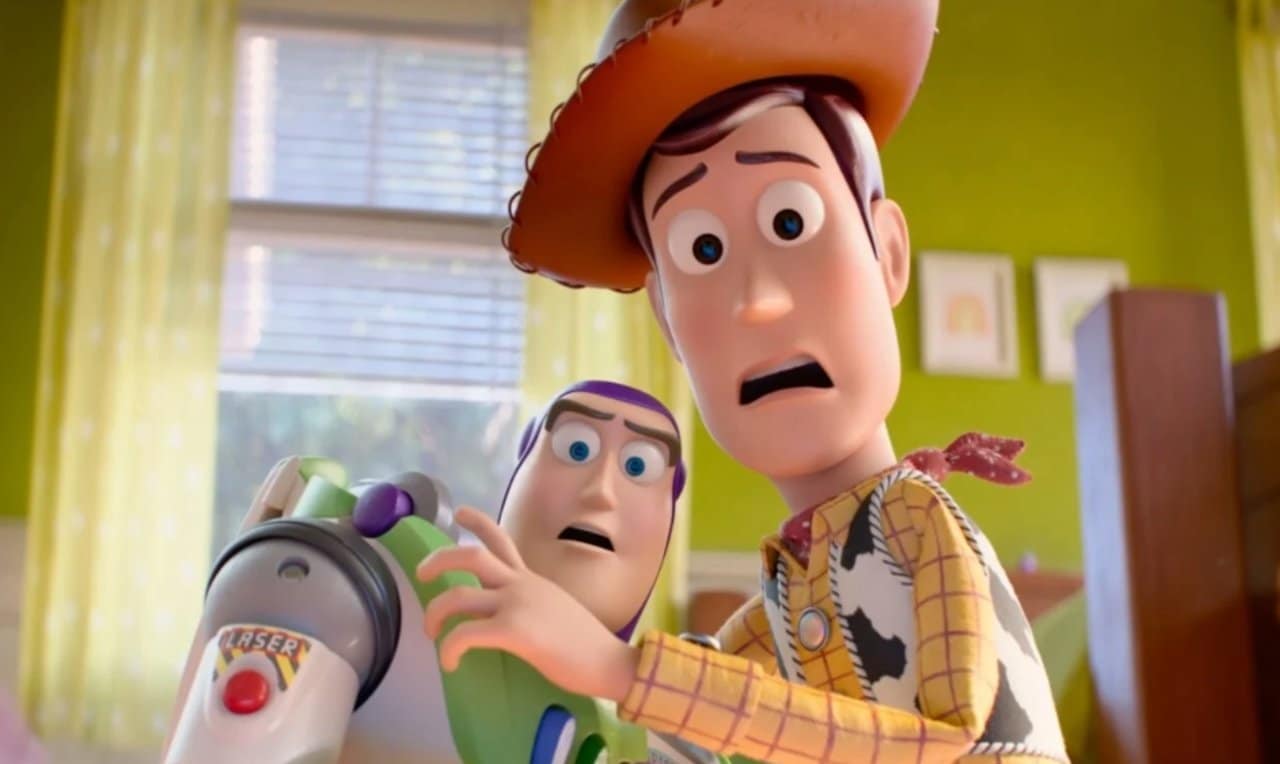
Producers Disney and Pixar have officially released the new trailer for Toy Story 5, marking the return of one of the most successful franchises in the history of animated cinema. Sob directed by Andrew Stanton, responsible for hits such as Procurando Nemo and WALL-E, the feature film proposes a deep reflection on the role of traditional toys in a world increasingly dominated by electronic devices and artificial intelligence. The promotional video details how the group led by Woody and Buzz Lightyear needs to adapt to children’s growing interest in tablets, cell phones and other technological gadgets that threaten the relevance of physical entertainment objects.
- The new plot focuses on the resistance of classic toys in the face of modernity.
- Greta Lee debuts in the franchise as the voice of technological antagonist Lilypad.
- The original cast, including Tom Hanks and Tim Allen, returns to bring the protagonists to life.
- Andrew Stanton takes over the script and direction, promising an emotional and updated narrative.
Generational conflict between traditional and digital
The narrative of Toy Story 5 delves into the inevitability of change, a theme that has accompanied the saga since its original launch in 1995. Woody, voiced by Tom Hanks, and Buzz Lightyear, voiced by
The inclusion of technological elements serves as a mirror for contemporary society, where childhood has been transformed by accelerated digital processes. Stanton’s script seeks to explore the feeling of obsolescence that affects Jessie, Slinky, Esse scenario creates a constant tension between nostalgia for the past and the demands of a future that is already present in children’s daily lives.
The arrival of Lilypad and the new antagonists
The trailer introduces Lilypad, a character described as terribly modern and who acts as the main counterpoint to the protagonists’ ideals. Dublada by Greta Lee, Lilypad symbolizes the technological sophistication that delights new generations, offering features that plastic and cloth toys cannot replicate. Ela is not just a new item on the shelf, but a representation of how digital interactivity can isolate conventional toys from everyday interactions with children.
In addition to Lilypad, the film introduces Smarty Pants, voiced by comedian Conan O’Brien, who reinforces the team of characters focused on electronic functionality. The dynamics between these new members and the original group of Woody promises moments of acid humor and subtle criticisms about technological dependence. The production indicated that the interaction between these different worlds will be the driving force behind great action sequences and dialogues that question the value of pure imagination in the face of the constant visual stimulus of the screens.
Diversity in the cast and new supporting figures
Pixar considerably expanded the universe of secondary characters to ensure that the generational transition is portrayed faithfully. Craig Robinson lends his voice to Atlas, a toy hippopotamus equipped with GPS technology that helps the class in their movements, while Shelby Rabara plays Snappy, a camera-shaped toy that records the events. Essas additions show that not all technology is seen as the enemy, creating a gray area of cooperation and mutual learning between different types of objects.
Other confirmed names include Tony Hale, who returns as the charismatic Forky, and new talents like Mykal-Michelle Harris as Blaze and Scarlett Spears as the sweet Bonnie. The presence of human characters continues to be the emotional anchor point, serving as the final motivation for the toys to fight for their space. Dr. Nutcase, voiced by Matty Matheson, appears as a curious figure who, despite being a toy, harbors a paralyzing fear of any technological advancement, serving as comic relief and a point of reflection.
Continuity of classics and renowned voices
Despite the numerous new features, Toy Story 5 maintains the foundation that won generations of fans around the world with the return of almost the entire original supporting cast. John Ratzenberger returns as the piggy bank Hamm, Wallace Shawn as the dinosaur Rex and Blake Clark as Slinky Dog, ensuring the necessary cohesion for the franchise. Maintaining these voices is essential to preserving the characters’ identity, allowing veteran audiences to feel familiar with the environment, even in the face of drastic transformations in the film’s central theme.
Annie Potts reprises her role as the adventurous Bo Peep, while Keanu Reeves returns as the fearless Duke Caboom, bringing the energy of the action sequences that marked the previous films. A Sra. Cabeça from Batata is now voiced by Anna Vocino, and Sr. Cabeça of Batata counts on Jeff Bergman, maintaining the couple’s characteristic sarcasm. Essa’s mix of veterans and newcomers reflects Disney’s effort to honor the series’ legacy while seeking to attract new viewers interested in modern discussions.
Andrew Stanton’s vision for the franchise
The choice of Andrew Stanton to lead this chapter was not random, given his track record in dealing with themes of isolation and connection in space and ocean films. The director stated in recent statements that Toy Story 5 is an opportunity to address current childhood without losing the charm of the classic narrative that defines Pixar. Sua’s experience in WALL-E, which already debated excessive technology and the loss of humanity, serves as a solid foundation for exploring how Woody and Buzz can survive in a room full of chargers and Wi-Fi.
Kenna Harris’s co-direction and Lindsey Collins’s production ensure that the film maintains the high technical standards that are the studio’s hallmark. The animation team worked to create textures that clearly differentiate the aged plastic of Andy’s toys with the metallic shine and LED lights of the new digital threats. Essa visual differentiation is crucial for the audience to perceive the shock of reality faced by the main characters as soon as they come into contact with the new electronics in Bonnie’s house.
Cultural impact and expectations for launch
The announcement of Toy Story 5 sparked immediate debates on social media about the need for another sequel to a story that seemed to have ended in the fourth film. However, the trailer’s reception was largely positive as it demonstrated that Pixar found a legitimate and current conflict to justify the return of its icons. The debate over children’s screen time and use of electronic devices is a global concern for parents and educators, making the film extremely relevant to contemporary audiences.
Disney’s strategy in releasing the trailer at this time aims to consolidate interest for the premiere, taking advantage of the vacuum of great animations focused on modern social themes. Analistas of the market predict that the film should appeal to both today’s children and adults who grew up with the first film, uniting generations around a message about friendship and adaptation. The expectation is that Toy Story 5 will not just be a box office success, but a starting point for discussions about how to balance digital development with the preservation of playful childhood.
Technical details and artistic production
The production of Toy Story 5 used new rendering technologies to ensure that the lighting effects of the electronic toys were realistic and intimidating. The animators focused on details such as the glow of the screens reflected in the fabric of Woody’s clothing, symbolizing the technological “invasion” that he so fears. Esse aesthetic care reinforces the narrative that the world around them is changing, making the home environment an unfamiliar and sometimes hostile place for those who do not have a USB port or Bluetooth connection.
The soundtrack, a vital element of the series, must also follow this line of contrast, mixing traditional orchestral arrangements with modern synthesizers when technology comes into play. The objective is to create an atmosphere where the spectator feels the pressure of modernity on classic toys. Stanton and his team sought references from real smart toy trends to create characters that appear believable to today’s audiences, avoiding dated electronic representations.
Lessons learned in previous films about children growing up and letting go of belongings take on a new layer of emotional complexity here. Não is more about just being exchanged for a new toy, but about being forgotten in favor of an immersive virtual experience. Woody and his friends face the challenge of proving that the physical presence and touch of a traditional toy offers a type of connection that no artificial intelligence algorithm or electronic game can completely replace.



