Comet C/2026 A1 MAPS approaches the Sun on a record sungrazer trajectory
Astronomers are following comet C/2026 A1 (MAPS), classified as a sungrazer of the Kreutz group, which is expected to pass very close to Sol in early April. The object was identified on January 13, 2026 by the AMACS1 observatory, located in the Atacama desert, in the Chile. The discovery occurred when the comet was still more than 2 astronomical units away from Sol, which represents a record for comets in this family, allowing observations for around 81 days before perihelion. Atualmente, the comet exhibits an apparent magnitude of around 9.7 to 10, with notable activity even far away.
The trajectory places the comet in an extremely close passage to the solar surface, with perihelion scheduled for April 4, 2026, at 2:21 pm UTC. Nesse moment, the minimum distance to the center of Sol will be approximately 855 thousand km, and to the solar surface, approximately 161 thousand km, equivalent to 23.1% of the solar radius. Essa intense approach exposes the core to high tidal forces and heat, conditions that often lead to the fragmentation or total destruction of sungrazers.
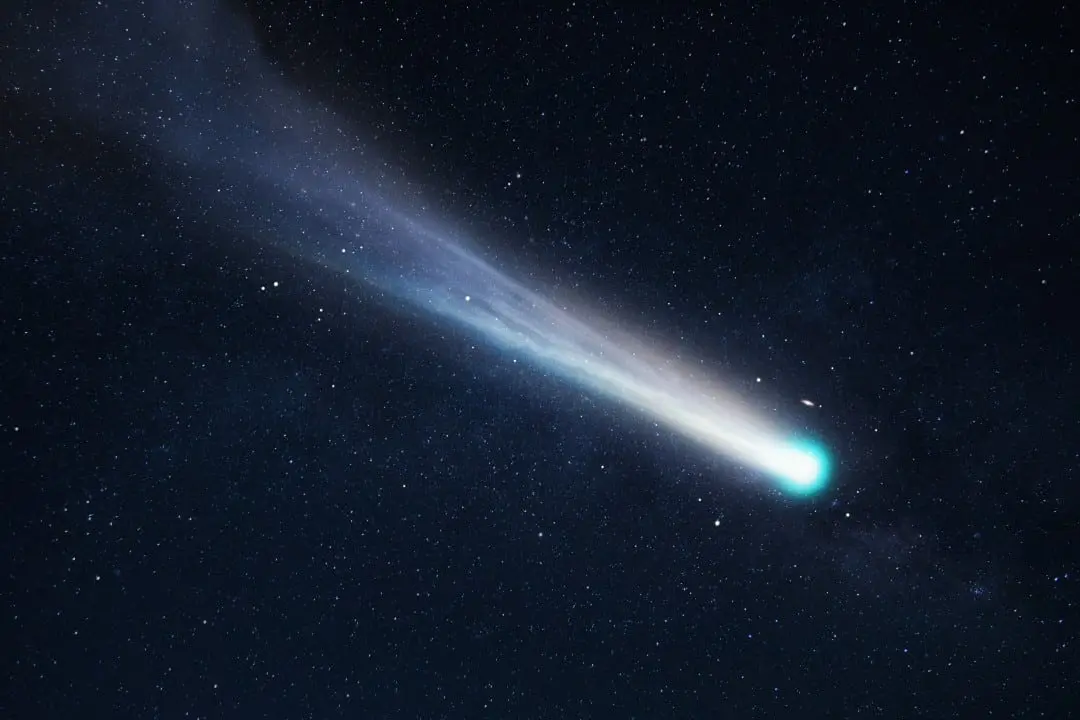
The comet is already showing brighter brightness than expected for its current distance, which suggests active composition or significant release of volatile material. Recent Observações reveal a well-condensed blue-green coma and a faint tail, indicating gas and dust production. Astrônomos use telescopes to monitor these changes, as the behavior can indicate whether the object will survive the encounter with Sol.
Unique orbital characteristics
Comet C/2026 A1 (MAPS) has an orbital inclination of 144.5 degrees, which differentiates it from other members of the Kreutz group. Seu orbital period estimated at about 1,900 years exceeds that of known sungrazers of this family by at least twice. Essas properties suggest that the object may belong to a less common subgroup or represent a fragment of distinct origin within the Kreutz population.
More on this story: Comet C/2026 A1 discovered by amateurs may shine brightly with the naked eye in the April daytime sky
During its passage through perihelion, the comet will enter solar conjunction as seen from Terra, passing behind Sol at 13:19 UTC and reappearing ahead at 15:34 UTC on April 4, always just 0.04 degrees from the solar center. Essa configuration makes direct observations difficult, but favors forward scattering of light, potentially enhancing brightness if the nucleus remains intact.
The maximum speed during the approach will reach 557 km/s, equivalent to 0.2% of the speed of light. Tal speed intensifies the thermal and dynamic effects on the core, which measures around 0.4 to 2.4 km in diameter according to preliminary estimates from different observations.
Current observations and recent developments
Since its discovery, the comet has increased in magnitude remarkably, going from faint values to levels visible in amateur telescopes. Entre early to mid-March 2026, records indicated coma expansion and core condensation, followed by temporary stabilization in brightness. Essas variations provide clues about the internal structure and rate of sublimation of ices.
Equipment such as the Telescópio Espacial James Webb contributed to estimating the core’s size at around 0.4 km in recent analyses, a value compatible with other sungrazers that survived similar passages. Imagens obtained shows moderately condensed coma and tail pointing in a specific direction, confirming continued activity.
Astronomers continue to collect data to predict the comet’s fate, considering that most of Kreutz disintegrate near Sol due to thermal and gravitational stress.
Possible scenarios after perihelion
See Also



Learn more: Comet MAPS discovered in January could shine in the April sky if it resists solar heat
If comet C/2026 A1 (MAPS) survives the passage, it may emerge from the solar glare with a high magnitude, possibly visible to the naked eye in ideal conditions shortly after perihelion. Forward scattering of sunlight would enhance its appearance, creating opportunity for detailed compositional observations through spectroscopy.
If fragmentation occurs, smaller fragments may disperse, producing a meteor show or multiple smaller visible objects. Telescópios solar arrays like SOHO or DKIST at Hawaii will monitor the event to capture details of the interaction with the solar corona.
The passage close to Terra will occur on April 5, 2026, at 23:56 UTC, at 143.8 million km, a safe distance that allows risk-free observations.
Comparison with historical sungrazers
The Kreutz group derives from a fragmented progenitor comet about 1,700 years ago, generating thousands of known members. Exemplos like the 1843 Grande Cometa and 1965 Ikeya-Seki demonstrated exceptional brightness after surviving perihelion. C/2026 A1 (MAPS) stands out for its early detection, which offers unprecedented time for preparation and study.
These comparisons help contextualize the current comet’s potential, although each object responds uniquely to the extreme conditions near Sol.
On the same topic: New comet C/2026 A1 MAPS discovered may shine in April in the night sky
Continuous monitoring by astronomers
International teams follow the comet with ground-based and space telescopes to record variations in brightness and morphology. Updated Dados indicates that the object maintains stable activity, with a coma and tail visible in recent observations from March 2026.
This information feeds models that predict behavior during perihelion and helps understand the dynamics of sungrazer comets.