
Gasoline rise to four dollars accelerates global transition towards electric car market
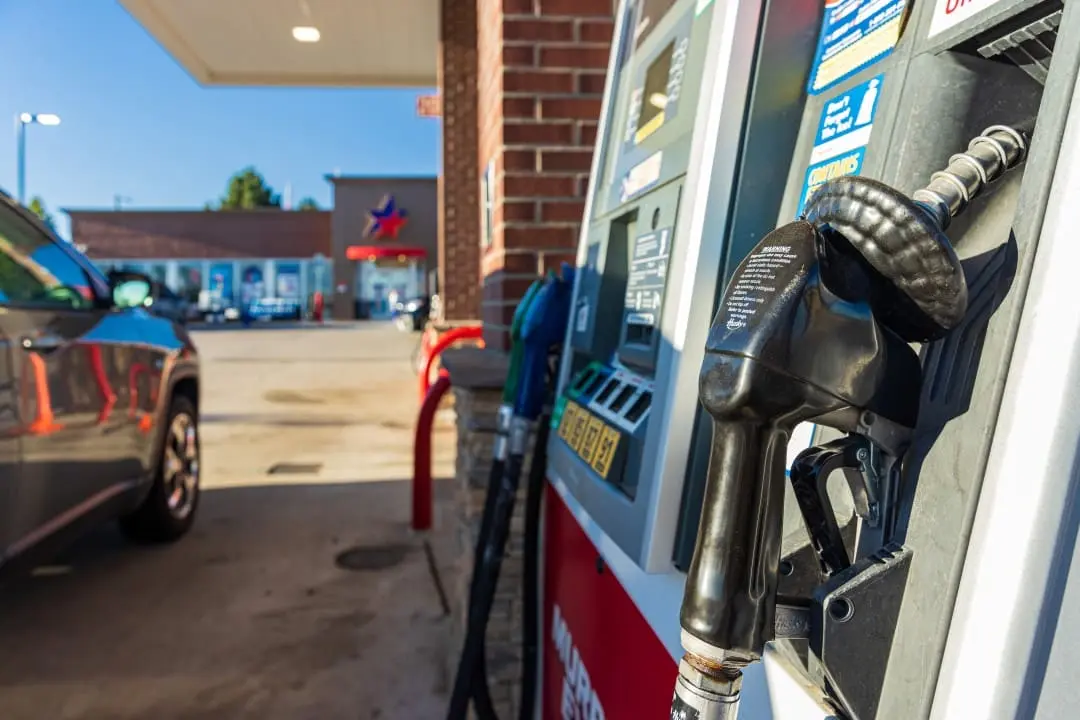
The continued increase in the price of fossil fuels establishes a new dynamic for the automotive sector on a global scale. The registration of values close to four dollars per gallon in reference markets acts as a direct driver for changes in driver behavior. The scenario occurs amid prolonged geopolitical tensions that directly affect the oil supply chain and stability.
The difference in operating costs between combustion vehicles and battery-powered models becomes the central element in consumers’ purchasing decisions. Calculating the monthly impact of traditional supply compared to electricity tariffs becomes a routine practice. The search for transport alternatives gains strength due to the strict need for families to readjust their budgets.
Experts in the mobility sector point out that sharp fluctuations in the energy market have historically restructured fleets in circulation. The current inflationary pressure on oil derivatives anticipates a technological adoption curve that would take years to consolidate under normal market conditions. Public interest quickly migrates from traditional utilities to platforms that offer electric mobility solutions.
Understand the case: Gasoline rise to four dollars boosts sales of electric cars in the global market
Direct financial impact on drivers’ budgets
The four-dollar-per-gallon threshold serves as a severe psychological barrier for most conventional vehicle owners. Levantamentos of the market indicate that it is exactly in this price range that families begin to change their daily routines, reducing non-essential trips and rethinking the use of private cars. The total cost of ownership takes center stage in automotive negotiations, surpassing factors such as design or engine power, which previously dominated automakers’ advertising campaigns.
In regions where the tax burden or logistics make fuel even more expensive, the economic superiority of electric motors presents itself as an indisputable mathematical fact. Local price dynamics force rapid adaptation, transforming what was previously considered a niche market into a viable mass option necessary to preserve families’ purchasing power. The current minimum wage of R$1,621, for example, imposes a rigid ceiling on the expenses of millions of workers, making the savings generated by electricity a crucial financial relief factor.
Tariff stability attracts new consumer profiles
Financial predictability emerges as the biggest attraction of electric vehicles in the current economic scenario. Enquanto the fossil fuel market undergoes daily changes linked to international conflicts and decisions by producer cartels, electricity tariffs offer much greater regulatory stability. The driver is able to project his annual transportation expenses accurately and smoothly.
Independence from oil fluctuations guarantees fundamental security in times of global economic uncertainty. The experience of recharging the vehicle at home overnight, taking advantage of times of lower demand and reduced rates, contrasts sharply with the unpredictability of frequent trips to gas stations. Family financial planning gains considerable momentum with this technological transition.
Added to this is the drastic reduction in preventive and corrective maintenance costs. The architecture of an electric motor eliminates the need to change lubricating oils, fuel filters, belts and spark plugs, in addition to having an infinitely smaller number of moving parts subject to wear. Brake wear is also minimized thanks to regenerative braking systems, extending the useful life of the components.
Structural barriers limit immediate fleet expansion
Despite the clear operational advantage, the large-scale transition faces logistical obstacles that require government and private attention. Uncertainty about the duration of the rise in oil prices causes a portion of consumers to postpone changing vehicles, acting in the hope of a normalization of values in the short term. Essa hesitation delays inventory turns for automakers focused on electrification.
More on this story: The price of a gallon of gasoline reaches four dollars and accelerates the transition to the electric car market
Public charging infrastructure remains the sector’s vulnerable point in several regions. The so-called range anxiety directly affects the purchasing decision of drivers who frequently undertake long journeys or who live in areas far from large urban centers. The absence of ultrafast charging networks on highways creates a considerable logistical bottleneck for mass adoption.
The initial purchase price of zero kilometer models also acts as an exclusionary filter in the current market. Para To overcome these challenges, the automotive sector has focused on specific strategies to attract consumers looking to avoid gas stations.
– Oferta appreciation bonus for used vehicles when exchanging them for electric ones.
– Parcerias with financial institutions for reduced interest rates on green financing.
– Instalação free home chargers when purchasing premium models.
– Expansão of monthly subscription plans as an alternative to outright purchase.
On the same topic: ANEEL confirms yellow flag for September and electricity bill continues with extra charge
Reduction in prices for sustainable technologies
The automotive market records a historical approximation in the values practiced between different engine technologies. The financial premium required to purchase a new electric vehicle has fallen drastically in recent months, reaching the lowest levels ever documented. The scale of global battery production and increased competition between traditional automakers and new technology startups have forced a review of price tables, making access to clean mobility less restrictive for the middle class.
The pre-owned vehicle segment presents an even more favorable scenario for the adoption of electric technology. Natural depreciation in the early years of use created a robust secondary market where the price difference for gasoline cars is marginal or, in some cases, non-existent. Diversas brands already offer second-hand electric units for lower prices than conventional models in the same category, representing the fastest way to escape fossil fuel inflation.
Inequality in access to new mobility technology
The current dynamics of the automotive market highlights a profound social paradox in relation to urban mobility and the domestic economy. Families with lower purchasing power are those that suffer the most violent impact from the increase in gasoline prices, committing a disproportionate share of their monthly income just to ensure transportation to work. The savings generated by electricity would be transformative for these homes, but it is exactly this demographic that encounters the greatest insurmountable barriers to accessing technology. The requirement for a high initial investment, combined with restrictive interest rates for financing, makes the acquisition unfeasible. Além Furthermore, the housing reality of these families, who often live in old popular condominiums or in areas without a private garage, makes it impossible to install domestic charging infrastructure. The scenario consolidates protection against global economic fluctuations as an exclusive privilege of the upper classes, while the most vulnerable remain dependent on an increasingly costly and unpredictable fossil fuel system.
Learn more: Rising gasoline prices strengthen the electric vehicle market and accelerate driver migration
Hybrid alternatives gain space in the sector
For consumers who do not have the structural conditions for the total transition, hybrid vehicles emerge as the ideal intermediate solution. The combination of combustion engines with auxiliary electrical systems provides a severe reduction in gasoline consumption, increasing energy efficiency without the need to plug the car into a socket. The technology mitigates the effects of rising oil prices by immediately relieving the monthly budget, while the public charging infrastructure continues its expansion process across the territory.
Decrease in global dependence on oil
The gradual replacement of the circulating fleet generates profound consequences for the macroeconomy and energy geopolitics. The volume of electric vehicles already in operation on public roads is responsible for removing millions of barrels of oil from global demand daily. The decline in consumption weakens the bargaining power of exporting countries and reduces the vulnerability of importing nations to supply shocks.
National energy security now depends more on internal electricity generation capacity than on the import of liquid fuels. Governos see this transition as a strategic opportunity to shield their economies against external crises. Promoting the adoption of clean technologies is consolidated not only as an environmental agenda, but as a fundamental guideline for the economic defense and financial stability of Estado.
More news in News (EN)
See more → Samsung releases new system update with new features for Galaxy Watch 4 users
 Digital retail reduces the value of the Galaxy S25 5G smartphone with bank bonuses and device exchange
 Amazon’s wireless CarPlay adapter has a 50% discount and high approval ratings from drivers
 Zach Cregger’s new Resident Evil ignores games and focuses on an unprecedented story with new characters
 Rumor suggests that Nintendo is preparing a special edition of the Switch 2 with a remake of Ocarina of Time
 Apple accelerates production of the iPhone 17e and develops new Air model with dual camera system
 Epic Games platform releases twelve high-budget games at no permanent cost for PC users
 PlayStation 5 Pro price drop accelerates digital retail sales and eliminates global stocks
 New Galaxy Watch 9 firmware appears on server and confirms progress in software development
 Apple’s commemorative project tests cell phone with 1.1 millimeter edge and curved screen for 2027
 New Apple system update optimizes urgent task management for iPhone users
 Leak details hardware of the new portable PlayStation with superior graphics to the Xbox Series S
More news on Mix Vale
- 1Colby Minifie confirms Ashley Barrett’s powers in The Boys season five
- 2Napoli x Milan in Serie A with confirmed lineups and where to watch live
- 3New battery test puts Galaxy S26 Ultra ahead of iPhone 17 Pro Max in global ranking
- 4Research reveals that parents are unaware of how their children use artificial intelligence
- 5Oppo officially launches the Find X9 Ultra worldwide with Hasselblad lenses and robust battery
- 6Tim Cook reveals new iPhone and iPod prototypes in celebration of Apple’s fiftieth anniversary
- 7New edition of foldable smartphone brings gold finish to Winter Games competitors
- 8Android system receives native Gemini Nano 4 integration for offline processing on smartphones
- 9Samsung updates QuickStar module and expands visual control of the panel in the One UI 8.5 interface
- 10Leak reveals Lords of the Fallen and Sword Art Online in April’s PS Plus Essential catalog