Moon Phase this Monday (30); check the lunar calendar
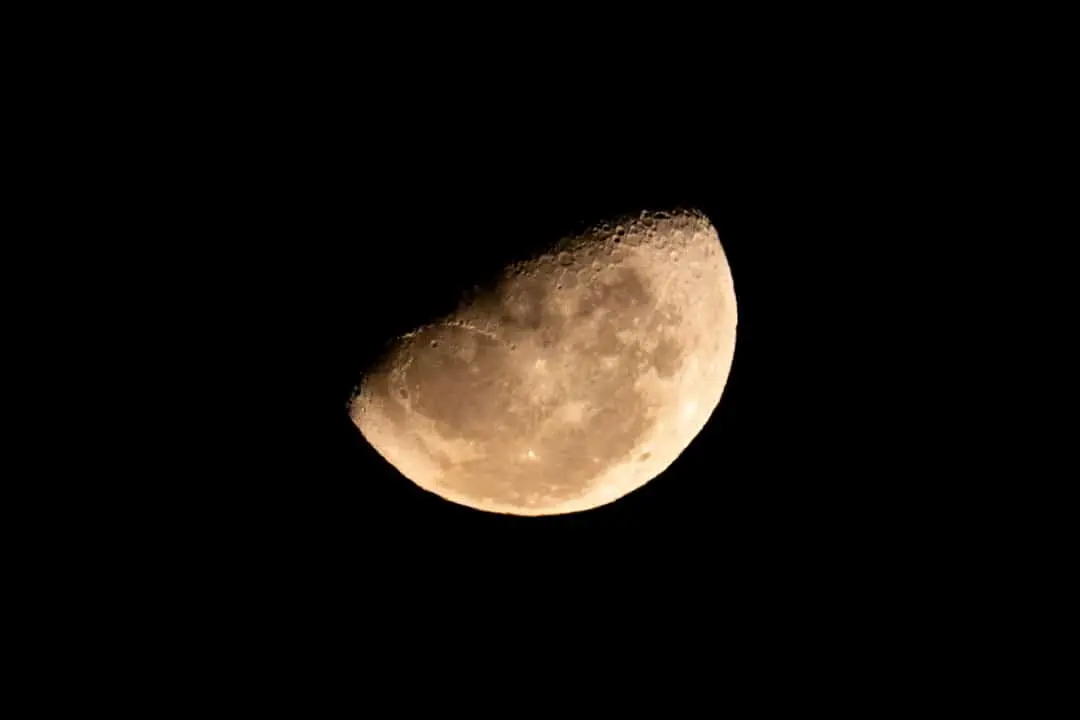
This Monday, March 30th, Lua is in the growing phase. The natural satellite advances visibly in the night sky and there are only a few days left to reach the full phase. Observadores may notice the gradual increase in the illuminated portion on the right side when viewed from Hemisfério Sul.
The lunar cycle follows its usual pattern with an average duration of 29.5 days between one new Lua and another. Cada main phase lasts about seven days and results from the relative position between Sol, Terra and Lua. Essa gravitational interaction determines the level of visible illumination of the lunar surface.
- The Lua flood occurred on March 3rd in the early hours of the morning
- The waning phase began on March 11th in the morning
- The new Lua happened on March 18th at the end of the night
- The growing phase began on March 25th in the afternoon
Understand the main phases of Lua and their characteristics
The four main phases mark the lunar cycle differently. Cada offers a specific visual appearance when viewed from Terra. Visibility depends on the amount of sunlight that reflects off the satellite’s surface.
On the same topic: What is the phase of the Moon today (3)? see the lunar calendar for August
The waning Lua has a similar shape to the letters D or C depending on the position. Ela appears after the full phase and gradually reduces the illuminated area. Essa phase indicates the end of a cycle and prepares the ground for the invisibility of the new Lua.
During the new Lua the satellite aligns with the Sol in relation to the Terra. That’s why it remains in the sky during the day and cannot be easily observed at night. Essa configuration marks the beginning of a new lunar cycle.
The crescent Lua illuminates the western half as seen from the Hemisfério Sul. Ela resembles the letter C from this perspective and gains more brightness every night. The illuminated portion increases progressively until reaching the full phase.
Visualization differences between hemispheres
The appearance of Lua varies depending on the observer’s hemisphere. No Hemisfério Sul the satellite appears inverted compared to the view from Hemisfério Norte. Essa difference occurs due to the geographic position and orientation of the observer.
More on this story: Moon phase today June 30, 2026 and the forecast for the next changes in the lunar cycle
The same face of Lua is always observed from Terra. Isso happens because the satellite’s rotation period coincides with the time it takes to travel around the planet. The phenomenon keeps a face permanently turned towards us.
See Also


Distance between Terra and Lua
The average distance between Terra and Lua is around 384 thousand kilometers. Currently, this measurement records daily variations due to the satellite’s elliptical orbit. On March 30, 2026, the approximate separation is close to 383 thousand to 400 thousand kilometers depending on the exact time.
Next lunar phase
The Lua should enter the full phase on April 1st. Essa transition will occur at the end of the night and will offer greater luminosity in the sky. Observadores will be able to follow the gradual increase in lighting until the peak of the phase.
Learn more: Moon today: crescent phase dominates the sky on July 28, 2026 with 99% illumination
The March lunar calendar ends with Lua still in a growing phase. The month started with the full Lua on the 3rd and went through all the main stages. The sequence follows the astronomical pattern without significant variations.
How to observe the growing Lua
The crescent phase allows good viewing in the early hours of the night. The illuminated portion grows daily and facilitates identification in the sky. Condições clear weather favors observation without the need for special equipment.
Learn more: What is the phase of the Moon this Monday (25/05)? check the lunar calendar in May
The gravitational interaction between celestial bodies keeps the cycle predictable. Essa regularity helps astronomers and interested parties plan observations throughout the year. The phenomenon continues to arouse curiosity due to its constancy and visual beauty.
Curiosities about the lunar cycle
The lunation represents the complete interval between two consecutive new Luas. Esse period undergoes small variations but maintains a stable average over the centuries. The phases influence several observable aspects on the Earth’s surface.
The full Lua represents the moment of greatest visibility. At Nessa, the satellite is positioned opposite Sol and reflects light on the entire face facing Terra. Maximum brightness allows observation even in urban areas with some light pollution.