

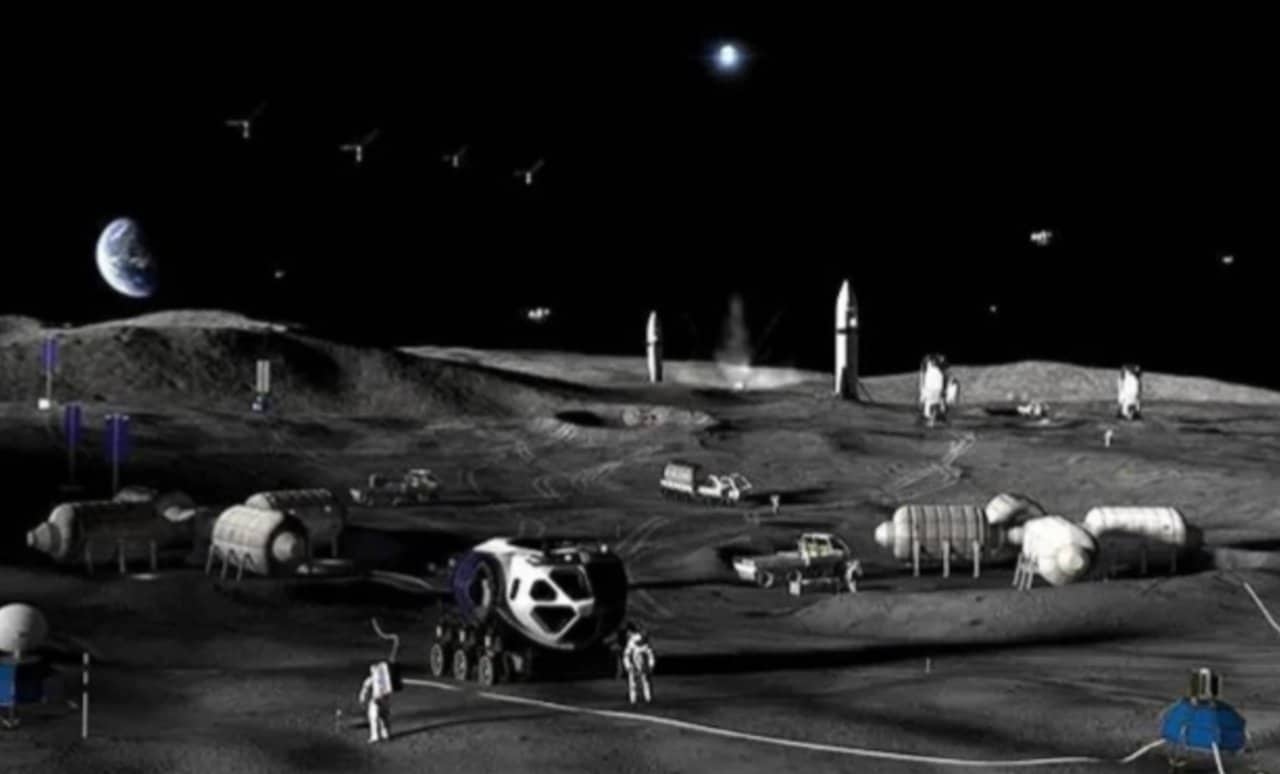
The American space agency, Nasa, is working to overcome the continued delays and various modifications that have marked Programa Artemis, its ambitious initiative to return astronauts to the surface of Lua. Esta undertaking represents the first time that humans will set foot on the natural satellite since the end of the era Apollo, with the ultimate goal of establishing a permanent human presence. The mission not only symbolizes a scientific and technological advancement, but also serves as a fundamental pillar for Estados Unidos to maintain its leadership on the global space stage.
This monumental effort comes at a time of increasing international competition, especially with China, which has also expressed plans to send astronauts to Lua by 2030 and to build its own lunar base. The Artemis program is expected to take a significant new step with the launch of mission Artemis 2. Essa crucial stage, involving four astronauts on board, is scheduled for this Wednesday, April 1, 2026, marking a historic moment in space exploration.
Changes in the schedule and objectives of Artemis have been a constant since its conception, reflecting the complexity inherent in projects of such magnitude. Inicialmente, the forecast for the flight of Artemis 2 was 2021, with the landing on Lua in 2023. Contudo, these deadlines have been revised. The agency recently announced its intention to build a lunar base by 2033, setting a long-term goal that reinforces the vision of human permanence in space.
Ongoing Revisions and Nasa’s New Moon Goal
Since its revitalization, Programa Artemis has undergone several revisions that have adjusted its scope and schedule. The initial goal of landing astronauts on Lua, scheduled for 2023, has given way to a more gradual approach, with the launch of the lunar base in 2033 as one of the most recent milestones.
These changes highlight the strategic importance of the initiative for the Estados Unidos, who see Artemis as an essential tool to reaffirm their space dominance. In the face of powers like China, which accelerate their own lunar programs, Nasa seeks to solidify its position, not only with symbolic returns, but with the construction of infrastructure that enables extended stays and in-depth studies.
Artemis 2’s complex journey to the natural satellite
Mission Artemis 2 represents a crucial milestone, being the first manned mission to orbit Lua in more than five decades. Programada for April 1, 2026, will carry four astronauts for a lunar flyby, testing vital systems before future landing missions.
This test flight is designed to verify all systems of the Orion spacecraft and the Space Launch System rocket (SLS) with crew on board, ensuring safety and performance for subsequent missions, such as Artemis 3, which involves landing humans on the lunar surface.
The astronauts selected for Artemis 2 will face rigorous training and preparations. Sua journey is a fundamental step towards human return to Lua and the advancement of deep space exploration, paving the way for the installation of a permanent base and future journeys to Marte.
Retrospective: the revitalization of the American space program
Nasa’s lunar program was revitalized between 2017 and 2018, during Donald Trump’s first administration. Naquele period, the agency was given directive to refocus its efforts on human spaceflight bound for Lua, a shift in focus from the previous priority of planning a future mission to Marte.
This new targeting was built around two main components: the powerful SLS rocket (Space Launch System) and the Orion capsule, both originally conceived under the previously canceled Constellation program. Reusing these designs allowed Nasa to accelerate the development of its new lunar plan.
Boeing played a central role as the lead developer of the SLS, contributing its extensive experience in aerospace engineering to the creation of the largest rocket ever built for Nasa. The SLS’s capability is crucial for transporting the heavy payloads and large volumes required for Artemis missions.
At the same time, Northrop Grumman was responsible for the rocket’s solid fuel propellants, essential components for the initial launch phase, while Lockheed Martin was in charge of developing the spacecraft Orion, designed to transport the crew and supplies into deep space.
Ambitious timelines and persistent technical challenges
In 2019, Casa Branca set an audacious goal: to land astronauts on Lua by 2024. Embora the program would only receive the name Artemis months later, in reference to Apolo’s sister in Greek mythology, the Nasa defined a sequence of three missions to achieve this objective.
The original plan called for Artemis 1, an unmanned test flight, for 2021; at Artemis 2, a manned flyby of Lua, for 2022; and Artemis 3, with landing on the lunar surface, to 2023. However, technical and budgetary challenges and the complexity inherent in the development of new technologies led to successive postponements of each stage.
Delays are common in large-scale, high-tech projects like Artemis. Questões related to hardware development, extensive security testing and the integration of multiple systems and industrial partners contributed to the reevaluation of deadlines, aiming to ensure maximum safety and success of the missens.
The revised schedules aim to accommodate difficulties encountered, allowing extra time for rigorous testing and refinements. Esta approach, although it generates waiting, is essential to mitigate risks and ensure that each phase of the program is executed with the precision required for manned space missions.
The contemporary space race: USA versus China
The current phase of lunar exploration is marked by a new space race, in which Estados Unidos and China stand out as the main competitors. Ambos countries see Lua as a strategic field not only for science and technology, but also for power projection and geopolitical influence.
China has clear and ambitious plans, including the goal of sending its own astronauts to the lunar surface by 2030. Além Additionally, the Asian nation has expressed a desire to build a lunar base, signaling an intention for a long-term presence that directly challenges the historic US supremacy in space.
This intensified competition has significant implications for global space policy, driving innovation and investment in programs like Artemis. The competition is not just about who gets there first or establishes the most infrastructure, but also about setting norms and standards for future space exploration.
Maintaining American space leadership is therefore a crucial motivating factor for Programa Artemis’s advancement. The success of the initiative is seen as essential to preserving Estados Unidos’s position as the leading power in the exploration and utilization of space.
Technology and innovation: pillars of the mission Artemis
The Artemis program is not just a return to Lua, but a significant technological leap forward. Ele incorporates advances in propulsion, life support systems and robotics, designed for long-duration operations in hostile environments.
The development of the SLS rocket, capsule Orion and new lunar modules requires continuous innovation. Essas technologies aim to not only bring humans to Lua but also build infrastructure that supports a sustainable human presence, including habitats and energy generation systems.
The future of human exploration at Lua
With the Artemis program, Nasa sets out a long-term vision for human space exploration. The goal is not just to revisit Lua, but rather to transform it into a permanent outpost for humanity, serving as a springboard for future missions to even more distant destinations, like Marte.
The continued presence at Lua will open new frontiers for scientific research, enabling in-depth studies of lunar geology, the space environment and the impact of life in low gravity. Além Furthermore, the exploration of in situ resources, such as water ice, could be fundamental to the self-sufficiency of future lunar bases.



