Carlos Alcaraz dominates Sebastián Báez in his Monte Carlo Masters 1000 debut with splits of 6/1 and 6/3

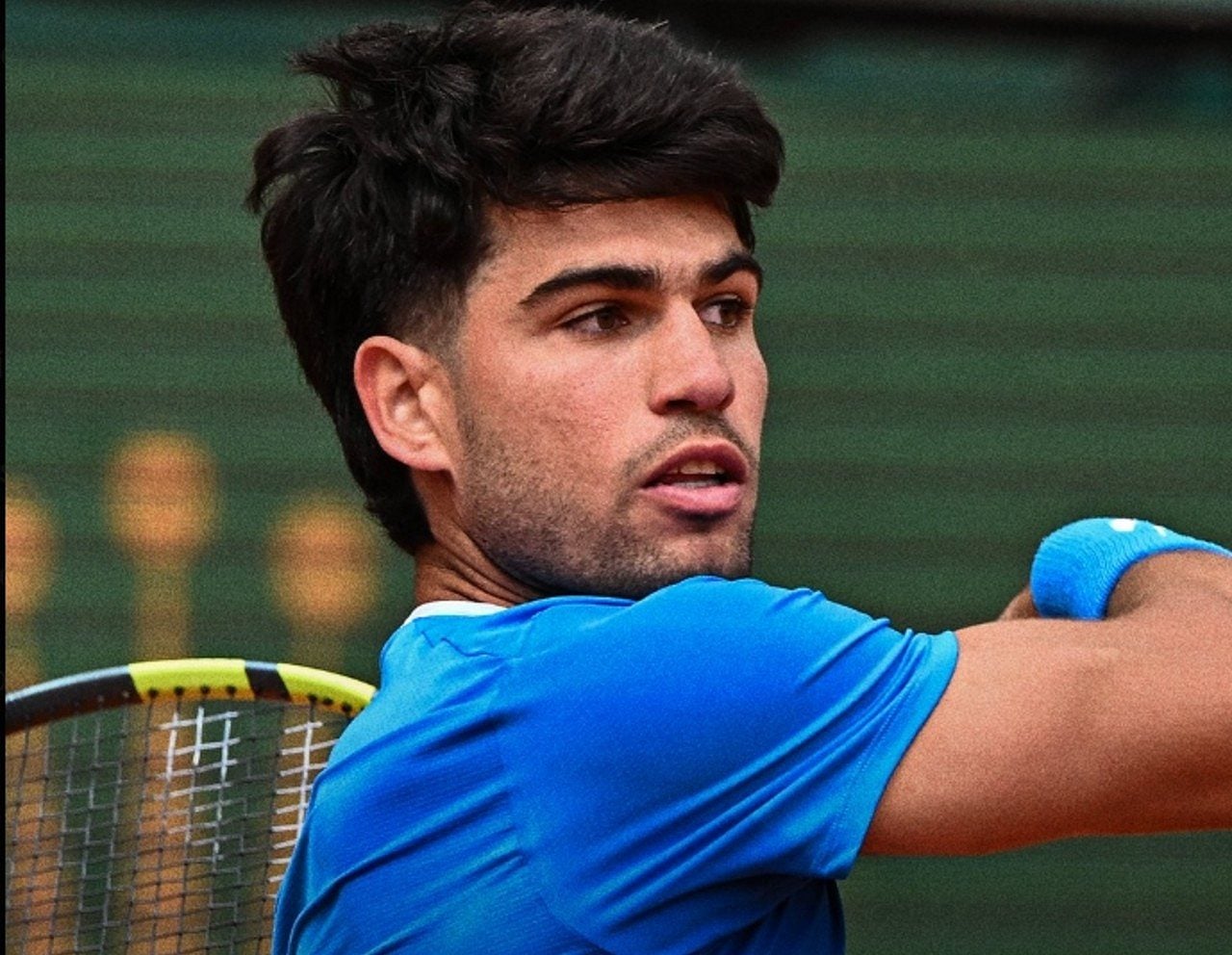
The Spanish tennis player Carlos Alcaraz debuted with an impressive victory in the 32nd stage of the Masters 1000 of Monte Carlo, beating the Argentine Sebastián Báez in straight sets. The match, held at the prestigious Court Rainier III, ended with scores of 6/1 and 6/3, demonstrating the young athlete’s quick adaptation to the clay court conditions in the principality. Desde the first games, Alcaraz demonstrated superior technical control, using variations in rhythm and short cuts that made his opponent’s defensive movement difficult.
The consistency of Alcaraz’s service was one of the pillars for building the positive result during the afternoon of competition in Mônaco. With 83% of the points won on the first serve, the Spaniard did not allow Báez to find gaps to balance the actions at the back of the court. The confrontation lasted just over an hour, reflecting Alcaraz’s aggressiveness in the decisive moments and his ability to convert five of the ten break opportunities obtained throughout the duel.
- The Spaniard registered six aces during the match, while the Argentine committed three double faults at critical moments in the second set.
- The efficiency in returning the serve allowed Alcaraz to score 34 points receiving the service, compared to just 14 from Báez.
- The territorial dominance in Court Rainier III was confirmed by the 65 total points scored by the winner, surpassing the opponent’s 42 points.
All-star@carlosalcaraz🤩
— ATP Tour (@atptour)April 7, 2026
The title defense is up and running!@ROLEXMCMASTERS | #RolexMonteCarloMasters pic.twitter.com/PrplRNE3OK
Superior technical performance on center court
Alcaraz started the first set by imposing an intense rhythm and breaking Báez’s serve in the opening games, which generated an immediate psychological advantage. The Argentine tried to react by varying the weight of the ball, but came up against the defensive solidity of the Spaniard, who managed to neutralize the attacks and counterattack with pinpoint precision along the lines. The score of 6/1 in the first half was a faithful reflection of the disparity in game volume presented by the two tennis players at the beginning of the day.
In the second set, Sebastián Báez showed a slight improvement in his first serve percentage, reaching 65% overall in the match. However, this evolution was not enough to stop the momentum of Alcaraz, who remained calm to manage moments of pressure and close the game at 6/3. The Spaniard ended the match with a streak of five consecutive game victories, sealing his qualification for the round of 16 of the competition.
Loot Stats and Break Points
Analysis of the numbers reveals that Carlos Alcaraz was extremely efficient in saving the rare opportunities given to his opponent on Monegasque clay. Báez only managed a break of service in a single chance created, which demonstrates the Argentine’s difficulty in reading the serving strategy of the current world ranking number. The safety of Alcaraz on the second serve, with 50% of points won, also significantly surpassed the 33% recorded by the South American tennis player.
The data collected by the tournament organization indicates that the aggressiveness in the returns was the difference for the Spaniard to avoid prolonged and exhausting rallies. By winning 12 games in total, Alcaraz showed that his physical and technical preparation for the clay season is at a high level. Báez, in turn, ended his participation in the singles tournament after winning four games, now focusing on his next commitments on the professional tennis circuit.
Strategy of Alcaraz for the clay of Mônaco
Carlos Alcaraz’s lateral movement was one of the most praised aspects by the experts present at the Monte Carlo complex during today’s round. Ele was able to reach short balls with ease and used topspin to push Báez behind the baseline, controlling the angles of the game. Essa offensive posture forced the Argentine to commit unforced errors in moments of transition, preventing any attempt to turn the score around.
- Alcaraz scored 31 points in his own service games, ensuring peace of mind to risk more on returns.
- Argentine Sebastián Báez won just three service games throughout the match, suffering constant pressure on his service turns.
- The Spaniard’s longest consecutive points streak was four, while Báez managed just three points in a row at his best in the final set.
Physical preparation and competition pace
Victory in straight sets allows Alcaraz to save energy for the more acute phases of the tournament, where he will face higher-ranked opponents. The stable climate and local temperature favored the athlete’s performance, as he showed no signs of physical wear or injuries during the execution of his more sudden movements. The precision in his right strikes was fundamental in destabilizing the defense of Báez, who is known for being a specialist on slow surfaces.
The Spaniard now awaits the definition of his next opponent to plan his tactics for the round of 16, keeping his focus on the quest for the unprecedented title in the principality. Sua technical team emphasized the importance of keeping concentration high, as Masters 1000 of Monte Carlo is known for surprises and games decided in minute details. The dominant performance against Báez serves as a warning to competitors about the current form of Grand Slam’s young champion.
Recent retrospective and projections on the circuit
This Wednesday’s triumph extends the series of good results of Alcaraz in tournaments at level Masters 1000, consolidating its position among the main favorites of the season. Sebastián Báez, despite the defeat, he demonstrated resilience by trying to change his strategy in the middle of the second set, although without effective success against the Spaniard’s volume of play. The ATP circuit remains busy with the world’s top names fighting for crucial ranking points before the second Major of the year at França.
The organization of the event highlighted the high demand for tickets for the Alcaraz matches, highlighting the player’s charisma and impact on the European public. The sneakers presented at Court Rainier III reinforce the trend of a faster game, even on clay courts, where the power of the serve and the speed of the ball make a difference. With the elimination of Báez, the singles table loses one of its most talented South American representatives, with only a few athletes from the region remaining in the main draw.
Analysis of direct confrontation and points scored
When observing the heat map of the match, it can be seen that Carlos Alcaraz occupied the baseline aggressively, rarely retreating excessively to defend Báez’s blows. Essa’s posture allowed him to dictate the rhythm of the points, totaling 65 points scored at the end of the second set, which represents a safe margin of technical dominance. The Argentine had difficulty keeping the ball deep, which made it easier for the Spaniard to reach the net at opportune moments to finish off the plays.
Unforced errors were minimized by Alcaraz, who presented a clean game with few mental oscillations, essential characteristics for success in long-term tournaments. Báez tried to use his backhand to open the court, but Alcaraz covered the spaces quickly, forcing his opponent to look for even more difficult and risky balls. The final result of 6/1 and 6/3 exactly reflects the superiority displayed on the court, with Alcaraz confirming their top seed status.