Donald Trump responds to criticism from conservative communicators and defends military action in Iran By Jeronimo Santos
8 min read
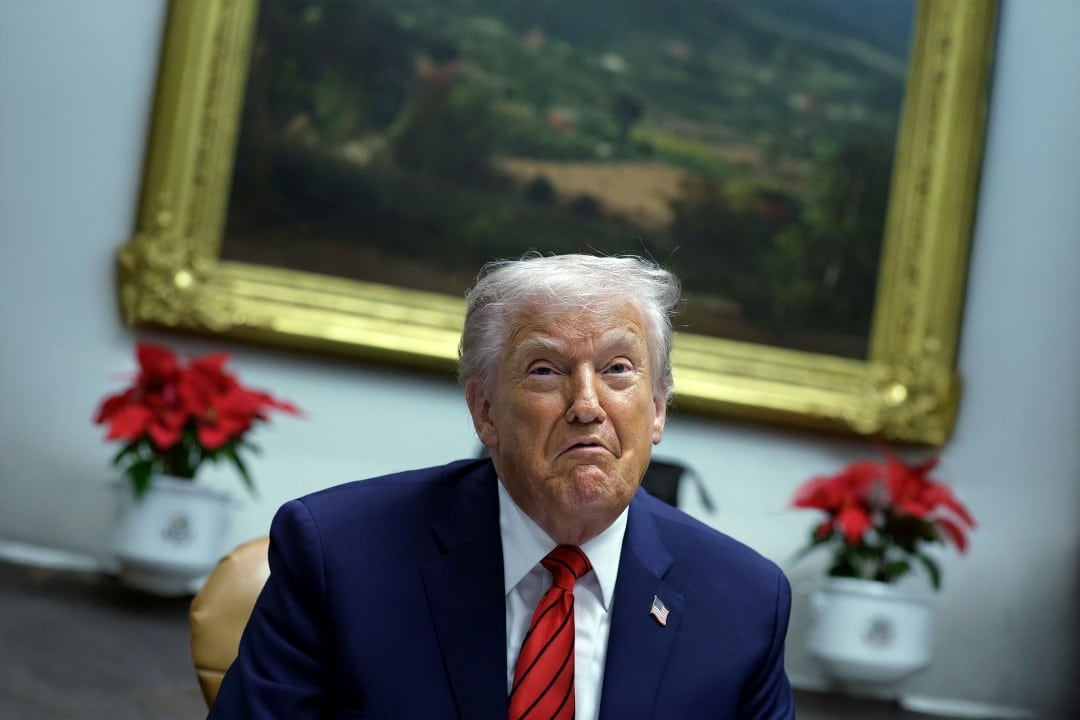 |
Donald Trump used his official platform on the social network Truth Social last Thursday to launch severe criticisms against four of the most influential voices on the conservative spectrum on Estados Unidos. The president reacted publicly against Tucker Carlson, Megyn Kelly, Candace Owens and Alex Jones, after communicators expressed opposition to recent military maneuvers and attacks led by the American government against targets in Irã. In an extensive message full of pejorative adjectives, Trump sought to delegitimize the authority of these influencers, labeling them as individuals of low intelligence and unlinked to the movement that elected them.
The public clash reveals a significant fragmentation within the support base that traditionally supports the agendas of the American right, especially with regard to military interventionism. Donald Trump categorically stated that the four critics do not represent the values of the Make America Great Again (MAGA) movement, arguing that their opposition to the containment of Irã is contrary to the national interests. Durante publication, the president argued that the strategy adopted by his government is essential to prevent Teerã from advancing in its nuclear weapons development program, a central point of Estados Unidos’s external security.
The president’s reaction was marked by a tone of direct confrontation with figures who, at other times, were already aligned with his policies or served as a platform for his ideas. Trump alleged, without presenting specific evidence, that the position against the war on the part of Carlson, Kelly, Owens and Jones would suggest collusion with the Iranian military buildup. The personal attacks were diverse and focused on each person’s professional trajectory, mentioning layoffs from major television stations and the loss of audience on digital platforms and podcasts.
- Tucker Carlson was described as someone who is unstable and does not have a complete academic background.
- Megyn Kelly had her history of controversial questions in previous debates recalled in a negative light.
- Candace Owens has been criticized for controversial statements about international public figures and her credibility has been questioned.
- Alex Jones was cited in relation to his financial problems and past lawsuits that resulted in large losses.
Personal offenses and questions about relevance in conservative media
The president of Estados Unidos focused much of his argument on the supposed lack of current relevance of the four communicators, stating that they seek free publicity by criticizing the government. Donald Trump declared that influencers are outside the traditional television circuit and that their podcasts are productions of minor importance in the current media scenario. Para the president, the fact that these personalities no longer have fixed spaces in large communication networks is an indication that their opinions are not taken seriously by the general American public.
In addition to questioning the scope of the criticism, Trump used hostile vocabulary to describe the intellectual capacity of his right-wing opponents, repeatedly calling them stupid and crazy. The president emphasized that the success of his election in 2024, although obtained with a narrow margin of 1.5 percentage points over Kamala Harris, proves that his worldview is the one that prevails among the conservative electorate. Ele reiterated that it does not seek the support of these figures and that it ignores their attempts at direct contact to focus exclusively on issues of national governance and international relations.

Internal resistance against American foreign policy in the Middle East
Tucker Carlson and Alex Jones’s criticisms of the Trump government focus mainly on the risk of a major military escalation in Oriente Médio, something that part of the conservative base views with skepticism. Esses influencers have advocated a more isolationist or cautious stance, arguing that new conflicts in Irã could drain American resources and generate prolonged global instability. Trump’s response to this resistance was interpreted by analysts as an attempt to maintain absolute control over the narrative of what defines the modern conservative movement.
The government argues that military pressure is the only way to guarantee that Irã does not become a nuclear power, which Trump classifies as the ultimate objective of its management in the defense sector. By isolating Carlson and Kelly, the president reinforces his decision-making autonomy, making it clear that he will not accept internal dissent from media figures he now considers losers. The dispute highlights the tension between the traditional populist wing, which opposes foreign wars, and the government wing that adopts a “peace through strength” stance.
Individual comments on Tucker Carlson and Megyn Kelly
When detailing his dissatisfaction with Tucker Carlson, Donald Trump recalled the period in which the journalist was dismissed from Fox News, suggesting that the communicator never recovered emotionally from his dismissal. The president used harsh words to describe Carlson’s gestures and posture in his independent broadcasts, suggesting that he should seek specialized medical assistance. Essa personalization of the attack aims to achieve the image of stability and seriousness that Carlson tries to project in its political analysis programs and long-form interviews.
In the case of Megyn Kelly, the animosity dates back to disagreements that began in the first presidential campaign of Trump, when the journalist confronted him about past statements. The president brought these events to light to reinforce the idea that Kelly always had an unpleasant stance that was contrary to his political interests. By attacking figures who were once pillars of conservative communication, Trump signals that personal loyalty and unrestricted support for their defense policies are the only valid criteria for recognition within their circle of influence.
Attacks targeting Candace Owens and Alex Jones for past conduct
Candace Owens was also the target of derogatory comparisons and criticism about her professional life, especially in relation to theories she allegedly propagated about foreign leaders. Trump disqualified Owens’s reviews, putting her in a position of desperately seeking financial gain through baseless controversies. The president used an ironic tone to compare Owens to other personalities, seeking to reduce her influence among women and young people in the conservative movement who see her as an intellectual leader.
In relation to Alex Jones, the agent focused on the recent legal defeats of the owner of InfoWars, mentioning the loss of his fortune due to false statements about tragic events in Estados Unidos. Trump classified Jones’s attitudes as horrible and stupid, aligning himself with the judicial decision that condemned the communicator in criminal cases. defamation. Essa specific criticism shows that the president is willing to use the legal and ethical vulnerabilities of his critics to invalidate any opposition they make to his current foreign policy regarding Irã.
The defense of the MAGA movement as a basis for national sovereignty
The president ended his speech by reinforcing that the concept of making América great again is intrinsically linked to victory and the demonstration of strength on the world stage. Trump stated that Estados Unidos are currently the most relevant and influential country in the world under his command, contrasting this view with what he called the weak ideas of the aforementioned influencers. Ele pointed out that the movement he leads has no space for those he considers traitors or who do not understand the need for assertive action against state sponsorship of terrorism.
The rhetoric used by Trump sought to consolidate the idea that support for the attack against Irã is proof of patriotism and geopolitical understanding, while opposition is the result of mediocrity or the search for clicks. By distancing himself from names like Marjorie Taylor Greene, which also received indirect mentions of discontent, the president signals a reform in his political alliances for his second term. The focus remains on executing an agenda that prioritizes the neutralization of nuclear threats, regardless of criticism coming from sectors that were previously considered natural allies.
Impact of statements on right-wing digital platforms
The publication of Donald Trump generated an immediate wave of reactions on social media, dividing followers between those who support the military decision and those who value influencers’ freedom to criticize. Como the four attacked personalities have millions of followers on their own networks and video platforms, the clash creates a bubble of mutual distrust within the right-wing electorate. Especialistas in political communication note that this strategy of Trump aims to prevent Carlson or Owens from becoming poles of resistance capable of influencing public opinion against the actions of Pentágono.
The lack of evidence regarding the influencers’ alleged desire for Irã to have nuclear weapons did not prevent Trump’s message from being widely shared by its most staunch defenders. Para the president, the important thing is to maintain the narrative that he is the only one capable of discerning what is right for the country, disregarding advice from independent analysts or dissenting voices in the media. Esse behavior reinforces the centralized management style based on direct confrontation with any form of opposition, whether coming from the left or from within its own ideological spectrum.
The role of foreign policy in maintaining presidential popularity
The government of Donald Trump has used military actions and rhetoric of force against Irã as a pillar of its leadership communication, presenting Estados Unidos as a nation that does not back down from adversaries. Essa stance is essential to maintain the engagement of a portion of the electorate that values military power and national sovereignty above complex diplomatic negotiations. By attacking those who disagree with this vision, Trump tries to shield its popularity against the erosion that prolonged international conflicts usually cause in the approval of heads of state.
The communication strategy adopted in Truth Social reflects the president’s desire to dictate the terms of the political debate without the mediation of journalists or commentators. Ele uses its digital presence to disqualify criticisms before they gain significant traction among undecided voters or the more moderate wing of the party. The insistence on terms such as intelligence and IQ serves as a tool of social and political differentiation, where the president places himself at a higher level of knowledge than his detractors, regardless of the technical basis of the criticisms presented by them.
Considerations on the future scenario of conservative communications
The rift exposed by Donald Trump could redefine how news and analysis is consumed by right-wing audiences for years to come, forcing influencers to choose between full alignment or marginalization. Figuras and Tucker Carlson, who have built careers based on independence of thought within conservatism, now face the challenge of maintaining their audience without the approval of the movement’s main political leader. Trump’s aggressive reaction indicates that the space for internal debate on issues of national security and military intervention will be increasingly reduced within the current power structure.
While the president focuses on global and national issues, as he himself described it, the repercussions of his words continue to shape the digital environment. The podcast and independent media market, where Carlson and Owens found refuge after leaving major networks, now finds itself under direct attack from the same figure they helped elevate to power. The outcome of this narrative dispute will depend on the ability of these communicators to maintain their faithful base in the face of accusations of treason and lack of patriotism launched by the government.