

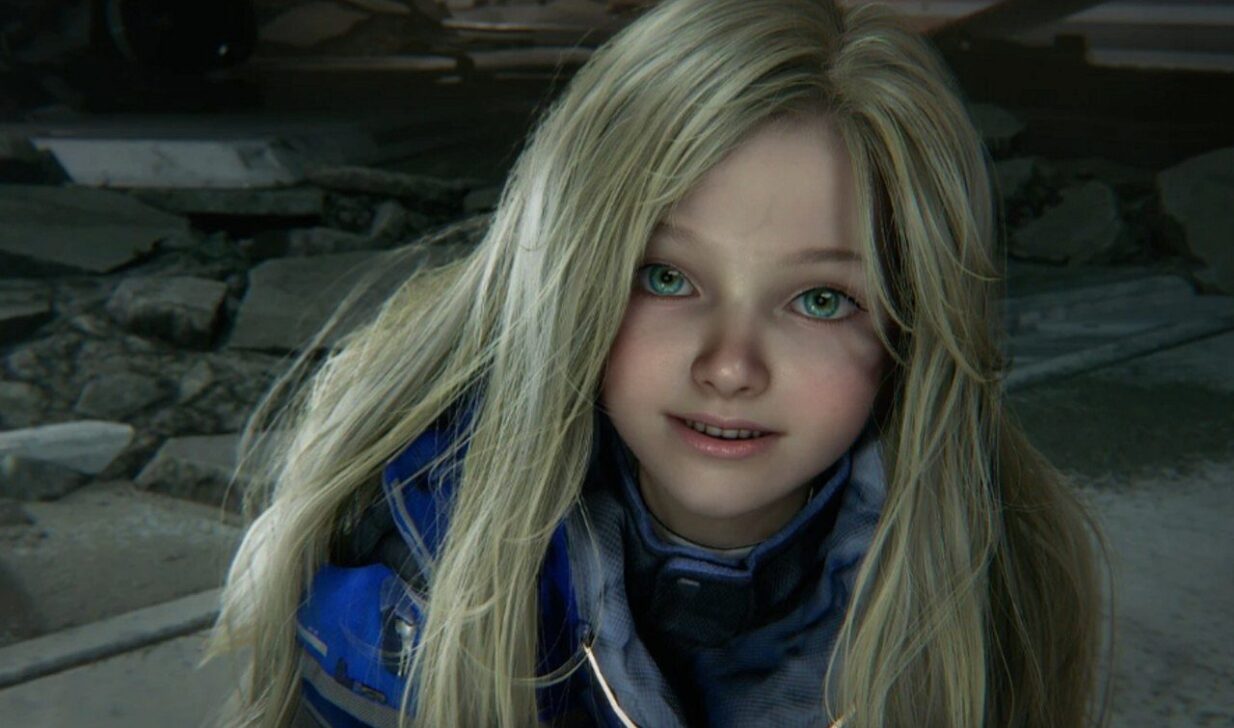
The new title from Capcom, Pragmata, has hit the market and has gained attention for its tactical gameplay proposal. The game transports players to Lua, where an enigmatic protagonist and a crucial android come together to unravel a mystery amidst the chaos. The narrative, although with some points to be explored, serves as the basis for a dynamic and innovative combat system.
The central premise of Pragmata involves a lunarite mining facility that suddenly goes haywire, transforming its productive function into a factory of aggressive robots. The dystopian setting and sci-fi atmosphere are built with the powerful RE Engine from Capcom, known for its ability to create detailed and immersive environments. The game promises an experience that combines exploration, shooting and a unique “invasion” mechanic.

The complex lunar plot and its characters
The story of Pragmata begins with Hugh, a traveler with an unclear motivation (“I just felt like it”) to carry out maintenance on a gigantic lunarite mining facility in Lua. Este mineral is the fuel for an industrial 3D printer of colossal proportions. Logo Upon arrival, the situation escalates out of control, with the printer beginning to exclusively produce aggressive robots, forcing a chaotic evacuation. Durante this pandemonium, Hugh crosses paths with Diana, an android who quickly establishes herself as the centerpiece for deciphering the complex situation. The plot maintains a steady pace, but the emotional depth of Hugh remains limited, which makes it difficult for the player to connect with its motivations.
In contrast, Diana shines as a narrative high point. Sua personality is permeated by friendliness and a captivating unpredictability, capable of bringing smiles even in moments of intense action. The android’s behavior adds a layer of humanity and interest to the story, making her a memorable figure amid the harsh, industrial environment. Infelizmente the depth of Diana’s narrative arc doesn’t extend consistently throughout the campaign, which is a missed opportunity to further flesh out the game’s central story. The relationship between the two characters, however, is the driving force behind the exploration and resolution of the challenges that arise.
Innovative and strategic combat system
Pragmata’s gameplay is defined by three fundamental pillars: movement, shooting and invasion mechanics. Esta The latter, controlled by physical controller buttons that correspond to directions on the raid interface, may seem abstract at first. Contudo, after the first few dozen minutes, it becomes a conditioned reflex. Inimigos only become vulnerable to common bullets after having their systems invaded by Diana, requiring precise timing for each attack. Este design forces the player to think strategically, prioritizing the synchronization between Hugh attacks and the ability Diana to exploit opponents’ weaknesses. The need to time each action creates a flow of combat that is constantly engaging and challenging.
The game stands out for a weapons system that discourages attachment to a single type of weaponry. Most weapons are temporary, obtained from defeated enemies, and wear out quickly, with ammunition running out in a short time. Até Even the standard pistol requires frequent reloads, forcing the player to improvise and adapt. Weapons are categorized by color, each indicating a distinct combat style:
- Red:Foco Purely offensive, ideal for dealing massive damage in short periods.
- Green:Permite Rapid elimination of enemies through specific mechanics.
- Blue:Oferece control of the battlefield, with the creation of shields and the use of decoys to manipulate enemy positioning.
This constant alternation between weapons and styles, combined with the variation in combat conditions, ensures that no fight is identical to the previous one. Posicionamento, action time and available inventory are factors that constantly change, keeping the experience fresh and demanding.
Character improvements and equipment management
The upgrade system in Pragmata is designed to make sense and directly impact gameplay. Hugh has a skill tree that can be developed to improve mobility, endurance or firepower, allowing players to mold the protagonist to their preferred combat style. Essas choices are significant, as each path offers distinct advantages for meeting the game’s increasing challenges.
Diana, in turn, has abilities that enhance her crucial invasion mechanics, adding varied bonuses that optimize her effectiveness in battle. However, she can only use a few improvements at a time, and these wear out with use, requiring the player to constantly switch between available equipment. Essa Dynamic resource and skill management ensures that progress is felt, but without alleviating the tactical pressure that permeates each combat. The developers managed to balance the feeling of evolution with the player’s continuous need for adaptation and strategy.
Exemplary designed chaos and epic battles
Combat in Pragmata is not limited to a succession of isolated encounters, but rather a continuous state of maximum alert. The battlefield is a whirlwind of bullets flying from all directions, enemies applying incessant pressure, and the player is forced to perform quick analyzes of the situation. The task is to find the exact moment to invade enemy systems with Diana and, simultaneously, select the most suitable weapon for the confrontation. Essa combination of tactical and reflex elements turns each battle into a puzzle under extreme pressure, moving away from the traditional format of shooting games.
Boss battles take this intensity to a new level, transcending conventional combat. The confrontation arenas disintegrate in real time, gigantic lasers cross the skies, and elements of the scenery transform into dangerous projectiles. The scale of these clashes is impressive, and the engineering behind them ensures that fights never feel artificially drawn out or repetitive. Entre the frenetic combats, the game offers a refuge at the protagonist’s base, providing moments of rest both in terms of gameplay and narrative. Esses Quieter interludes with Diana add an intimate and essential touch, allowing the player to breathe and delve deeper into the relationships between the characters, enriching the game world.
Longevity and launch value
Pragmata offers a main campaign that can be completed in approximately 15 hours, a reasonable time for a unique gaming experience in the genre. Contudo, the title rewards replayability, following in the tradition of Capcom’s other hits. Players are encouraged to revisit the campaign to try out different combinations of upgrades, explore alternative skill trees for Hugh, and tackle higher difficulty levels. Essa approach ensures that the experience remains fresh and challenging even after the first completion.
In addition to the robust content, the launch price of Pragmata stands out as a pleasant surprise. Posicionado as a AAA title, the game cost 259 PLN on the Polish PlayStation Store, a competitive price for a large-scale production. The affordability of the price, combined with the technical quality and depth of gameplay, positions Pragmata as a notable release in the current video game landscape. It’s a testament to Capcom’s commitment to delivering high-quality experiences at a cost that reflects consumer value.
Visual and technical quality
The visuals of Pragmata are of the highest quality, driven by the acclaimed RE Engine, the same technology that underpins series such as Resident Evil and the recent Dragon’s Dogma 2. The lunar settings are rendered with stunning realism, alternating between arid environments, industrial structures and claustrophobic sections that together create a cohesive and immersive backdrop to the action. The attention to visual detail contributes significantly to the game’s sci-fi atmosphere.
The combat animations, despite the constant chaos on screen, remain clear and effective, allowing the player to follow the action without difficulty. The design of the enemies is another strong point, visually communicating their behaviors and attack patterns, which is crucial for strategy in battle. Diana, the co-protagonist android, stands out visually from the rest of the cast; their appearance and movements are meticulously detailed, drawing attention even in calmer narrative moments and solidifying their importance in the overall game experience.