James Webb Telescope reveals carbon molecules in dying star
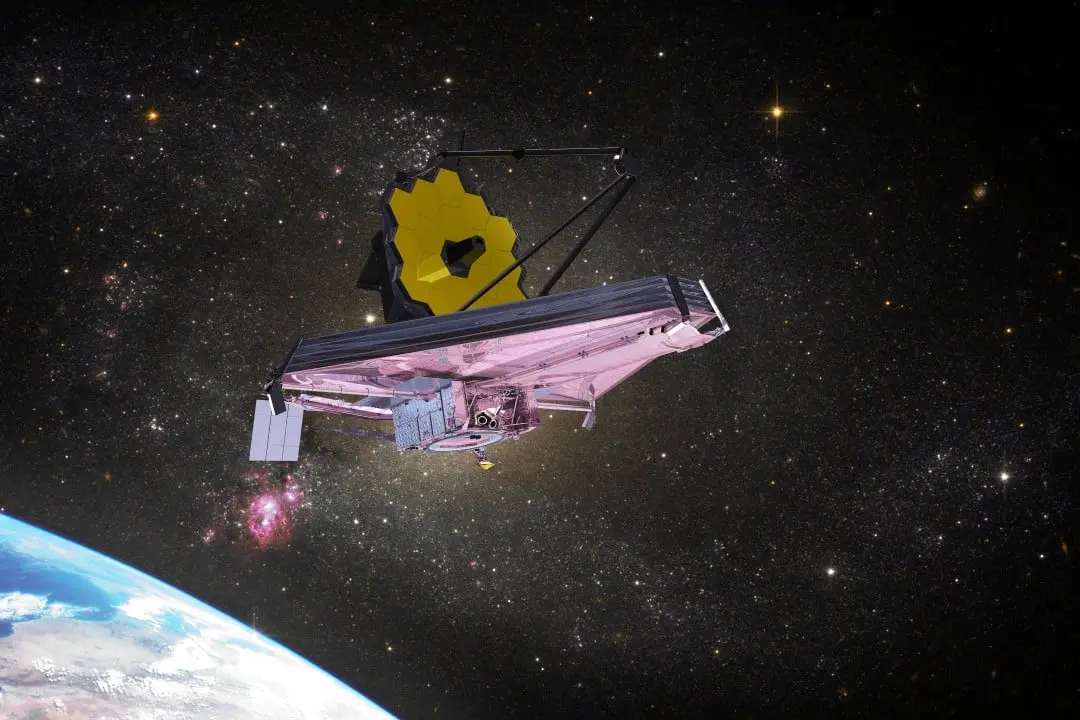
Telescópio Espacial James Webb captured detailed images of a late-life star surrounded by complex structures of gas and dust in the Tc 1 nebula, located about 10,000 light-years from Terra. The observations revealed the presence of special carbon molecules known as buckyballs, compounds that have intrigued scientists for years due to their rare detection in deep space. The data collected expands knowledge about how these essential elements behave in extreme Universo environments.
The star at the center of the nebula is an extremely hot white dwarf. Trata is the remains of a star similar to Sol, but much older, that expelled its outer layers after consuming all its nuclear fuel. Essa white dwarf still emits intense radiation, which illuminates the surrounding gas and creates the bright structures seen by Webb. Essa light allows detailed study of the chemical composition of the region.
Rare Moléculas identified in high resolution
Buckyballs, scientifically called buckminsterfullerenes, are formed exclusively by carbon atoms organized in a closed structure. Essa configuration makes them extremely stable and similar to a football in shape. Eles belong to a larger class of compounds called polycyclic aromatic hydrocarbons, considered important because they may be linked to chemical processes related to the origin of life in Universo.
The first detection of fullerenes in space occurred in 2010, also in the Tc 1 nebula, using NASA’s Spitzer telescope. Porém, the new images from James Webb reveal a much greater level of detail. Jan Cami, Western University researcher at Canadá, highlighted that the region shows unexpected structures and raises new questions about how these molecules form and behave in high-radiation environments. Webb can capture images with higher resolution and identify more subtle chemical variations than any previous instrument.

Distribuição mysterious inside the nebula
Cientistas and Morgan Giese analyzed how fullerenes are distributed within the Tc 1 nebula. Descobriram found that these molecules appear to form an organized layer around the white dwarf, as if they were structured in a larger spherical shape. Essa unexpected configuration does not yet have a definitive explanation. The researchers point out that it is not even clear why the presence of these compounds is so common in some cosmic environments and rare in others.
Essas molecules do not only appear in stars in their final stages of life. Elas were also found in:
Leia Também

The absence of Neymar’s wedding ring in a New York club stirs social media during the Brazilian team’s break

Parachuting plane crash leaves eleven dead in northeastern France this Sunday

Financial analysis indicates that GTA 6 generated US$1 billion in the first hour of pre-sales
- Estrelas young people in training
- Nuvens dense interstellar
- Starborn Regiões
- Meteoritos arriving at Terra
Porém, the distribution pattern remains one of the greatest mysteries in modern astronomy.
Physicist Comportamento challenges scientific models
Outro point of intrigue involves how these molecules emit infrared light. Current theoretical models cannot fully explain the behavior observed by Webb. Isso indicates that the physical processes involved may be more complex than previously imagined. Cientistas recognize the need for new theoretical and experimental studies to fine-tune predictions and understand the physics behind these emissions.
The James Webb represents a significant advance compared to the Spitzer, closed in 2020. With a larger mirror and much more sensitive instruments, the JWST is able to capture images with greater infrared resolution. Isso allows us to study with precision never before achieved the regions where complex molecules are present in intergalactic space.
Próximos steps into cosmic exploration
Scientists plan new observations with James Webb to investigate other planetary nebulae similar to Tc 1. The central objective is to understand how radiation from the central star influences the chemistry of the surrounding environment. Pesquisadores also wants to unravel how these processes shape the evolution of molecules over cosmic time, helping to reveal how elements essential to life spread throughout Universo. The research team includes Simon Van Schuylenbergh, Els Peeters, Jan Cami, Morgan Giese, Charmi Bhatt and Dries Van De Putte, all contributing to this critically important study.