Director reveals that The Last of Us multiplayer was almost ready before cancellation
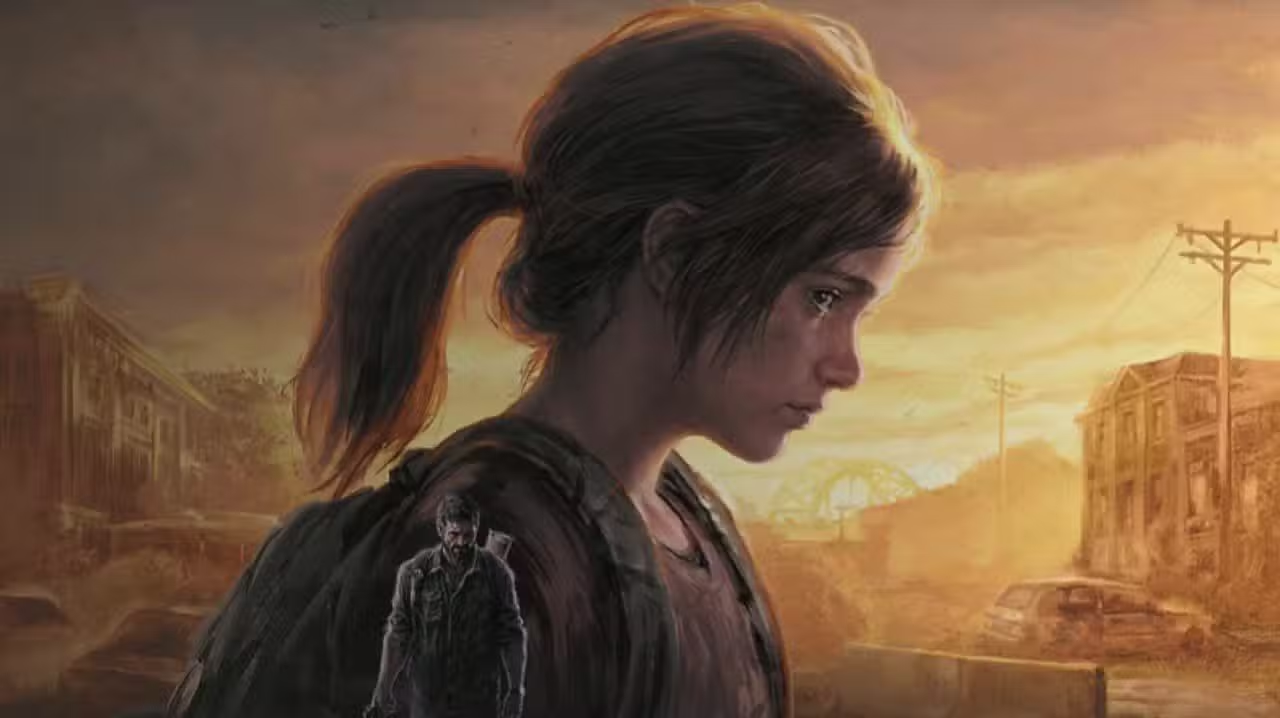
The development of the multiplayer project set in the universe of The Last of Us reached eighty percent completion before the definitive interruption by Naughty Dog. The initiative’s former director shared previously unseen details about the state of the game during a recent interview. Vinit Agarwal reported that former members of the production team still get in touch to praise the technical quality of the work. The title promised to expand the franchise’s survival mechanics to a large-scale competitive environment.
The decision to close the work took place in December last year. The studio chose to maintain the historical focus on single-player narrative adventures. Maintaining continuous service would require relocating virtually all of the company’s employees for several years. The cancellation caught some developers by surprise shortly after internal tests showed positive results.
It’s wild how many of my ex-colleagues still message me today saying how amazing TLOU Online was going to be — still the best multiplayer game they’ve ever played. Never going to let what I work on not see the light of day again. Thank you all for your support and confidence! ❤️
— Vinit Agarwal (@vinixkun) April 25, 2026
Bastidores’s closure indicates advanced stage of production
Work on the standalone title took almost seven years of dedication from a considerable team within the developer. Agarwal took over as director in 2016. The initial scope only provided for one additional mode for The Last of Us Part II. The project’s ambition grew quickly. Executives realized the potential to turn the idea into a big-budget standalone product. The structure evolved into an extraction format with a strong narrative weight.
The messages received by the former director highlight the level of polish achieved by programmers and artists. Profissionais who participated in the creation consider the gameplay superior to other options on the current market. The combat system inherited the fluidity and weight characteristic of the main series. Internal testing indicated a warm welcome from quality testers. The team firmly believed in the commercial success of the venture.
The announcement of the cancellation had a profound impact on those directly involved. Agarwal learned of the end of the project just one day before Sony’s public announcement. The initial shock gave way to a period of reflection on the direction of a career in the electronic games industry. The director set a strict personal goal after the episode. Ele stated that he will not work on something again that risks not reaching the public.
Naughty Dog Strategy Mudança Prioritized Narrative Campaigns
The company’s official justification addressed the incompatibility between the game-as-a-service model and the studio’s identity. Naughty Dog has built a global reputation based on linear stories with high emotional impact. Títulos like Uncharted and the Ellie and Joel saga itself defined the brand’s quality standard. The transition to a constant update format would require a drastic change in internal culture.
Post-launch support for a massively multiplayer game demands ongoing content creation. Novos maps, weapons, seasonal events, and crash fixes would need daily attention. Management realized that this need would drain resources allocated to the next major launches. The development of Intergalactic: The Heretic Prophet, under Neil Druckmann, would experience significant delays. The choice became a matter of survival of the producer’s essence.
The electronic games market has undergone severe transformations in the post-pandemic period. Production costs have soared around the world. Long-term Projetos have become risky financial bets for publishers. The economic downturn forced companies to reevaluate entire portfolios. Naughty Dog preferred to step back and guarantee excellence in the individual experiences that it masters with mastery.
External Fatores and market assessments influenced the decision
Sony acquired Bungie with the aim of accelerating expansion in the games-as-a-service sector. The creator of Destiny has taken on an internal consultancy role to evaluate ongoing projects at PlayStation studios. Relatos from the industry point out that this external analysis weighed on the fate of the derivative of The Last of Us. The feasibility of keeping players engaged for years raised doubts among executives.
The competitive environment has also shown signs of saturation in recent years. Vários titles focused on continuous multiplayer shut down servers just months after debuting. Competition for users’ time and money requires massive investments in marketing and retention. Naughty Dog would need to face already established giants in the shooter and survival genre.



The dynamics of cancellations and restructuring affected several divisions of the Japanese company. Original planning called for the launch of more than ten games as a service by 2026. Esse number has undergone drastic reductions following commercial viability reviews. The project led by Agarwal entered this statistic of strategic cuts.
- The technical feasibility assessment highlighted challenges in maintaining global servers.
- The cost of producing seasonal content exceeded the budget of traditional games.
- The team would need to double in size to ensure monthly updates without overhead.
- The publisher’s focus returned to prestige titles with closed narratives.
Transparency about the reasons for the closure helped calm part of the community. Fans have been waiting for news since the reveal of concept art years before. The initial frustration gave way to understanding about preserving the quality of the studio’s future releases.
Ex-director seeks a fresh start at Japão with a focus on new experiences
Vinit Agarwal’s departure from Naughty Dog marked the end of an important professional cycle. Ele contributed combat mechanics and boss design in Uncharted 4 and The Last of Us Part II. The experience accumulated in creating action systems served as the basis for the next step in my career. The developer packed his bags and moved to Japanese territory.
The founding of an independent studio represents an opportunity to apply lessons learned during the seven years of the canceled project. The new company seeks to combine the intensity of cinematic action with innovative multiplayer elements. The central objective involves creating connected experiences without losing narrative weight. Agarwal aims to use the knowledge gained to avoid the pitfalls of long-term development.
The Japanese market offers a different creative environment than the North American scene. The proximity to other game design philosophies attracts Western talent looking for renewal. The director maintains contact with industry partners to structure the new operation. The financing and scale of the studio’s first title remain under wraps.
Histórico from the franchise shows a complex relationship with online modes
The origin of the multiplayer aspect dates back to the launch of the first The Last of Us on PlayStation 3. The Factions mode surprised players with a tactical and rhythmic approach. The mechanic of gathering supplies to maintain a virtual camp has spawned a dedicated community. The success of this first iteration planted the seed for the ambitious expansion that would follow.
The sequel released in 2020 hit stores exclusively with the main campaign. The absence of an online component generated immediate questions from the public. Naughty Dog promised at the time that the mode was in separate production and would take on a life of its own. The promise fueled expectations for three years until the definitive outcome.
The legacy of the unreleased work survives in discussions on forums and social networks. Entusiastas debate how stealth and item crafting mechanics would work on an open map with dozens of survivors. The cancellation ended a specific chapter, but the franchise continues to expand through other means. The universe created by the studio continues to generate interest through television adaptations and technical re-releases.
See Also em Latest News (EN)

Palmeiras negotiates the signing of Nino with optimism and a ceiling of 15 million euros
01/05/2026
Take-Two releases results in May and raises expectations for third GTA 6 trailer
01/05/2026
Classic strategy returns to Steam with new Heroes of Might and Magic
01/05/2026
Netflix brings miniseries A Escad about true crime that shocked the US with Colin Firth
01/05/2026
Zverev defeats Blockx and advances to the Masters 1000 final against Sinner in Madrid
01/05/2026
X360 Mobile app runs classic Xbox 360 games on high-performance Android phones
01/05/2026
Chery reveals seven-seater sports utility vehicle with modular cabin convertible into a pickup truck
01/05/2026
Oppo launches cell phone in Brazil with 7000 mAh battery and military resistance certification
01/05/2026
Ubisoft transfers Assassin’s Creed Hexe team and changes mechanics for release in 2027
01/05/2026
Assassin’s Creed Black Flag remake debuts on PlayStation 5 with advanced graphics in July
01/05/2026
Studio responsible for the Alien Isolation franchise publishes unprecedented video about the progress in the production of the new game
01/05/2026